How to Start Decorating an Apartment With Roommates Without Fighting About It

✔ Written & fact-checked by Sophie — last reviewed November 1, 2026
The fight usually starts over something small. A throw pillow, a lamp, or a poster someone hung in the living room without asking. But the pillow is never the real problem. The real problem is that nobody talked about money, taste, or who keeps what when the lease ends. Decorating an apartment with roommates goes wrong when everyone guesses instead of asking.
This guide fixes that. You will walk through the space together, sort out what’s shared and what’s private, set a budget, and agree on a few clear rules before anyone spends a dollar. Then you’ll pick colors, buy one key piece, and style the rooms so they feel like everyone lives there, not one person plus guests.
This order works because the hard talks happen first, while nobody is attached to anything yet. Agreeing on a budget is far less awkward than arguing over a couch that’s already sitting in the living room.
Plan on about 3 to 4 hours of real work, spread over 1 to 3 weeks. Most of that time is waiting: for replies, for paydays, for deliveries. Pick a night when everyone’s home, grab a tape measure, and start with the walkthrough.
What You Need
Gather these before your first walkthrough.
- ✓ Every roommate, in the same room
- ✓ 25-foot tape measure
- ✓ Shared notes app (Google Keep or Apple Notes)
- ✓ A Pinterest account for each person
- ✓ Bill-splitting app (Splitwise or Venmo)
- ✓ Blue painter’s tape
- ✓ Removable hooks and strips
- ✓ A copy of your lease
- ✓ Sticky notes and a pen
- ✓ Snacks (optional, but they help)
At a Glance
- Walk through shared rooms together
- Split the apartment into zones
- List what everyone already owns
- Set a monthly decor budget
- Decide who owns each new purchase
- Build a shared Pinterest board
- Pick three shared colors
- Agree on a one-veto rule
- Write your decor agreement down
- Buy one anchor piece first
- Hang decor with renter-safe hardware
- Give each roommate a surface to style
- Schedule a 30-day check-in
1.Walk Through Every Shared Room Together Before Anyone Buys Anything
Pick a night when all of you are home for about 45 minutes. A group chat won’t work for this one. Stand in each shared room and let every person say one thing they like and one thing that bugs them. Measure the big spots while you’re there: the wall behind the couch, the open floor for a rug, and the width of each window. Save the numbers in your phone. Seeing the space side by side keeps everyone from decorating a room the others pictured differently.
2.Split the Apartment Into Shared, Private, and "Ask First" Zones

Most roommate fights happen in the gray areas, not the living room. Give every space one of three labels:
- Shared: living room, kitchen, entryway. The group decides.
- Private: each bedroom. The person who sleeps there decides everything.
- Ask first: shared bathroom, hallway, balcony. Anyone can add something small, but they check with the group first.
3.List What Everyone Already Owns, Room by Room
Three toasters is a real thing that happens. Before anyone shops, each roommate adds their furniture and decor to one shared note: couches, lamps, rugs, art, shelves, and kitchen items. Then circle the doubles. The best one goes in the shared space, and the rest go to bedrooms or storage. This stops you from buying things you already have, so your budget goes further.
Snap a photo of each item and put the owner’s name next to it in the note. A year from now, nobody will remember whose blue lamp it was.
4.Set a Monthly Decor Budget Every Roommate Can Afford

If one roommate earns twice what another does, an even split can still feel unfair. Keep the money talk private. Each person writes the most they can spend per month on a sticky note, folds it, and drops it in a bowl. Open them together. The lowest number becomes everyone’s budget. If the notes say $40, $75, and $60, each person pays $40, giving you $120 a month to work with. Nobody gets pushed past their limit, and nobody has to say "I can’t afford that" out loud. Log every purchase in your bill-splitting app the day you buy it.
5.Decide Who Owns Each New Purchase Before You Buy It
Leases end, and roommates move. Before anything over $50 goes in a cart, pick one of two rules for it. The first rule is "one owner": one person pays full price and keeps it forever. The second is "split and buy out": everyone chips in, and whoever keeps the item later pays the others back.
Skip this and move-out day turns into a fight over the couch. Agree on the buy-out math now. A common rule is half the original price for anything under 2 years old, and free after that.
6.Build a Shared Pinterest Board for Decorating an Apartment With Roommates
"Cozy" means something different to everyone. Pictures clear that up fast. Create one group board, invite every roommate, and give each person a limit of 10 pins, shared rooms only. Bedroom ideas stay off this board. Once everyone’s done, scroll through it together and look for repeats:
- Colors that show up more than twice
- Wood tones (light, medium, or dark)
- Materials like linen, rattan, metal, or plants
Those overlaps are your shared style. Anything only one person pinned can live in their bedroom instead.
7.Pick Three Colors Everyone Can Live With

Three colors can carry a whole living room without it looking busy. Pull them from the overlaps on your Pinterest board:
One base: a neutral for walls and big furniture. One main color: for the rug, curtains, and pillows. One accent: for small things like vases and frames.
Grab free paint swatches in all three from a hardware store. Tape them to the fridge for 3 days. If anyone hates a color by day three, swap it now, before you’ve bought anything in that shade.
8.Agree on a One-Veto Rule for Shared Rooms
Your roommate finds a neon sign they love. You can’t stand it. Without a rule, that turns into a week of cold silence. Give each person 1 veto per shared room. Before anyone buys something for a shared space, they post a photo in the group chat. Everyone has 48 hours to use a veto. If nobody does, the item gets bought. A veto can’t be used on something already in the apartment, only on proposed buys. This stops one loud roommate from deciding everything, and it stops the endless "no."
Whoever uses a veto has to help find the replacement. That keeps “no” from becoming the lazy way out of every decision.
9.Write Your Decor Agreement Down in a Shared Note
Nobody remembers a spoken deal the same way six months later. Spend 10 minutes putting everything you’ve agreed on into one note:
- Your zones from Step 2
- The monthly budget per person
- Your ownership rule and buy-out math
- The three colors, with paint names or codes
- The veto rule and the 48-hour window
Have every roommate read it and react with a thumbs-up. Then pin the note to the top of your group chat so it’s always one tap away.
10.Buy One Anchor Piece for the Living Room First
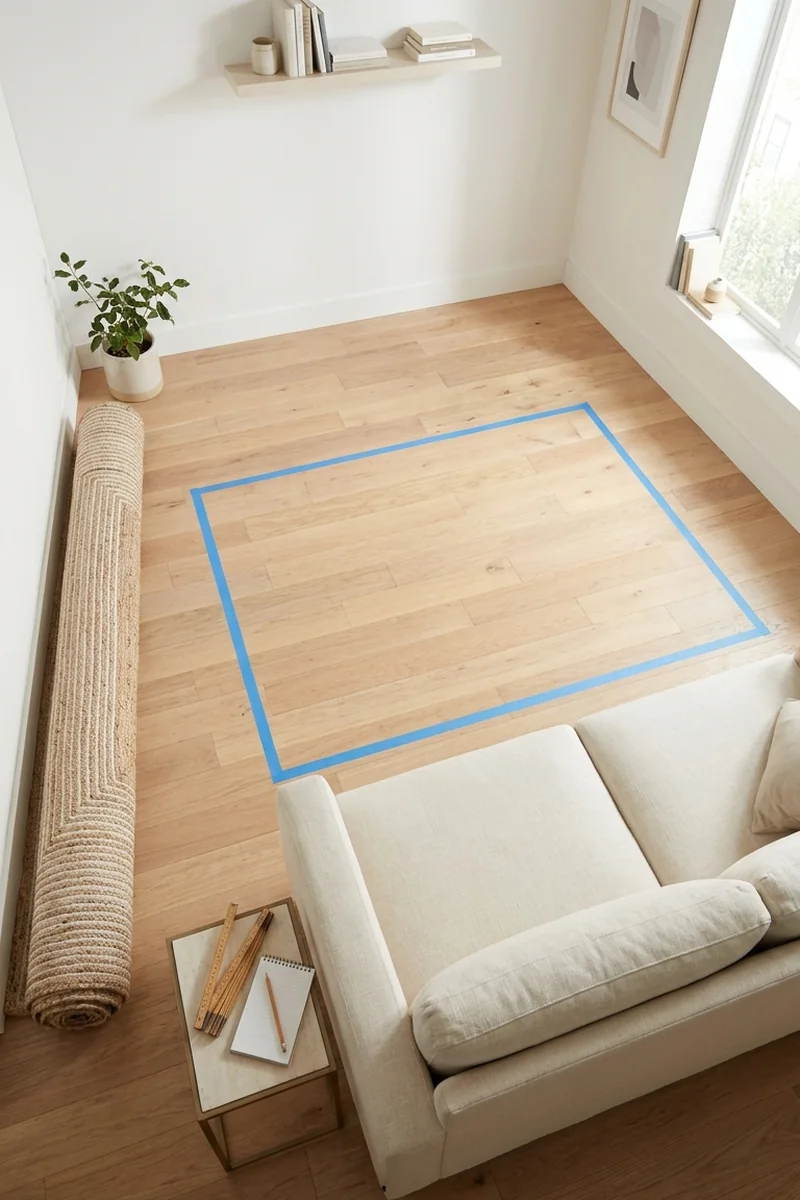
Until the big piece is in, every small choice is a guess. Pick your anchor, usually the rug or the sofa, and buy that before anything else. Mark its exact size on the floor with painter’s tape first. For a rug, a 5×8-foot size fits most small living rooms, and an 8×10 works if the front legs of the sofa should rest on it. Leave the tape down for a full day and walk around it. If someone keeps stepping over a corner, go one size smaller.
Check Facebook Marketplace before buying new. Rugs and sofas often sell for half price or less, which stretches your shared budget a lot further.
11.Hang Wall Decor With Renter-Safe Hardware
Read your lease before you put anything on the walls. Some leases allow small nails, and some ban them completely. Removable strips work for most frames, but check the weight limit printed on the package, and use the next size up if you’re unsure. Before hanging, tape a paper outline of each piece to the wall. The center of the art should sit about 57 inches from the floor, which is roughly eye level for most people.
Strips fail on dusty walls. Wipe the spot with rubbing alcohol, press each strip for 30 seconds, and wait 1 hour before hanging anything. To remove one, pull the tab straight down along the wall, slowly. Pulling it toward you rips the paint, and that comes out of the security deposit.
12.Give Each Roommate One Shared Surface to Style
A shared room should still have a little of everyone in it. Assign one surface per person, such as the bookshelf, the entry table, or the kitchen windowsill. That person styles it however they like, as long as they stick to your three colors. Skip the veto for anything under $20 here. When everyone can point to a spot that’s theirs, nobody feels like a guest in their own living room.
13.Schedule a 30-Day Check-In to Adjust What Isn’t Working
Thirty days is long enough to know what’s working and what’s quietly bugging someone. Put a date on a shared calendar now, while everyone’s happy. Keep the meeting to 20 minutes. Each roommate answers two questions: what’s one thing you love about the space, and what’s one thing you’d change? Any changes follow the same budget and veto rules as before. After that, check in every 3 months, and any time a roommate moves in or out. Small annoyances are easy to fix when they’re small.
Troubleshooting: When Things Get Tense
Find your situation on the left. Try the fix on the right.
| If This Happens | Try This |
|---|---|
| A roommate stops paying their share | Pause group buying. New items get bought only by the people paying, and they own them under the “one owner” rule. |
| Someone hates an item that’s already bought | Give it a 2-week trial. If they still hate it, move it to the owner’s bedroom or resell it and split the money. |
| A roommate adds decor without asking | Point to the pinned agreement, not the person. The item goes to their room until it passes the 48-hour photo rule. |
| Your styles clash (boho vs. minimal) | Keep big pieces in your neutral base color. Let each style show up in small accents and on each person’s own surface. |
| Nobody agrees on the anchor piece | Pick 3 finalists under budget. Everyone ranks them 1 to 3, and the lowest total score wins. |
| A new roommate moves in | Walk them through the agreement. Give them a veto, a surface to style, and 10 pins on the shared board. |
Frequently Asked Questions
Should we split decor costs evenly if our bedrooms are different sizes?
For shared rooms, yes. Everyone uses the living room and kitchen the same amount, so shared decor gets split evenly. Bedroom size is a rent question, not a decor one.
What happens to shared stuff when someone moves out?
Follow the ownership rule you wrote down in Step 5. Items with one owner leave with that person. Split items get bought out using the math you already agreed on.
Can we paint the walls in a rental?
Ask your landlord in writing first. Many landlords say yes but make you repaint before you leave. If the answer is no, bring color in with curtains, rugs, and pillows instead.
What if one roommate doesn’t care about decor at all?
Let them sit out the picking, but they still agree on the budget. They keep their veto in case something really bothers them.
What if one roommate owns way more furniture?
Use their pieces in shared rooms under the “one owner” rule. They keep everything when they move, and the group saves money now.
Roommate Decorating Cheat Sheet
- All roommates together
- Tape measure
- Shared notes app
- Group Pinterest board
- Bill-splitting app
- Painter’s tape
- Removable hooks & strips
- Your lease
- Walk through and measure together
- Label zones: shared, private, ask first
- List what everyone owns
- Budget = lowest anonymous number
- Set ownership rules for items over $50
- Build a group board (10 pins each)
- Pick 3 colors and test for 3 days
- 1 veto per room, 48-hour window
- Write and pin the agreement
- Buy the anchor piece first
- Hang art with renter-safe hardware
- Give each person one surface
- Check in at 30 days, then every 3 months
You might also like

Conclusion
You did the hard part. You talked about money, ownership, and taste before any of them became a fight. Decorating an apartment with roommates feels a lot calmer once everyone knows the rules and has a corner of the shared space that’s theirs.
A good next project is the entryway. It’s the smallest shared space, so it’s a low-stakes way to try your new system together.
📌 Save this guide to your apartment ideas board so it’s ready the next time a new roommate moves in.