20+ Wood Slat Room Divider Ideas That Quietly Transformed My Open Floor Plan

✔ Written & fact-checked by Sophie — last reviewed May 4, 2026
Why I Stopped Hating Open Floor Plans
For years I rolled my eyes at open floor plans. Everything bleeds into everything else, the TV competes with the dinner table, and don’t get me started on trying to read while someone’s cooking garlic ten feet away. Then I started using wood slat dividers in my own home and in client projects, and something shifted. The right slatted partition gives you separation without the heaviness of a wall, lets light keep doing its job, and adds the kind of texture that makes a room feel finished. In this post I’m walking you through 20+ slat divider ideas I’ve either tried, specified, or pinned obsessively over the last two years.
1. Floor-To-Ceiling Slats Behind The Sofa
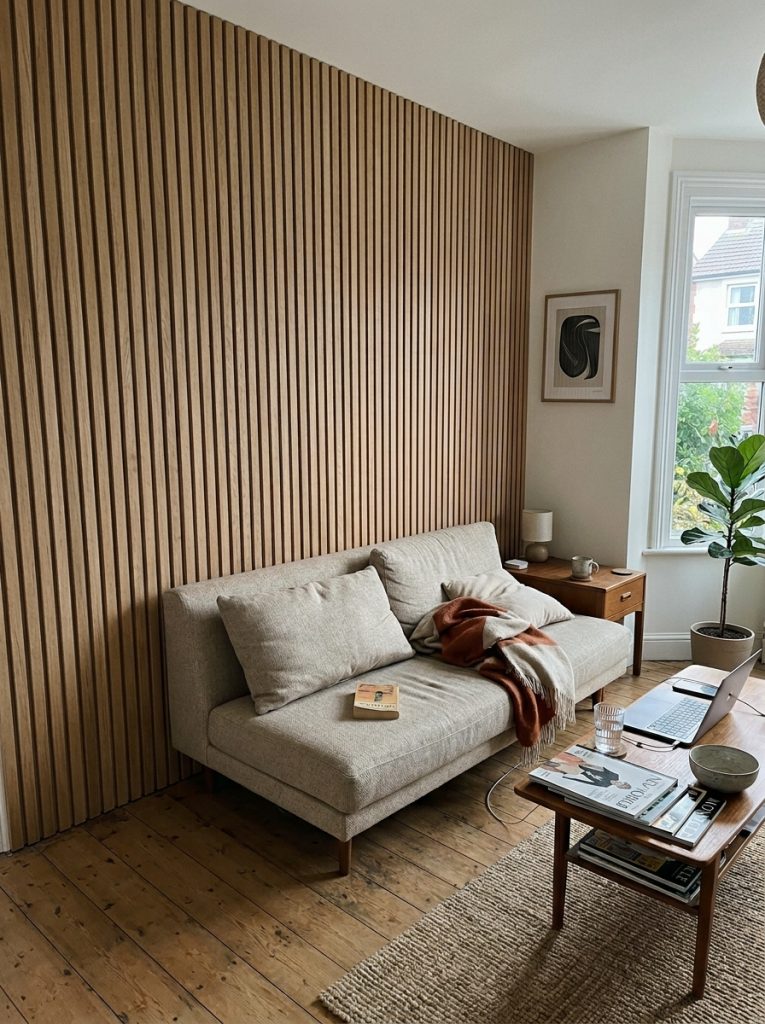
This is my go-to when a living room dead-ends into a hallway or entry. Run vertical oak slats from floor to ceiling directly behind the couch, and suddenly the sofa has a back, the hallway has a wall, and neither space loses any light. I did this in a client’s narrow row house last fall and the husband texted me a week later saying he finally felt like he had a living room. Keep the slat spacing tight enough that you can’t see straight through, but loose enough that air still moves.
2. A Curved Slat Divider Around The Dining Area
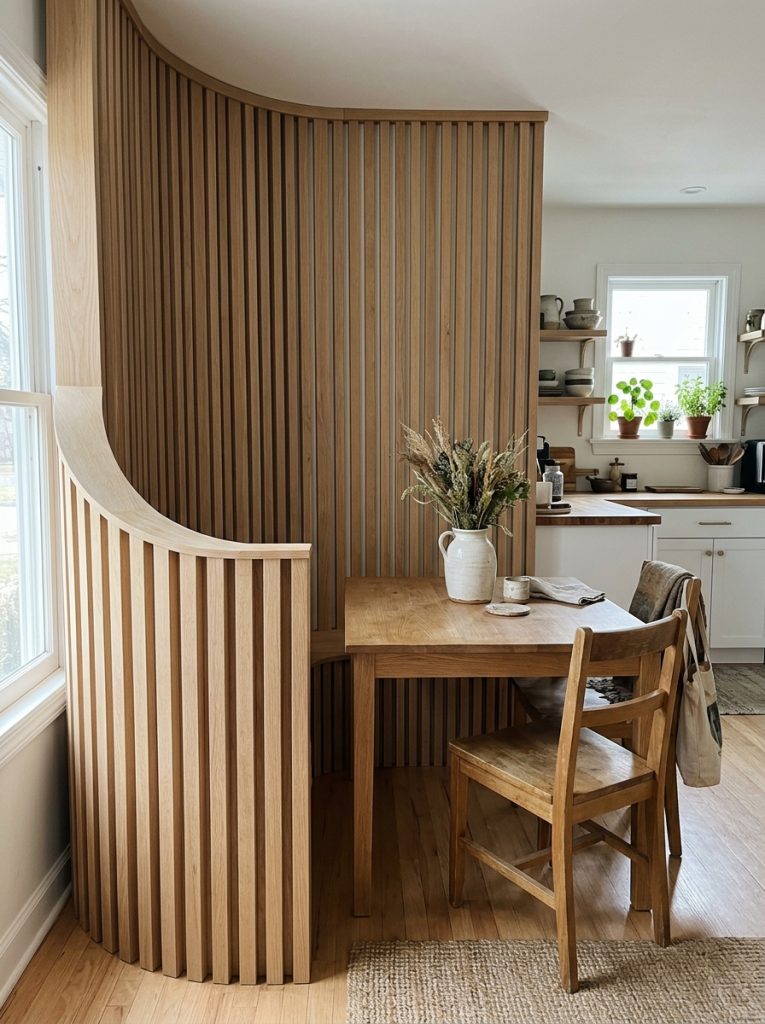
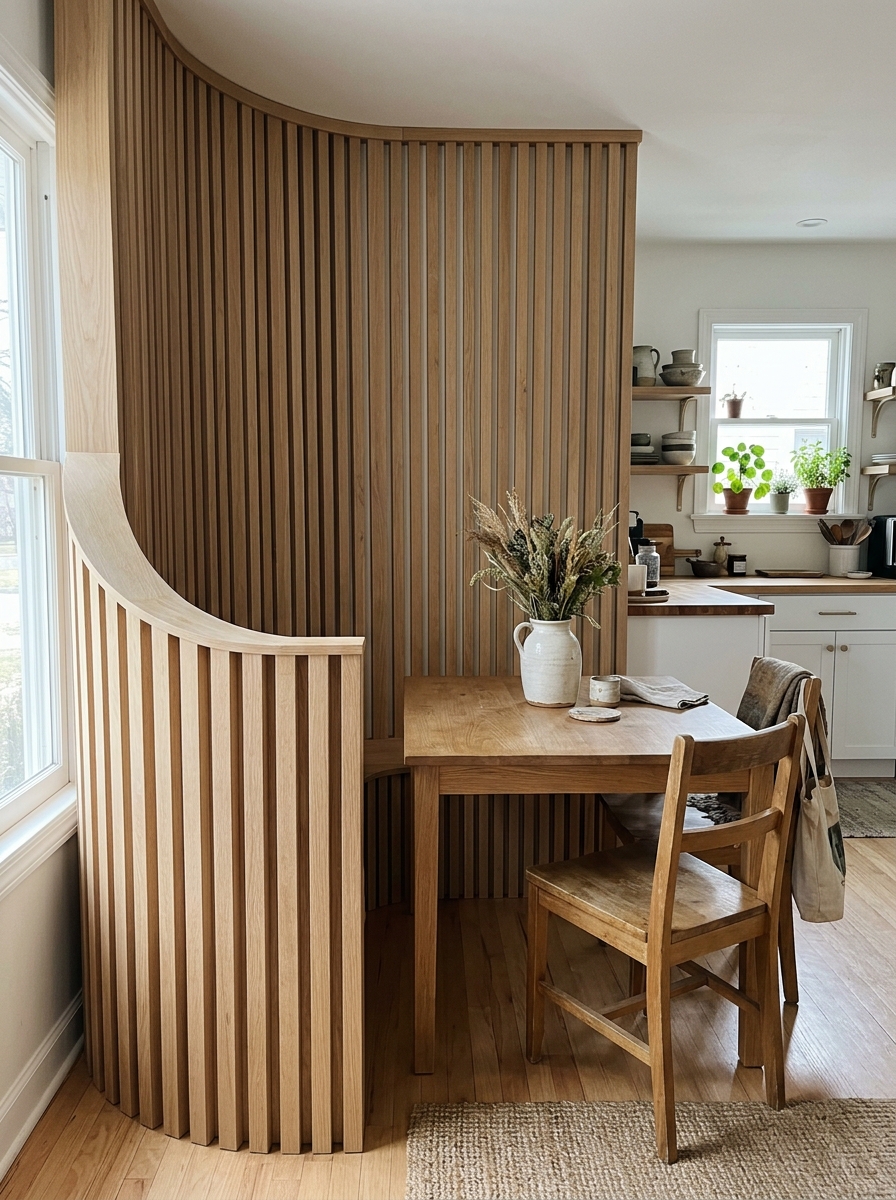
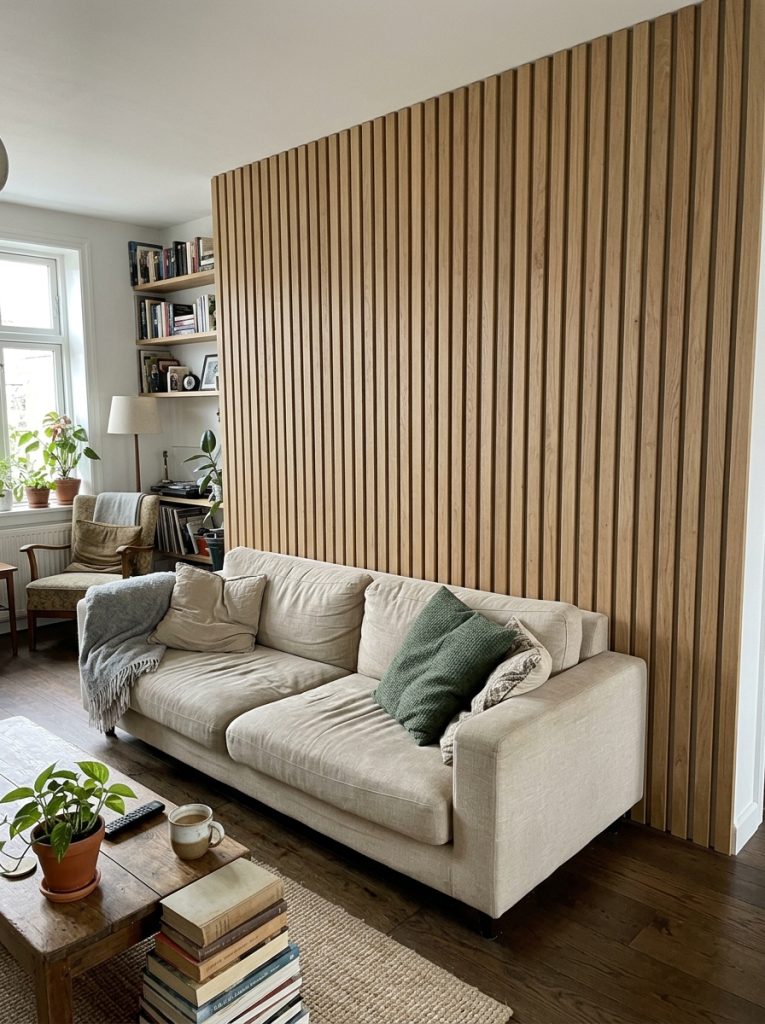
Straight slats are everywhere. A curved run is rarer and honestly more interesting. I specified a gently curved slat partition between a kitchen and dining nook a couple of years ago and it changed how the whole floor read — the curve pulls you toward the table instead of just blocking the kitchen. White oak works best here because the grain follows the curve naturally. Don’t go too dramatic with the radius, a soft arc reads more sophisticated than a tight bend.
3. Slats As A Stair Railing
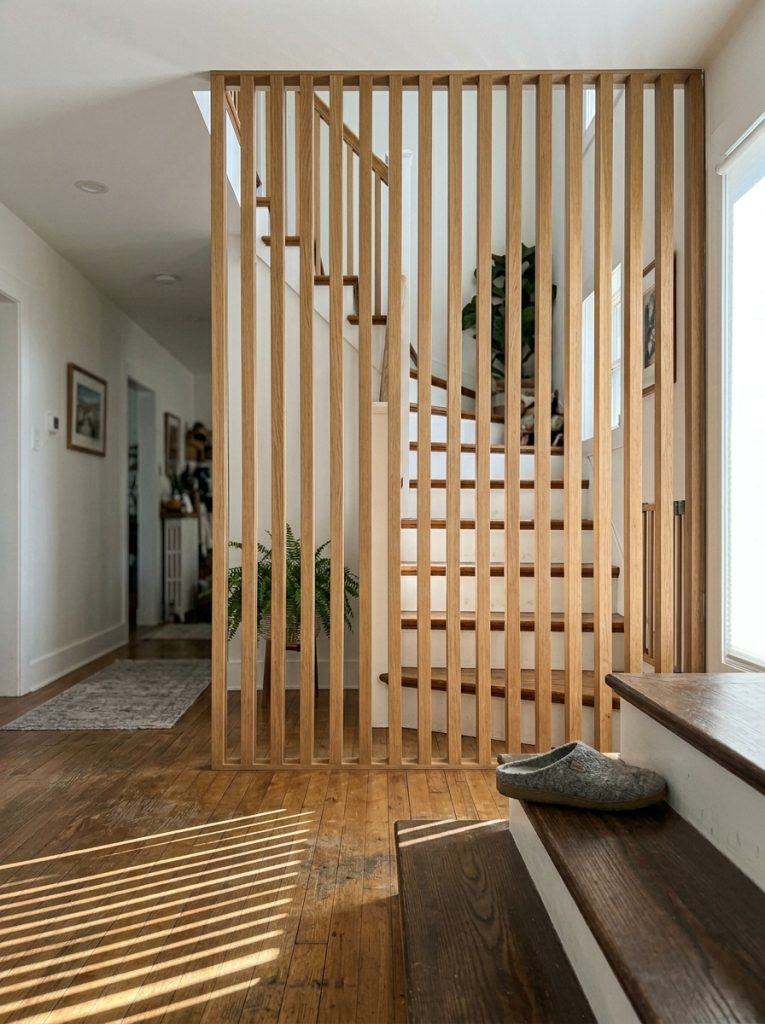
If you have an open staircase, this one will quietly upgrade the entire ground floor. Replace the standard balustrade with vertical slats that run from the stair stringer to the ceiling. You get a railing, a divider, and a piece of architecture in one move. I love how the slats cast long striped shadows in the afternoon. Make sure the gap between slats meets your local code for railings before you commit.
4. A Half-Height Slat Wall Behind A Console
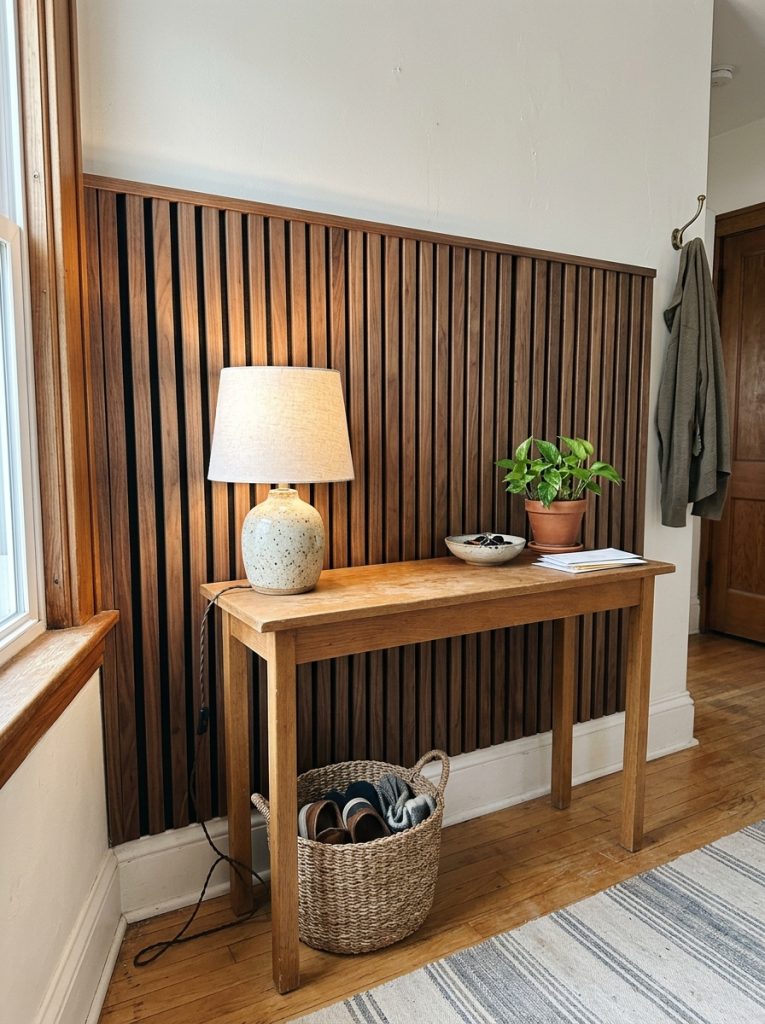
You don’t always need to go floor to ceiling. A four or five-foot slat wall mounted behind a console table makes a beautiful break between an entry and a living room without committing to full separation. I’m partial to walnut for this one because at eye level the grain really matters. Keep the console simple underneath — one lamp, one bowl for keys, that’s it.
5. Slats Between Kitchen And Living Room
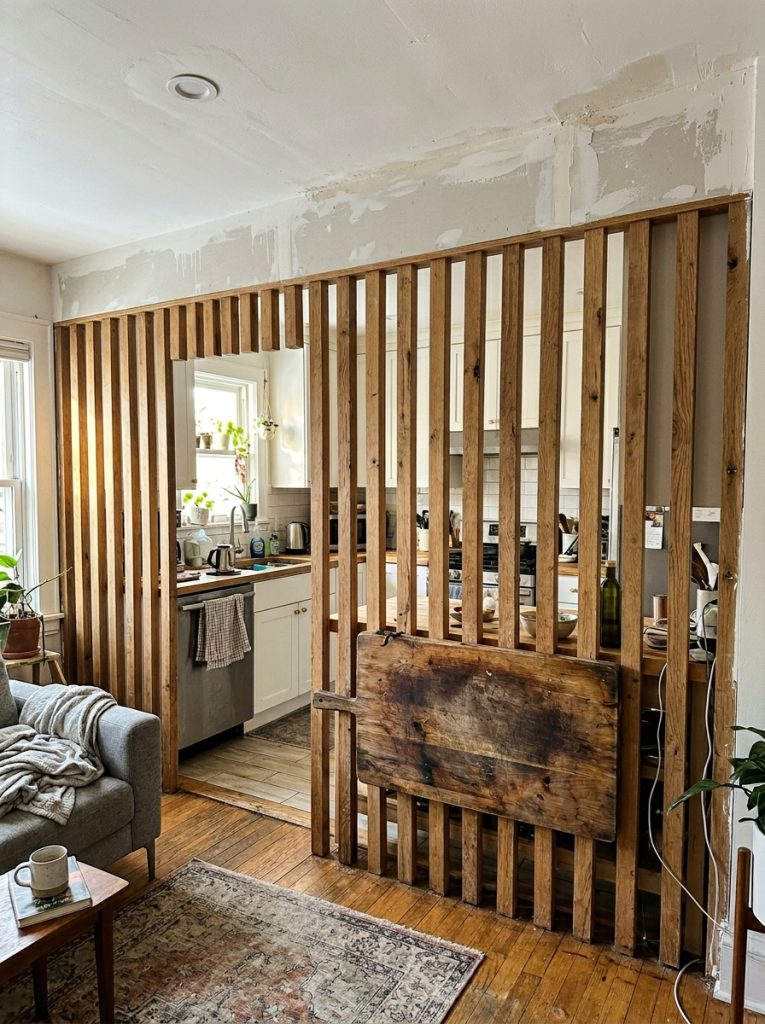
The kitchen-living combo is where most people first consider a divider, and slats are the gentlest way to do it. I install these so they stop about eight inches short of the ceiling — that little gap above keeps the room feeling open and prevents the divider from looking like a wall pretending to be art. Choose a wood tone that picks up either your cabinet color or your flooring, not both.
6. A Slat Headboard That Doubles As A Divider
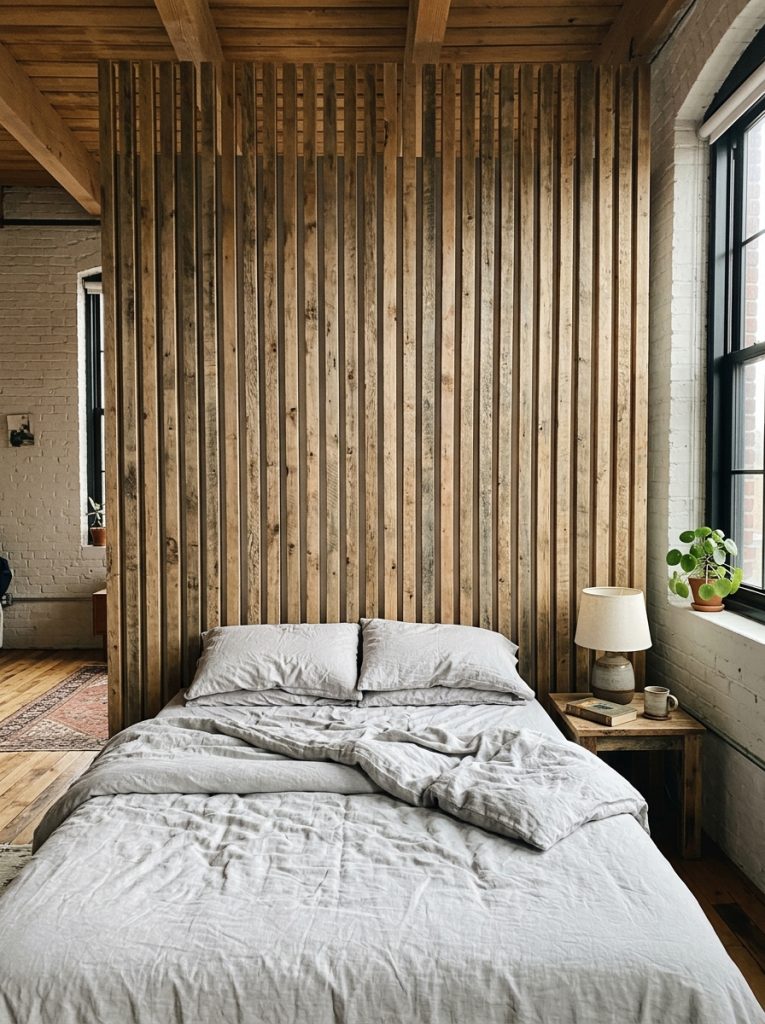
In studio apartments and lofts, the bed often floats in the middle of the room with no good wall behind it. A tall slat panel solves both problems — it gives the bed a back and divides the sleeping area from the living zone. I’ve done this with reclaimed pine for warmth and with painted black slats for drama. The black version is striking but commit to it, half-measures look indecisive here.
7. Slats With A Built-In Bench
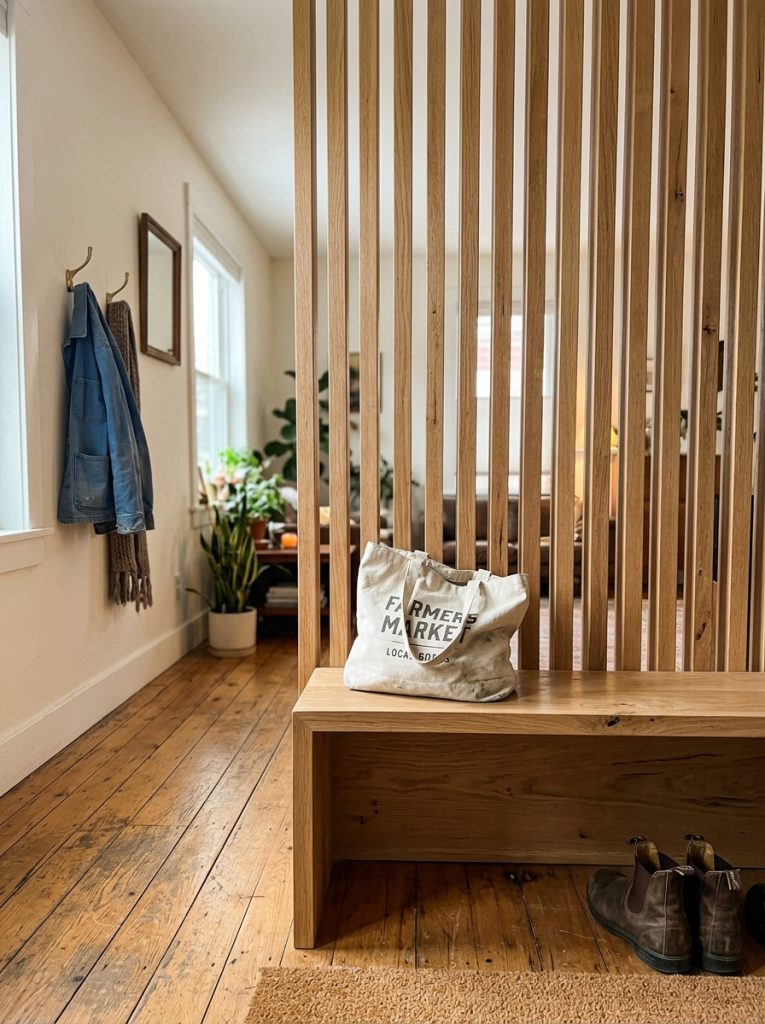
Combining a slat divider with a low bench at the base is one of those moves that looks more expensive than it is. The bench gives the divider purpose — somewhere to sit while putting on shoes, somewhere to drop a bag — and makes the partition feel like real furniture instead of a screen. Keep the bench cushion-free for a more architectural look.
8. A Black-Stained Slat Divider For Drama
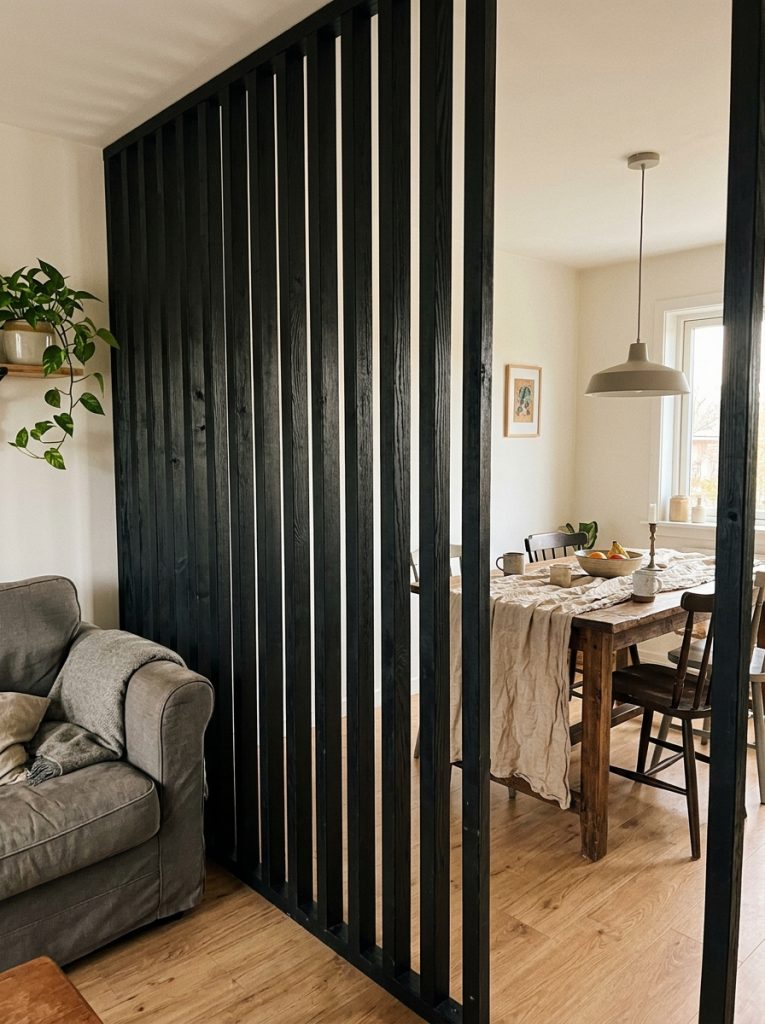
Most slat dividers are honey oak or walnut, which is fine, but if your space already has plenty of warm wood tones, going black changes everything. I tried this in my own dining room — black-stained oak slats between the dining and living areas — and the room got about ten times more sophisticated overnight. The slats almost disappear at certain angles and become a strong graphic element at others.
9. Slats As A Home Office Boundary
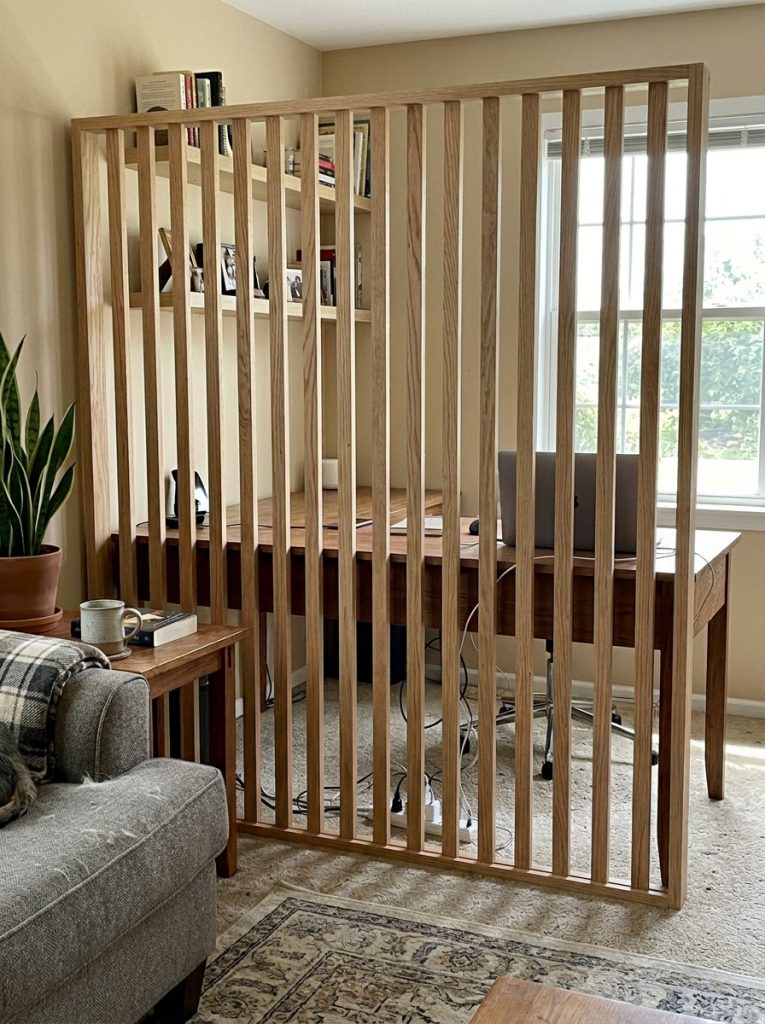
If your work-from-home setup lives in a corner of the living room, a slat divider can carve out a real office without building a wall. I use a freestanding slat panel on a slim base for this — that way it can move if the room needs to flex. Position it so the slats screen the desk from the sofa side but leave the window in front of the desk uncovered.
10. Horizontal Slats For A Lower Ceiling
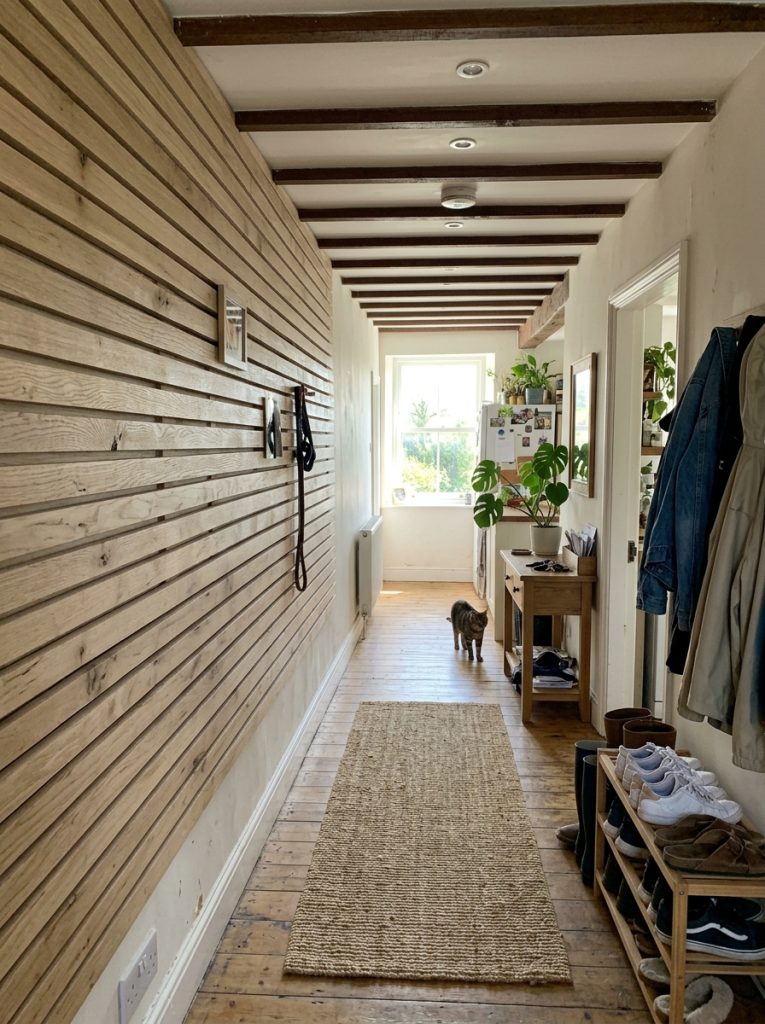
Vertical slats stretch a room upward, but if your ceiling is already low, horizontals can actually do more for you. They pull the eye sideways and make a narrow space feel longer. I specify these in galley-shaped rooms or when there’s a single long wall that needs softening. White oak with the grain running horizontally is gorgeous.
11. A Slat Divider With A Mirror Behind It
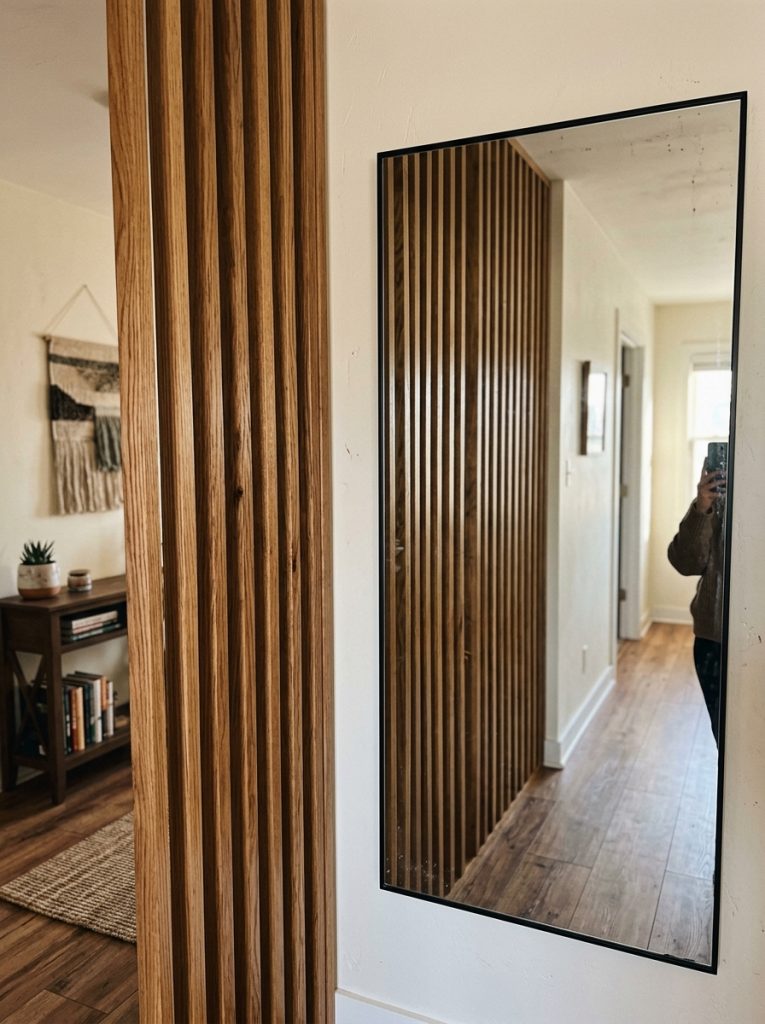
Here’s a trick that punches above its weight. Mount a large mirror on the wall behind a freestanding slat divider so the slats appear to extend twice as far. The space feels almost double the size and the light doubles too. I learned this one from a designer in Toronto and have used it in three small condos since.
12. Slats Around A Reading Nook
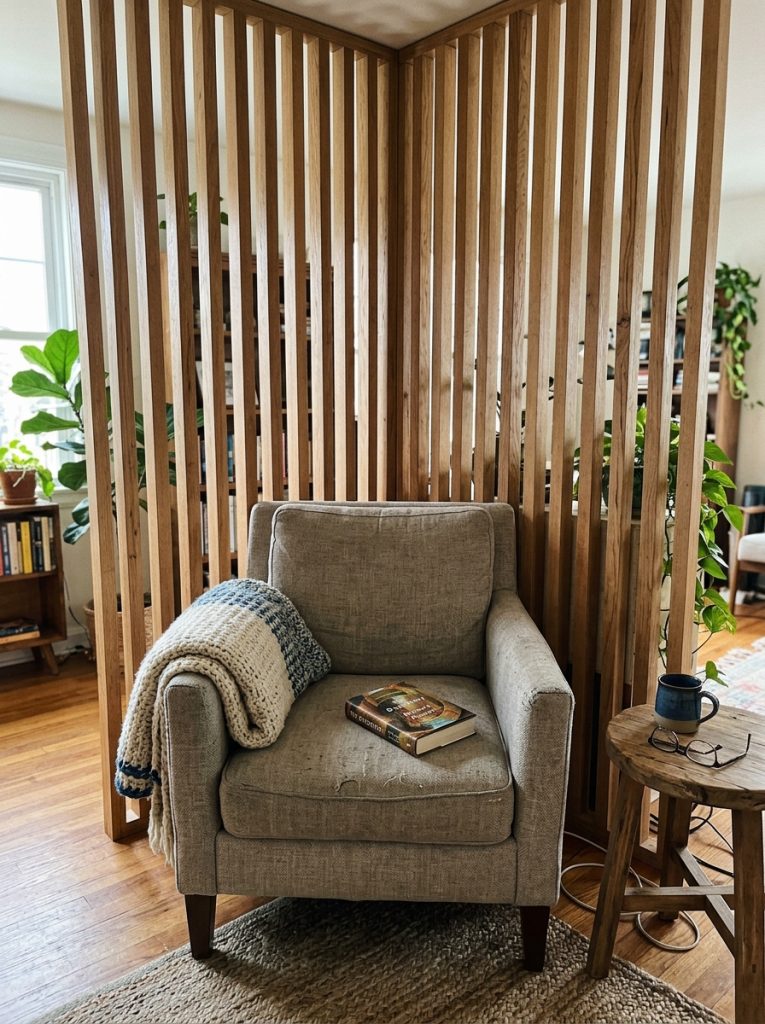
Wrap two or three sides of a corner with slats and you’ve made a reading nook out of nothing. Add one armchair, one floor lamp, one small side table, done. This works especially well in a corner where two windows meet — the slats give the chair a defined room without blocking either window’s light.
13. Ceiling-Mounted Hanging Slats
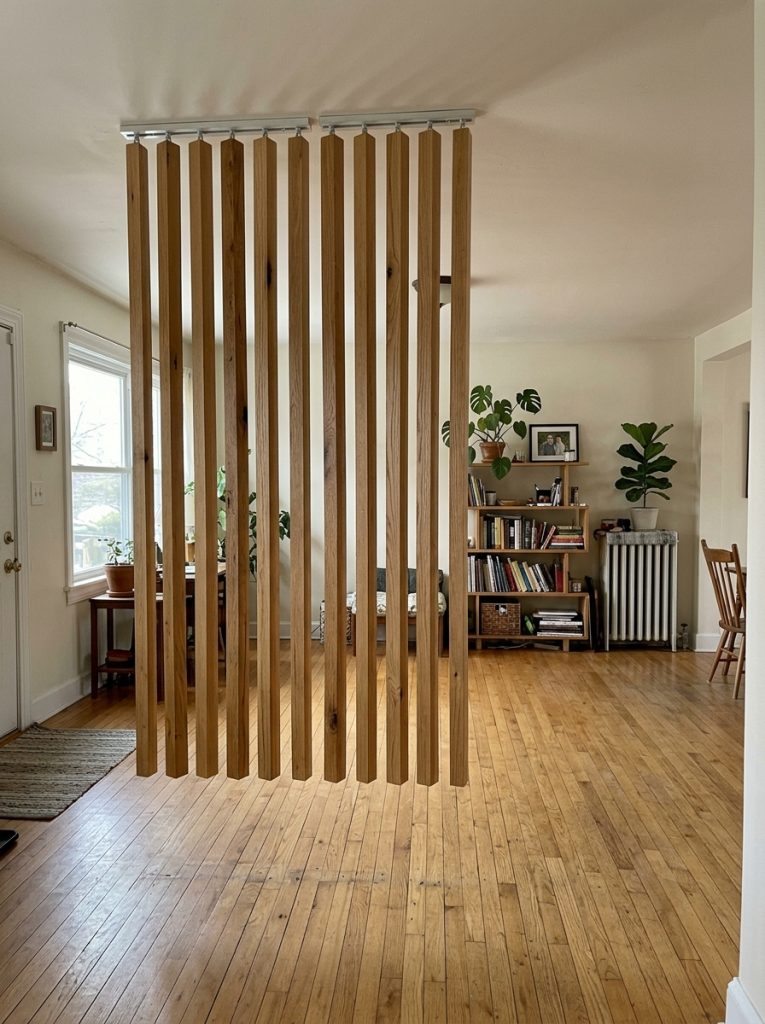
Suspending slats from the ceiling without touching the floor is a more delicate look. The divider feels like it’s floating, and you keep the floor visually unbroken. Best for spots where you want a hint of separation, not a real boundary — like distinguishing an entry from a living room without committing to a wall.
14. A Slat Wall With Integrated Shelving
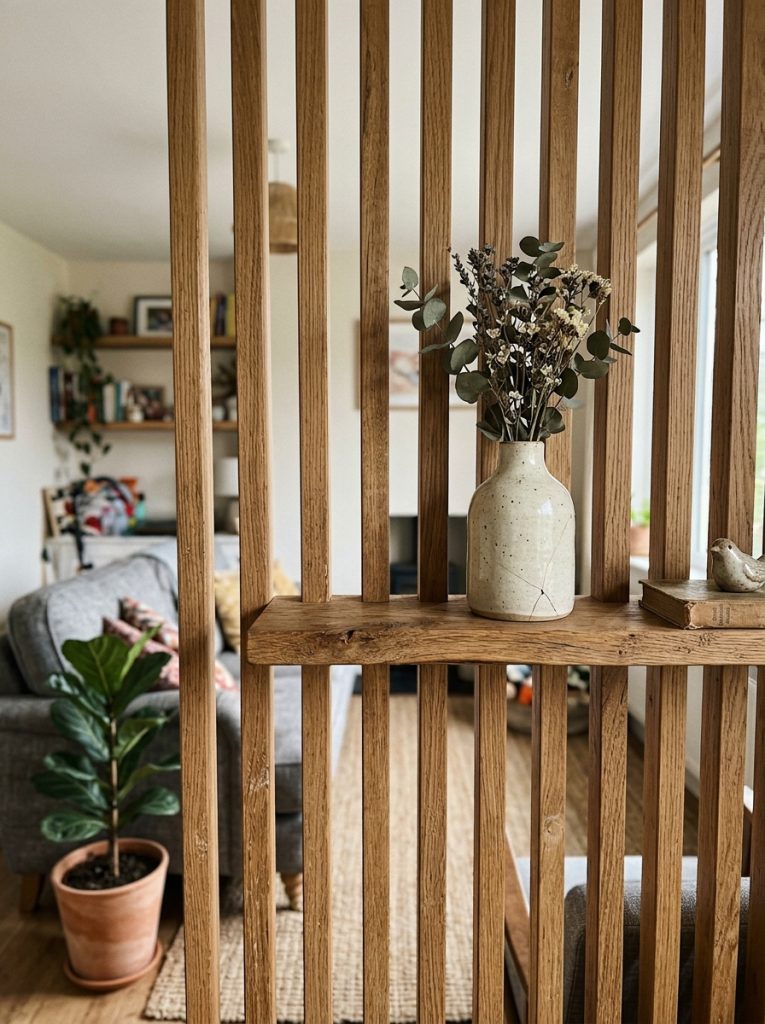
If you want the divider to earn its keep, build shelves into it. A slat divider with one or two horizontal shelves lets you display a few objects without it becoming a full bookcase. The shelf openings break up the verticality and give the eye a place to rest. One ceramic vase per shelf is plenty.
15. Slats In A Bathroom For A Shower Screen
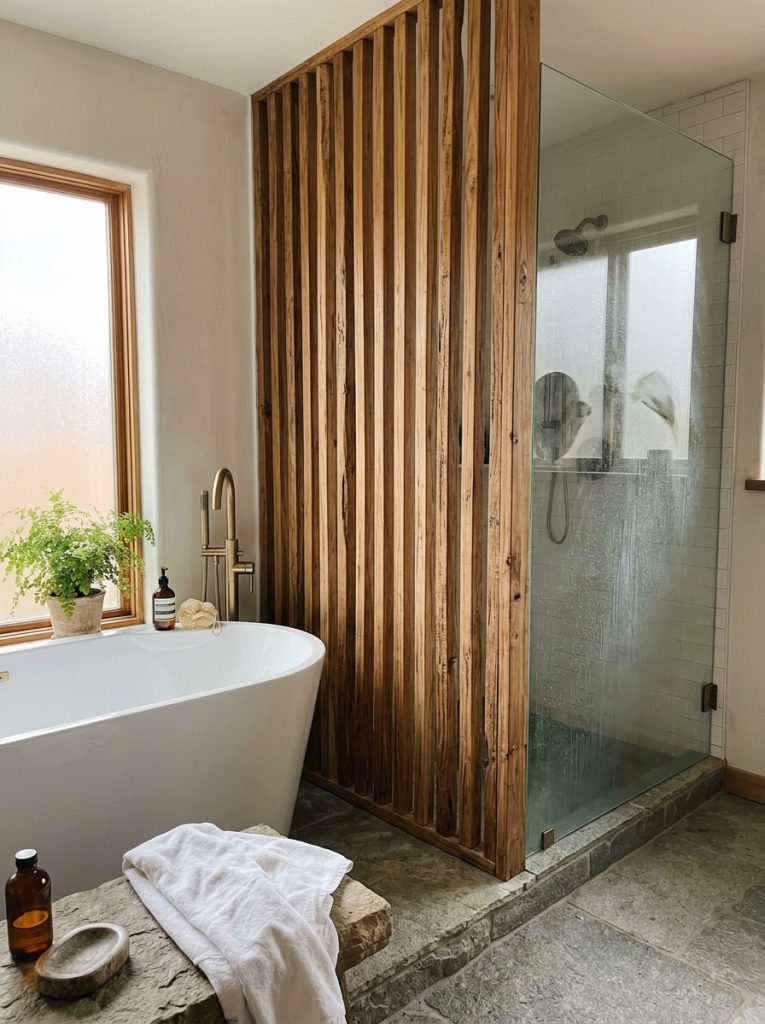
This one surprised me. I specified vertical teak slats as a partial screen between a freestanding tub and a walk-in shower in a primary bath, and the result was the most spa-like bathroom I’ve worked on. Teak handles moisture well, the slats let steam dissipate, and you get visual privacy without enclosing the shower. Make sure your wood is rated for wet areas.
16. A Two-Tone Slat Wall
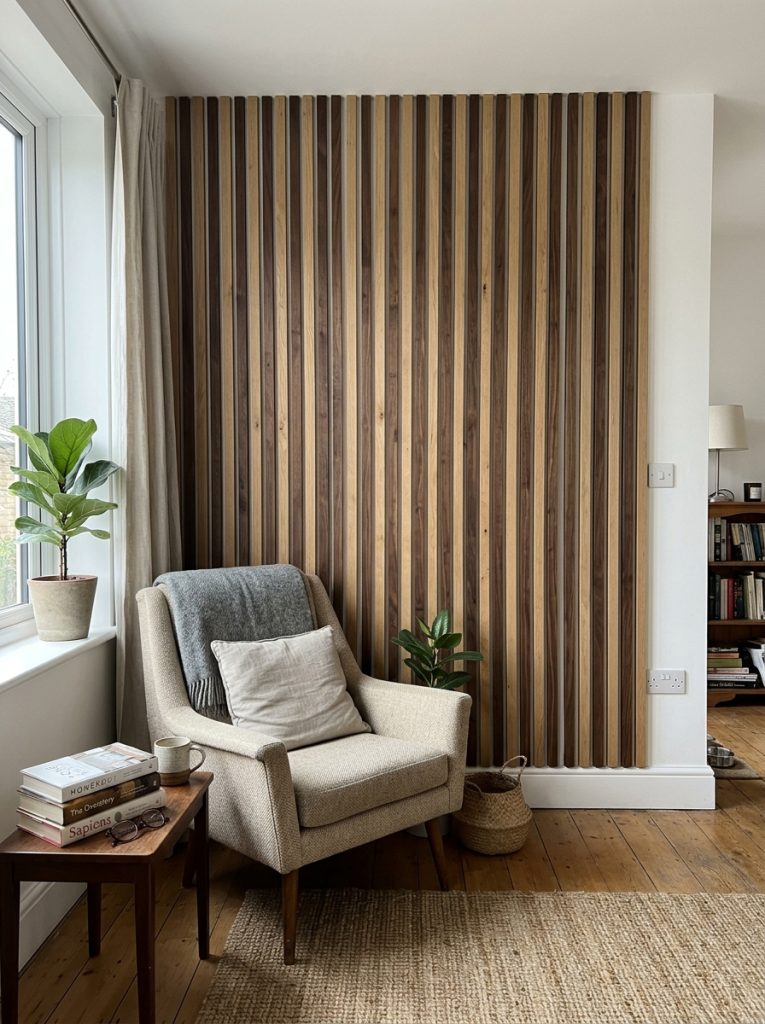
Alternating two wood tones in a single slat wall — say, white oak and walnut — creates rhythm without needing extra ornamentation. I use it sparingly because it can tip into busy fast, but in the right room it adds depth that single-tone slats can’t match. Keep the rest of the room very quiet if you go this route.
17. Slats As A Closet Door Replacement
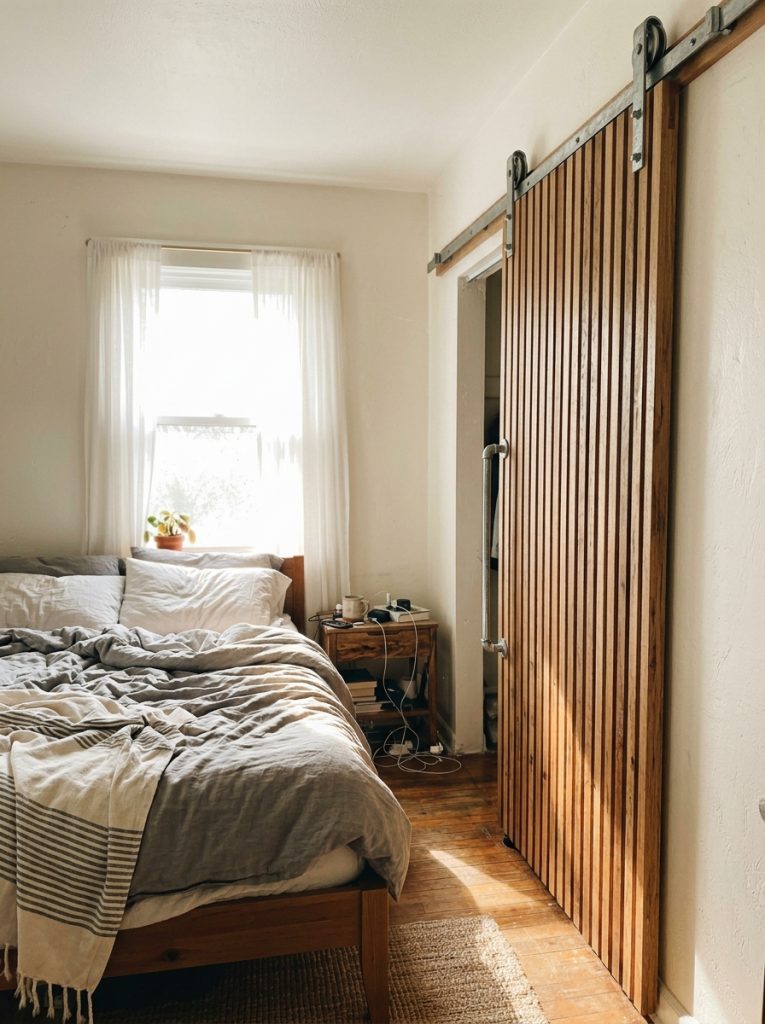
Pull off your closet doors and replace them with a sliding slat panel. The closet stays hidden enough, the room gets a piece of architecture instead of a flat door, and you avoid that closet-door clunk forever. I did this in a guest room last year and the homeowner told me it was the single best change in the house.
18. Slats To Frame A Hallway Entrance
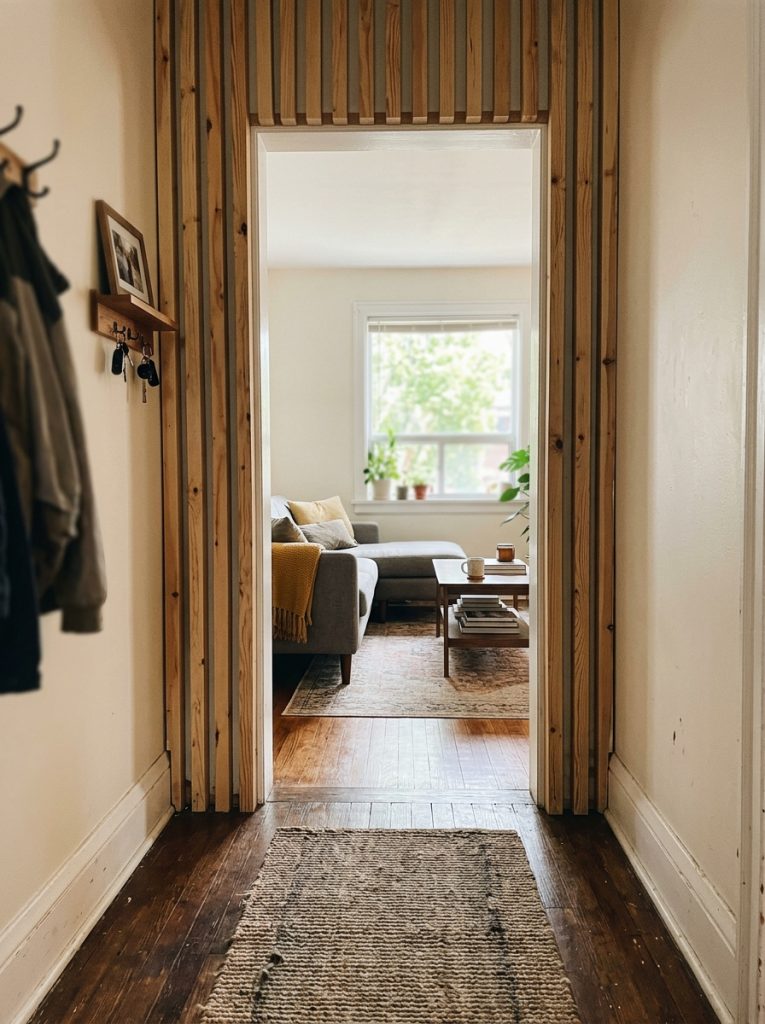
If a hallway dead-ends at a wall or transitions awkwardly into another room, frame the opening with slats on either side. It turns a forgettable passage into a moment. I think of these as architectural punctuation — they tell you you’re moving from one space to another without slowing you down.
19. A Slat Divider With A Hidden Door
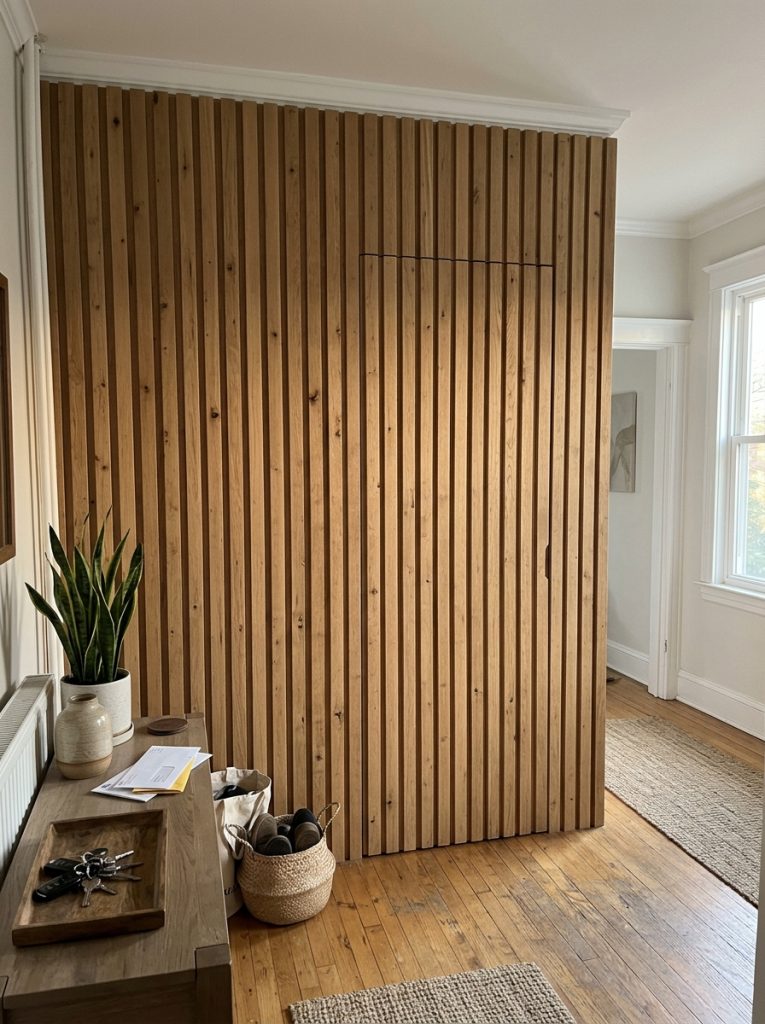
For clients who want privacy without a visible door, I cut a door right into a slat divider so the slats run continuously across both the wall and the door panel. When closed, the door disappears into the rhythm of the slats. It’s the kind of detail nobody notices until you point it out, and then they can’t unsee it.
20. Slats In A Sunroom Or Conservatory
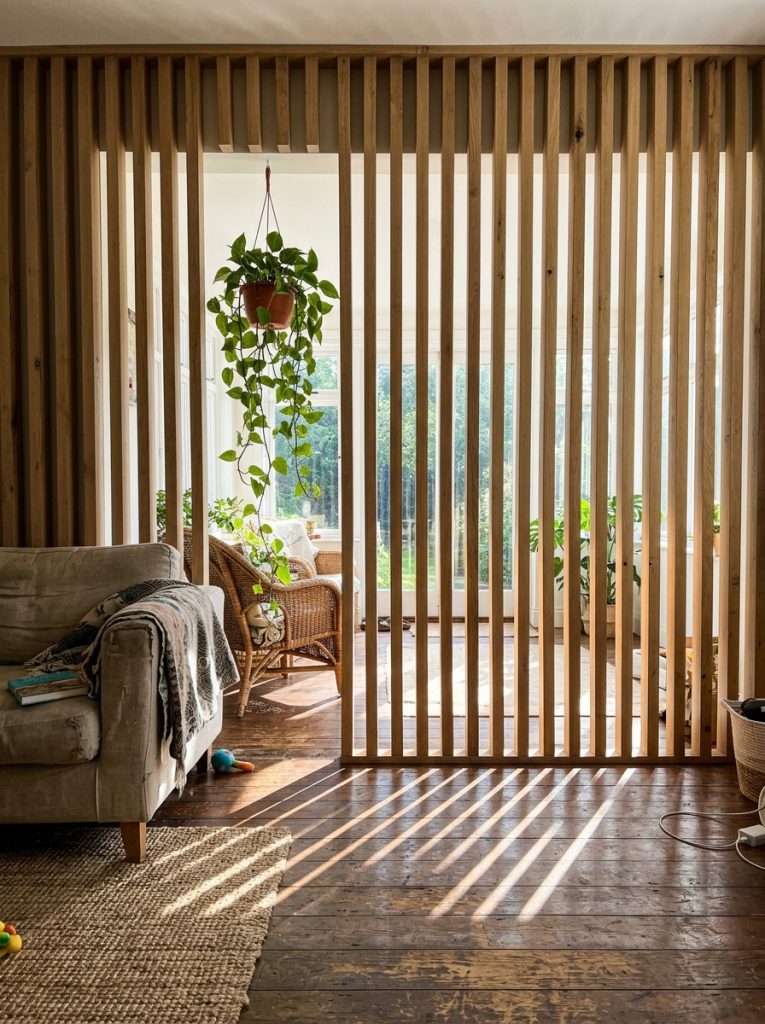
Slats in a sunroom act differently than slats anywhere else because of how the light moves through them all day. I put a vertical slat panel between the main house and a small sunroom in a project last summer, and watching the striped light shift across the floor from morning to evening became the homeowner’s favorite thing about the room. White oak takes that light beautifully.
21. A Freestanding Slat Screen You Can Move
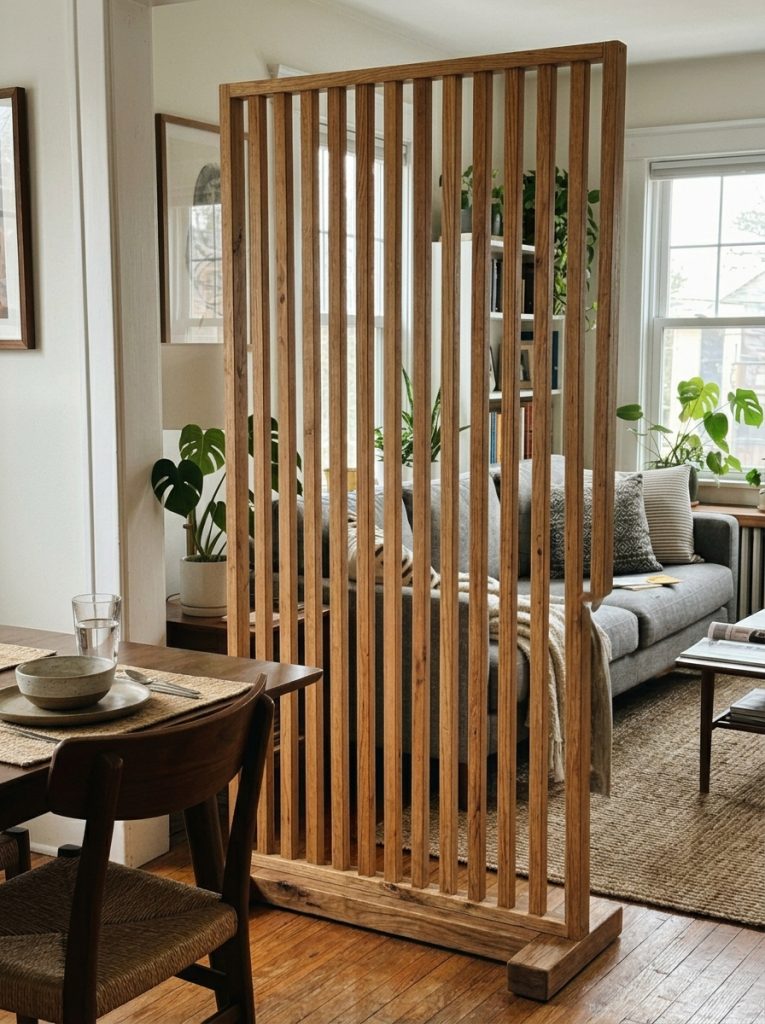
Not every divider needs to be permanent. A freestanding slat screen on a heavy base gives you all the visual benefits with none of the construction. I keep one in my own living room and rearrange it seasonally — it sits behind the sofa in winter and between the dining and living spaces in summer when we entertain more. Get one with real weight at the bottom or it’ll feel flimsy.
22. Slats Painted To Match The Wall
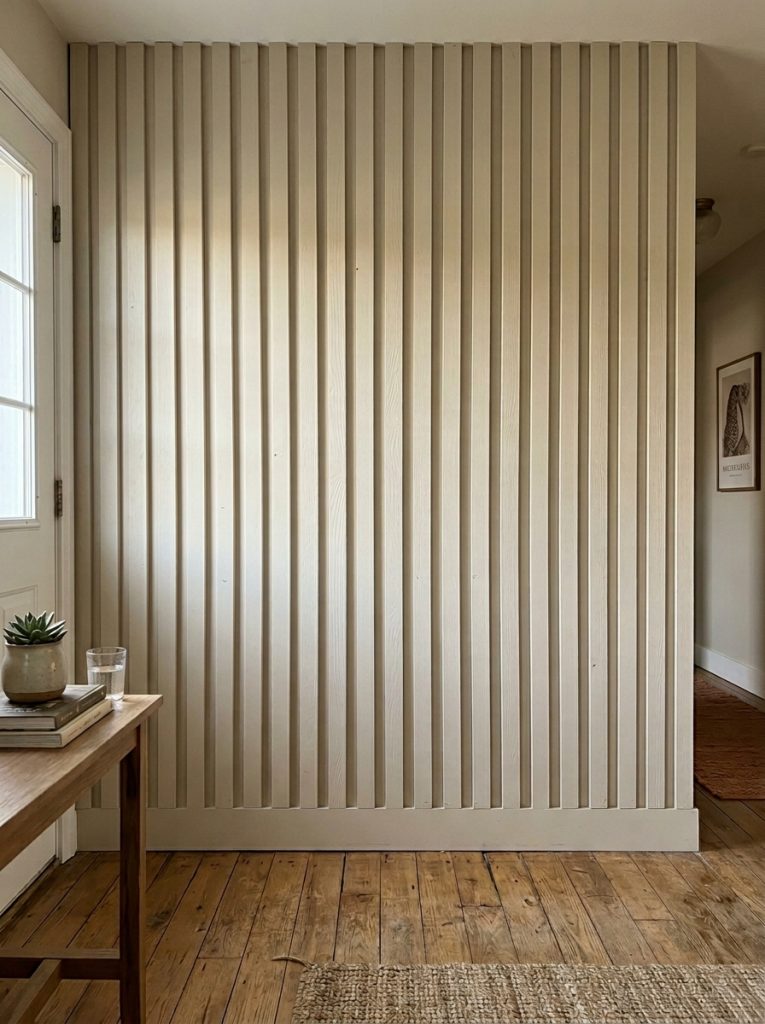
Last one and it’s the quietest. Paint your slats the exact same color as the wall behind them — a soft white, a warm putty, whatever your wall already is — and the divider becomes about texture rather than wood. The shadows do all the work. I’ve done this in two minimalist projects and both clients said it felt expensive in a way they couldn’t quite explain. That’s the slats earning their keep.
A Final Note From Sophie
If you take one thing from this post, take this: slats work because they give your eye somewhere to rest while still letting the room breathe. Start with one wall, one divider, one corner — you don’t need to commit to a whole renovation to see what they can do. Tell me which one you’d try first, I’m always curious what catches people’s eye.