12 Decorating Ideas for First-Time Homeowners

✔ Written & fact-checked by Sophie — last reviewed June 26, 2026
Why Your Empty New House Is Actually a Good Thing
You got the keys. You walked through the front door. And then you stood in the middle of a room that echoed, holding a single lamp, wondering where to even start. That feeling is normal. Every Pinterest photo makes it look like other people moved into finished homes, but real houses don’t work that way. This roundup of decorating ideas for first-time homeowners gives you a plan instead of a panic-spend. You’ll learn what to buy first, what to skip, and how to make rooms feel like you without copying a catalog. Here’s the good news about renting for years: now you can paint, hang real curtains, and put holes in the wall. Designer Beth Haley told StyleBlueprint that 2026 is all about homes that feel lived-in and full of emotional warmth, not cold and showroom-perfect. That’s the goal here. Let’s get your first place feeling like home, one smart move at a time.
1. Start With the Bed and the Sofa, Not the Throw Pillows
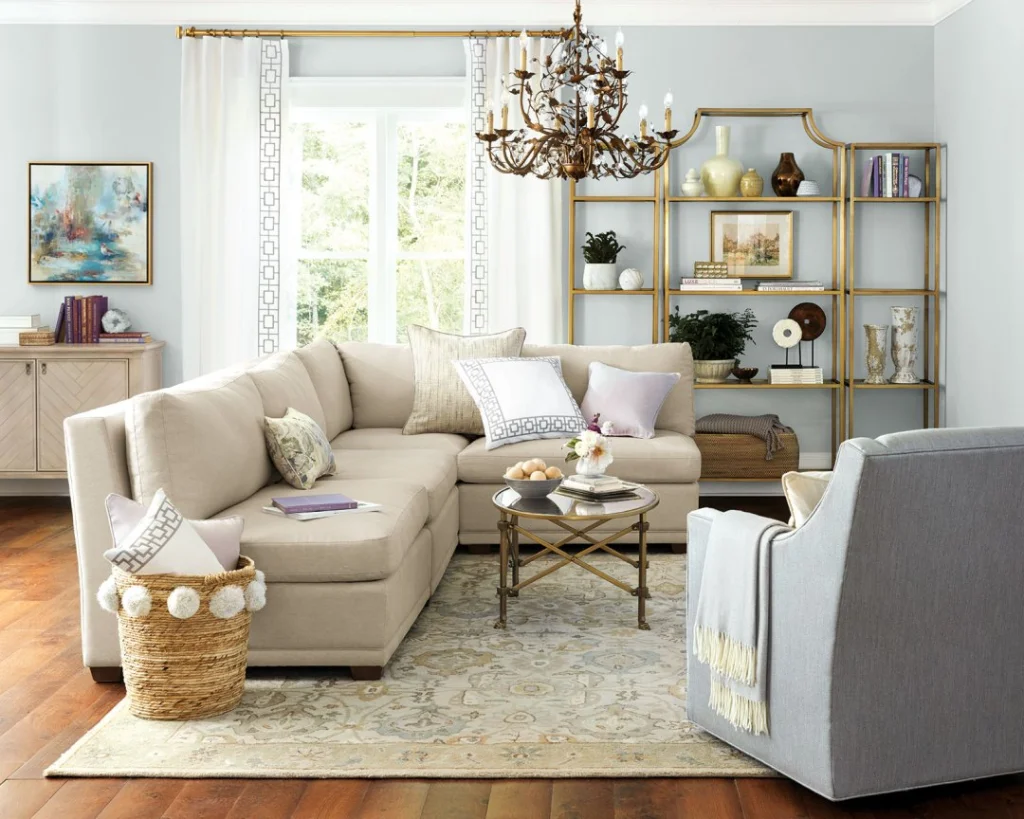
Buy the big stuff first. A good bed and a properly sized sofa are the home decor essentials every new homeowner needs before anything else. HGTV and the design team at Décor Aid both say to sort out where you sleep and where you sit, then let everything else follow. Your sofa becomes the anchor that the whole living room builds around. So skip the fancy headboard, the decorative bowls, and the trendy accent chair for now. If you only buy one upgradeable seating piece, look at a modular sectional. The units come apart and rearrange as you figure out your space, and budget versions run around $600 to $1,500. Living with a half-empty room for a few weeks beats returning a couch you rushed to buy.
2. Float Your Furniture Off the Walls
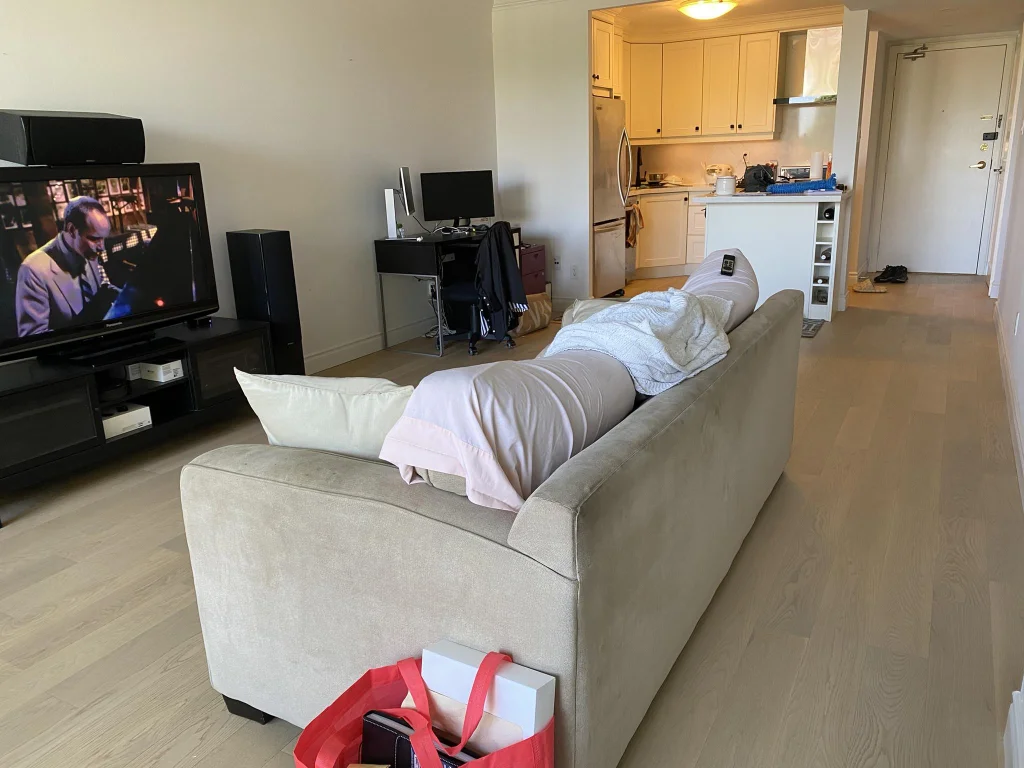
Here’s the move almost nobody expects. Pulling your sofa away from the wall makes a room feel bigger, not smaller. Simplicity Homes and Décor Aid both call wall-hugging the most common placement mistake new owners make. When everything sits flush against the walls, you get a waiting-room vibe where people sit too far apart to talk. Pull the sofa and chairs in a few inches and the whole space breathes. In a big open room, you can even use the furniture itself to split things into a sitting zone and a reading zone. One more thing: keep about 36 inches clear in your main walkways so nobody has to squeeze past the coffee table.
3. Pick a Warm Neutral as Your Base Color
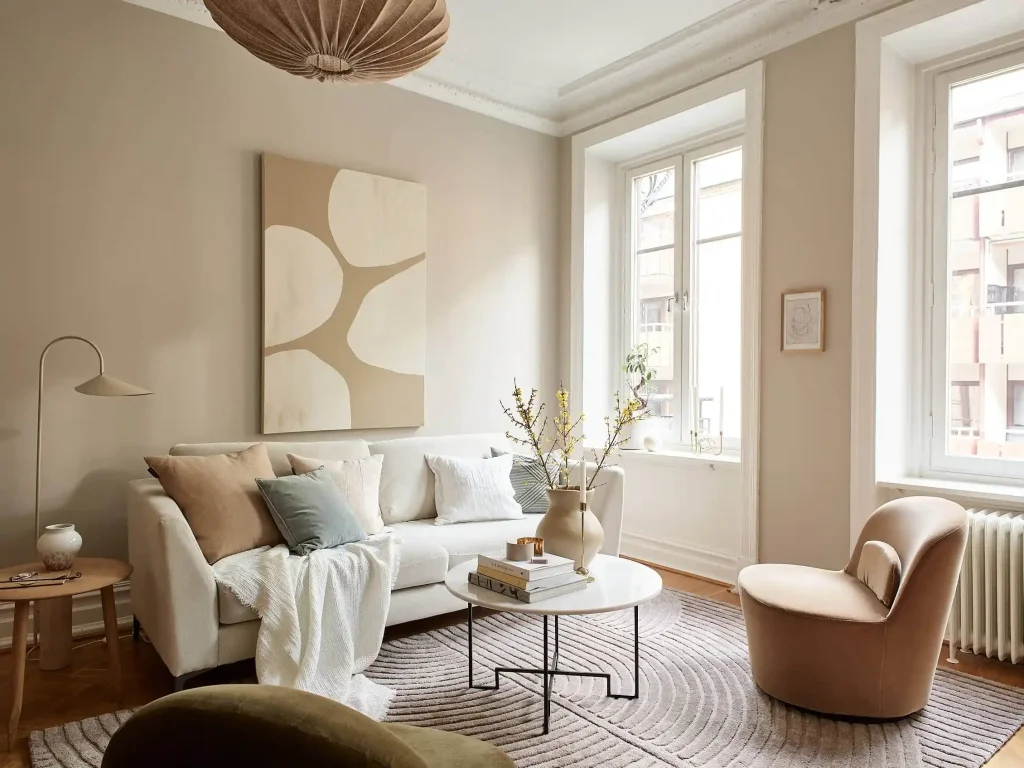
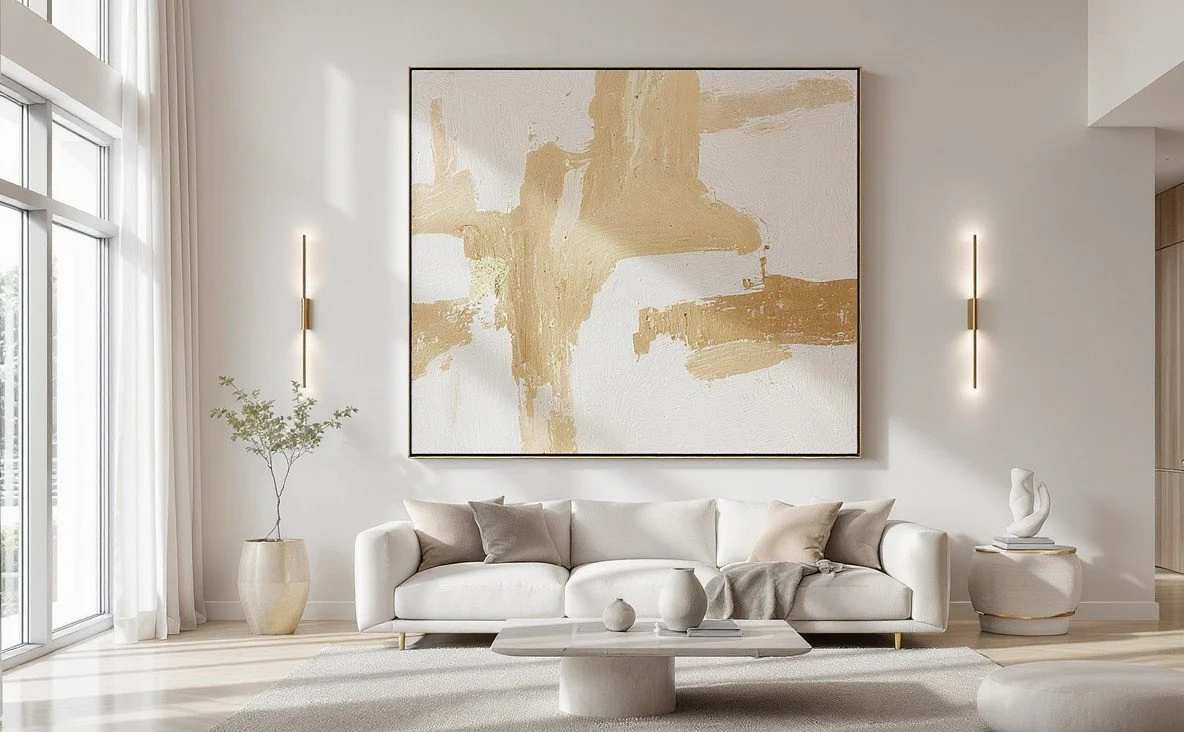
If you paint nothing else, paint your walls a warm neutral. The cool grays and stark whites that ruled the 2010s now read dated. Elizabeth Graziolo of Yellow House Architects put it plainly to Homes & Gardens: an all-white and gray palette can instantly make a home look dated. So what do you reach for instead? Sherwin-Williams named Universal Khaki its 2026 Color of the Year, a sandy mid-tone with a soft green undertone. Their color director Sue Wadden calls it a timeless, go-anywhere shade. Benjamin Moore went deeper with Silhouette, an espresso brown. For most first-time homeowners, a warm greige or putty tone is the safest base that still feels current. Always tape a big swatch to the wall and look at it in morning and evening light. Color shifts a lot between a north window and a south one.
4. Color-Drench One Small Room
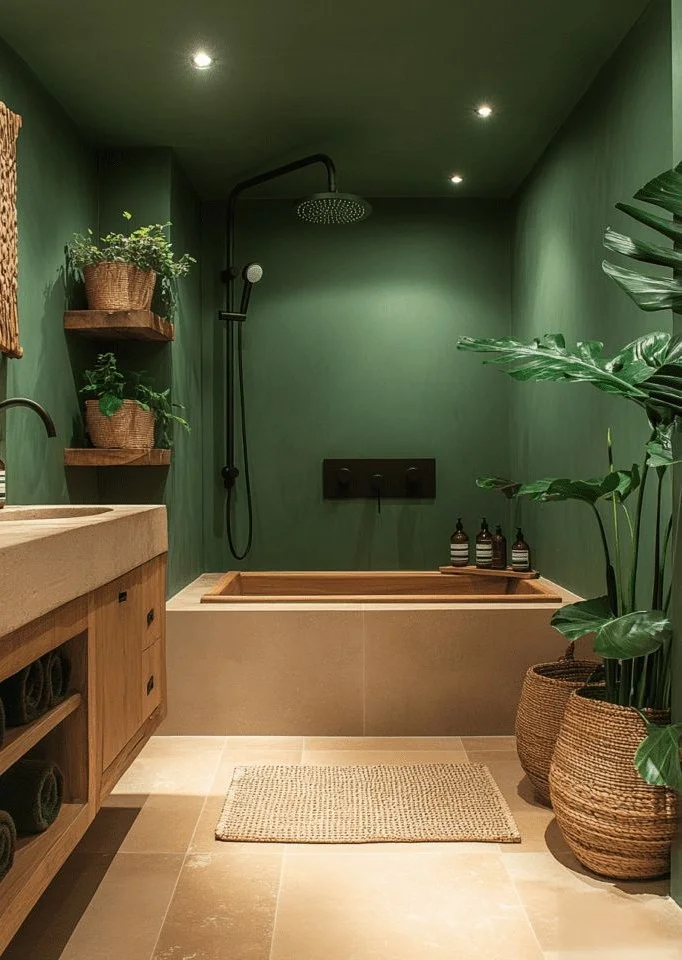
Want to try a bold color without risking your whole house? Drench one small room. Color-drenching means painting the walls, trim, and ceiling all the same shade, and Young House Love and Sierra Living Concepts both flag it as a defining 2026 look. A powder room, a small office, or an entry closet is the perfect test spot. Pick something deep, like Behr’s Hidden Gem smoky jade or a chocolate brown, and commit the whole little room to it. The effect feels rich and finished, and it only takes a gallon of paint. Small rooms are where you get to be brave. If you hate it, you’ve only repainted a closet.
5. Layer Your Lighting From Day One
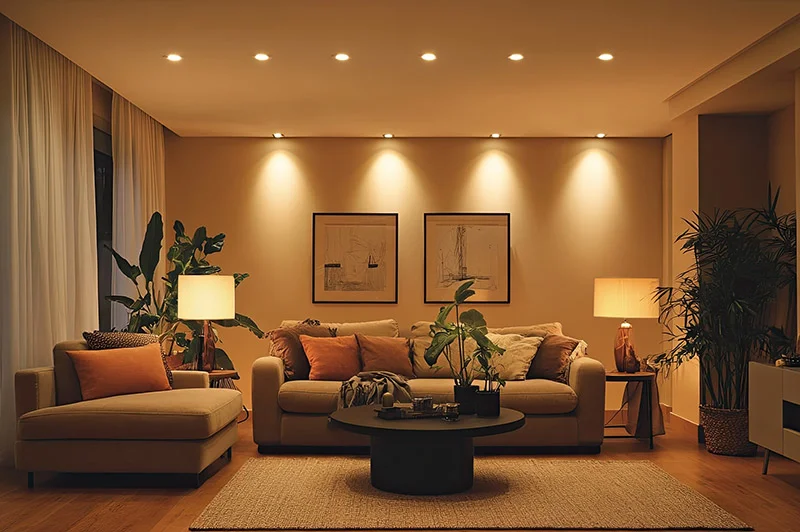
One overhead light is not enough, and it never was. The harsh glow from a single ceiling fixture makes a room feel flat and unfinished. The fix is to layer your light. You want a mix: something overhead, a table lamp or two, and a task light where you read or work. Classic Casual Home points out that new owners almost always leave lighting for last, after the budget is gone, and then sit in the dark. Don’t do that. Two lamps will instantly soften an echoey living room and give it a lived-in feel. Use warm white bulbs, not the blue-white kind. Pools of soft light at different heights do more for a room than almost any other quick fix.
6. Stop Matching Your Furniture
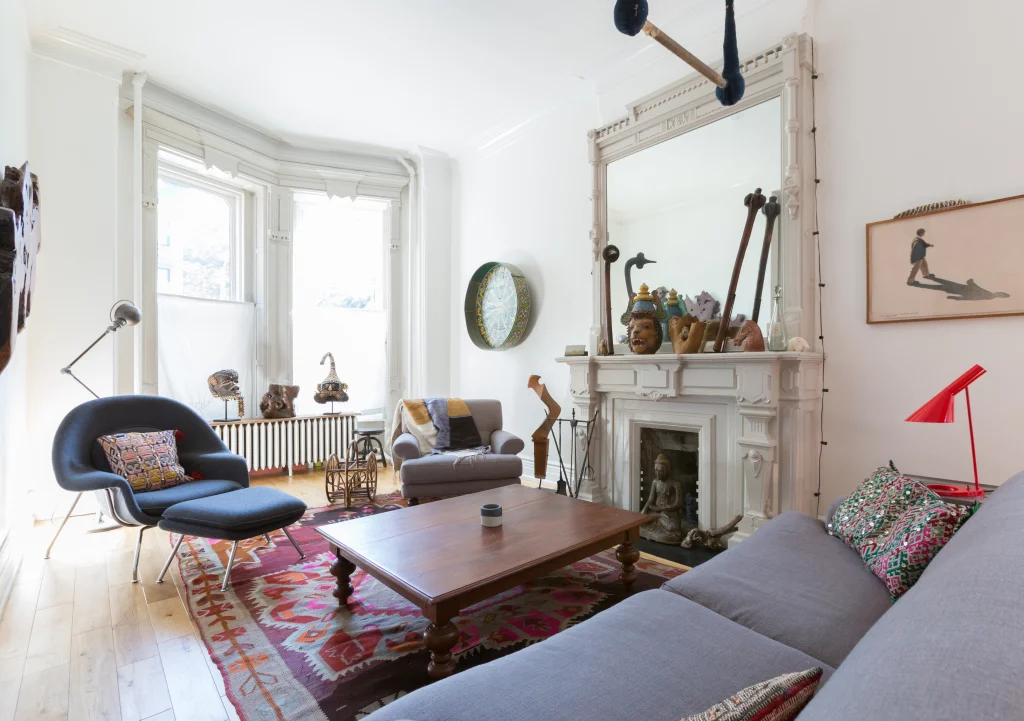
Put down the matching furniture set. Buying the sofa, the loveseat, and the matching armchairs all in one go is the fastest way to make your home look dated. Interior stylist Anna Smith of Hither & Thither calls matched sets one of the top first-timer mistakes, and HGTV flat-out calls matching a myth you should ignore. The look everyone wants in 2026 feels collected over time, like you found each piece on its own. That doesn’t mean nothing can match. A pair of matching nightstands or two of the same chair is fine. Just don’t buy your dresser, bed, and side tables as one boxed set. Mix an old piece with a new one and the room gains character right away.
7. Mix Wood Tones on Purpose
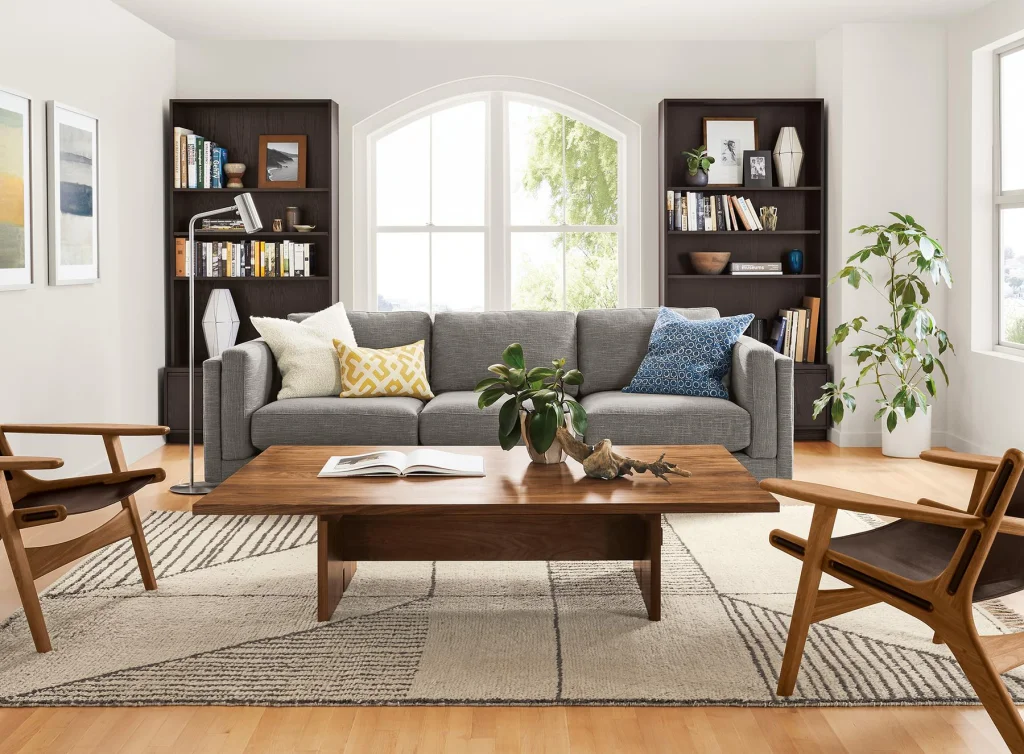
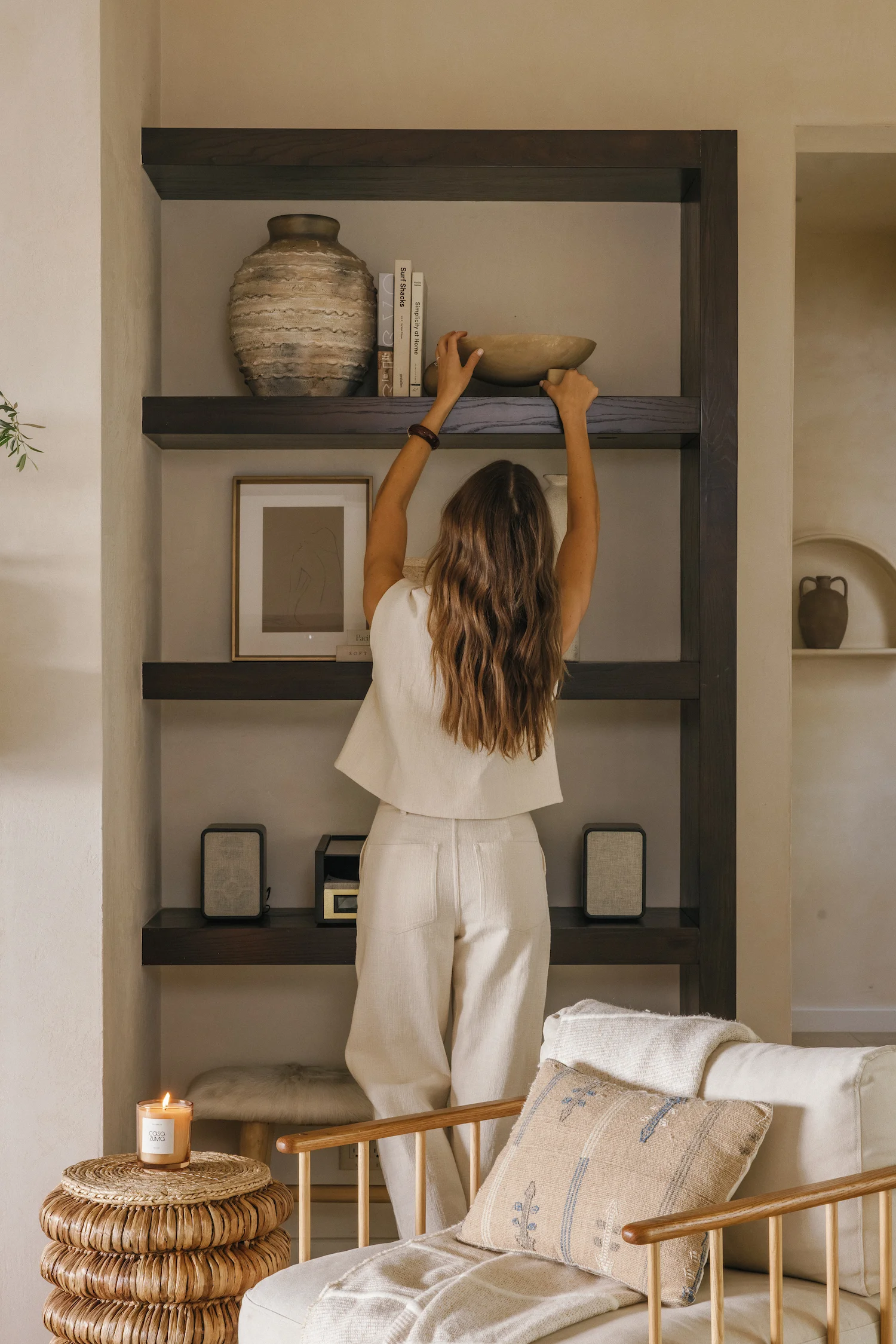
You don’t have to match every wood in the room. In fact, you shouldn’t. Too much of one wood tone goes flat and boring fast. Mixing a few tones adds depth and a hand-collected feel, and Woodgrain’s 2026 trend report puts warm wood front and center this year. Here’s a simple rule. If your room already has a lot of color or pattern, stick to one or two wood tones so things don’t get busy. If your room is quiet and neutral, you can play with more variety, like a darker dining table over a lighter floor with a mid-brown shelf nearby. The key is letting the tones be clearly different, not almost-the-same. Almost-matching is what looks like a mistake.
8. Buy One Good Rug per Room and Size It Up
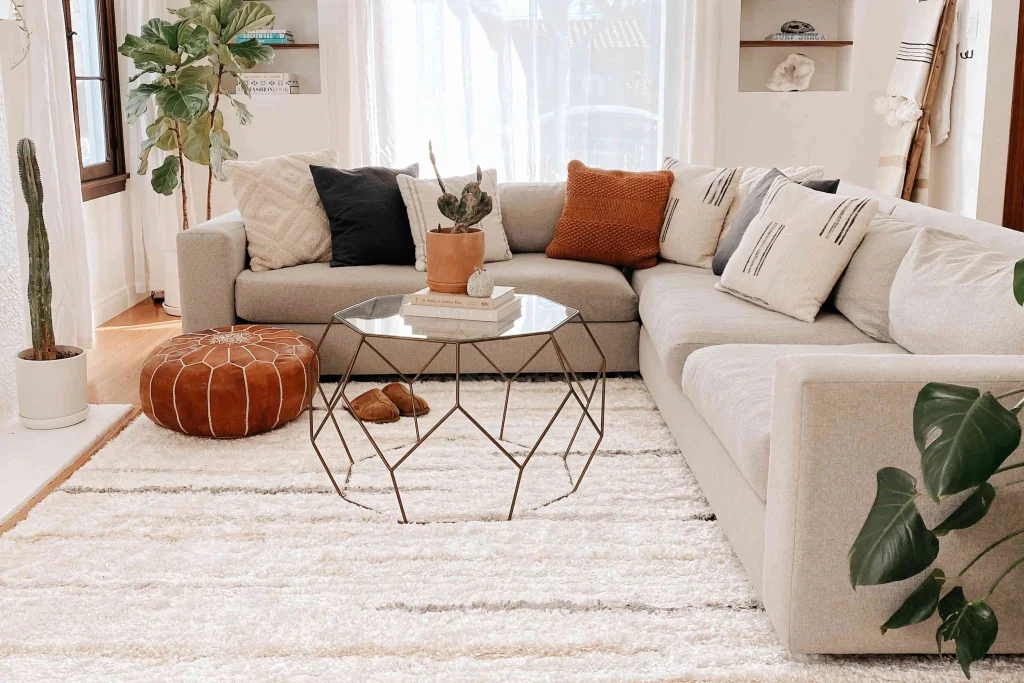
A rug grounds a whole room, so it’s worth getting right early. The biggest rookie mistake is buying one too small. A tiny rug floating in the middle of the floor makes everything around it look off. Size up so the rug sits under at least the front legs of your main furniture, and ideally under two pieces. The team at Fableroom recommends a wool or wool-jute rug in an abstract or simple weave, since that style works across almost every 2026 look. Plan to spend around $150 to $400 for a solid 8×10 in a wool blend or jute. Hand-knotted wool costs more. Think of the rug as a foundation purchase, not an afterthought, and buy it before you fill the room with smaller stuff.
9. Use Removable Upgrades While You Figure Things Out
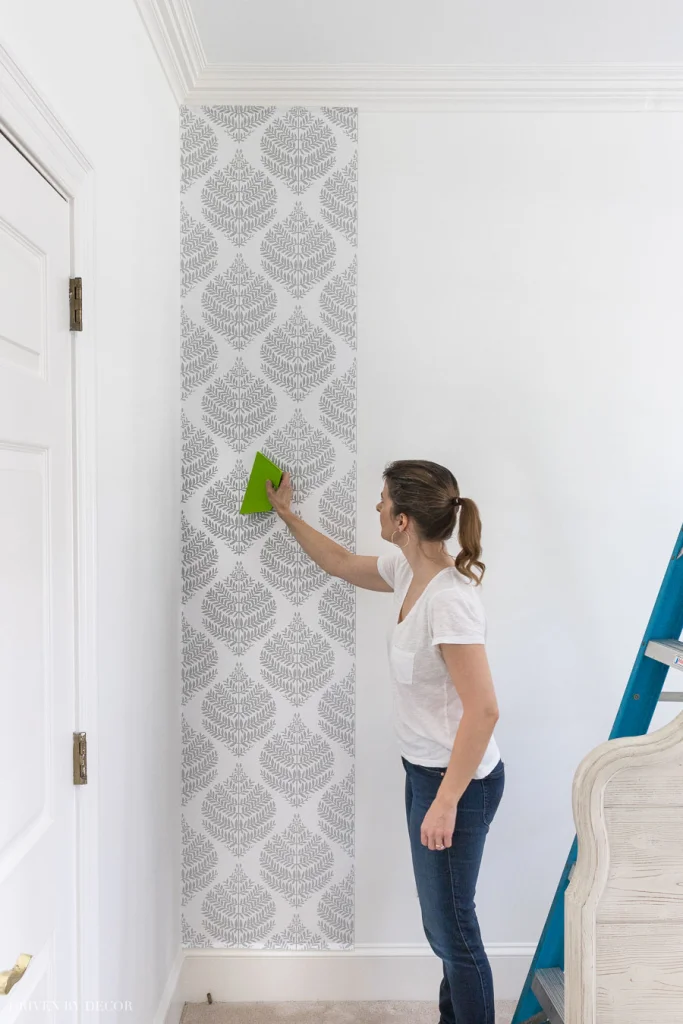
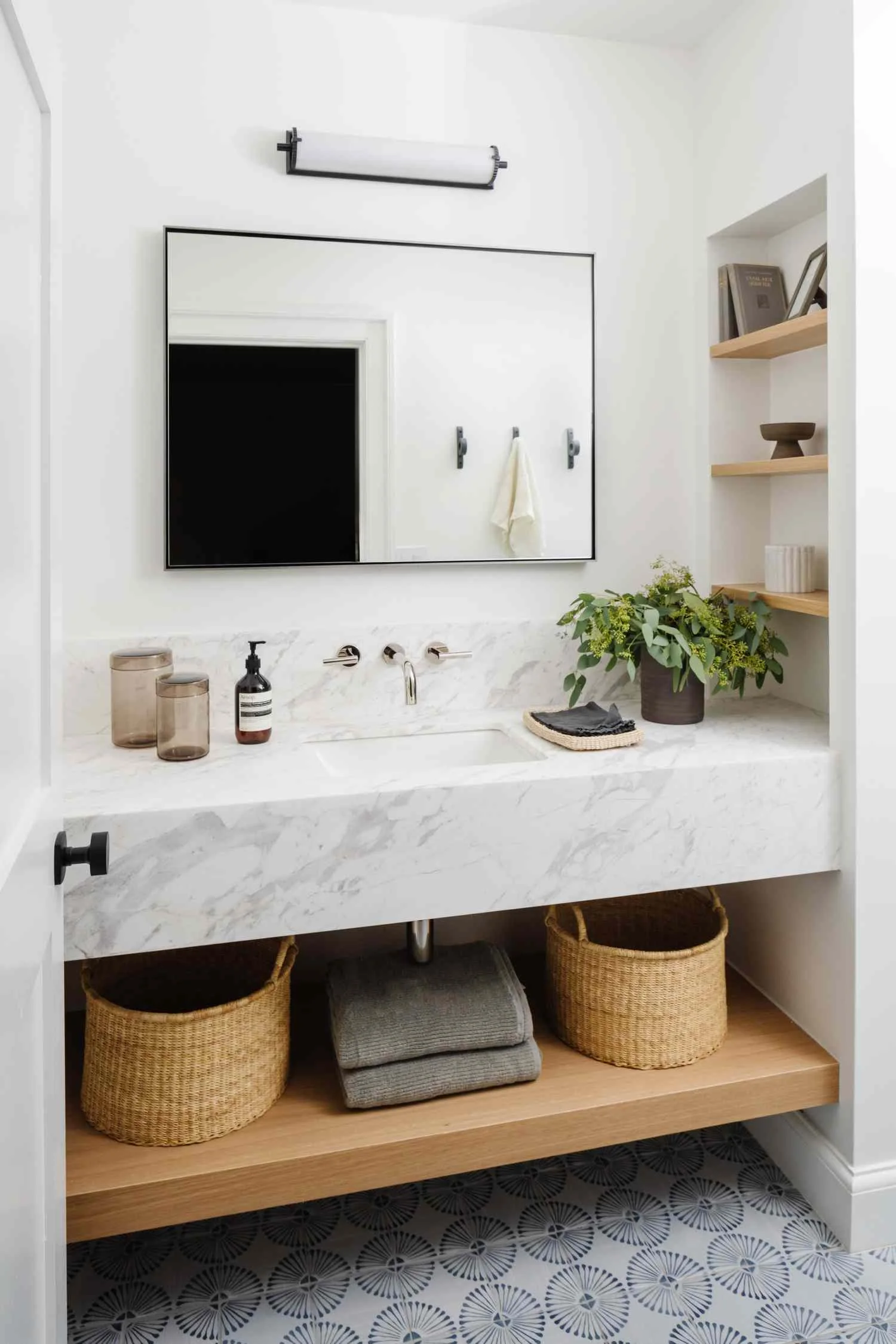
You don’t have to commit to everything on day one. Some of the best changes peel right back off. Peel-and-stick wallpaper, contact paper, swappable cabinet hardware, and fresh outlet switch covers all give you a real upgrade with zero permanence. HanoDecor calls peel-and-stick wallpaper a renter-friendly miracle, and it works just as well for owners still learning a house. A roll runs about $30 to $60, and contact paper is often under $20. Try it on one accent wall, inside a powder room, or on the back of a bookshelf for a little surprise. New switch plates and drawer pulls cost a few dollars and instantly make builder-basic rooms feel considered. Live with these low-risk swaps first, then decide what’s worth making permanent.
10. Decorate Your Walls With What You Already Own
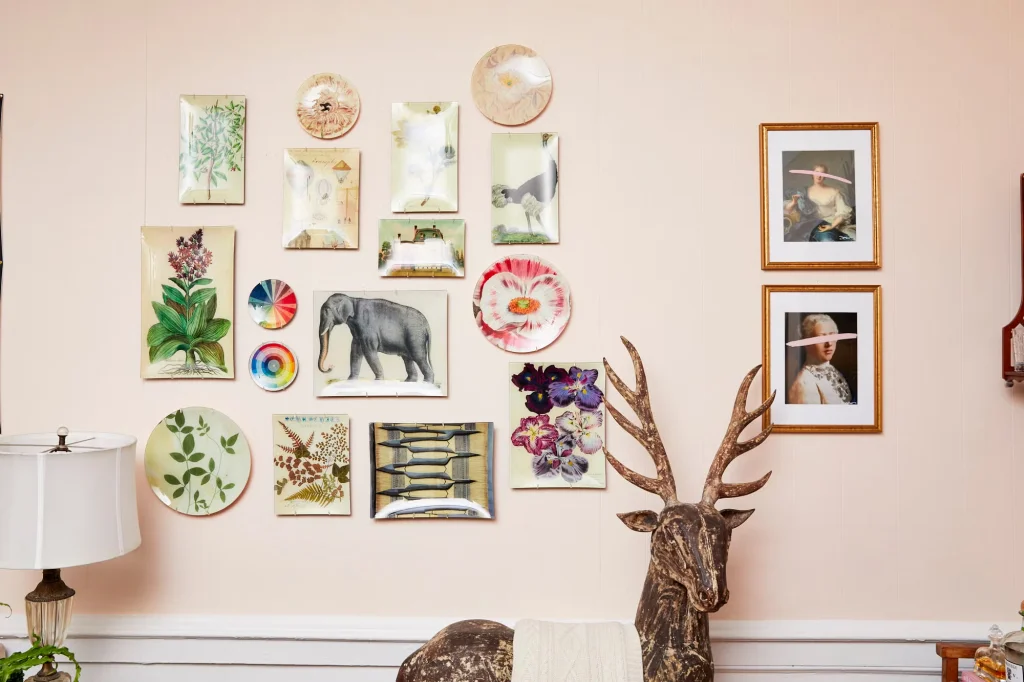
Before you buy a single mass-produced print, look at what you already have. Baskets, plates, framed photos, travel finds, even a stack of well-loved books can become your wall decor. Bless’er House spotted this all over the HGTV Dream Home 2026, where collections were hung as art instead of generic canvases. Pinterest’s 2026 forecast says people are done copying aesthetics and want their homes to feel like a personal manifesto, not a showroom. That’s great news for your wallet. A wall of plates you actually use or photos that mean something costs almost nothing and tells your story. Group a few related pieces together and let them breathe. This is the cheapest way to make a first home feel like yours.
11. Embrace Empty Space and Decorate Slowly
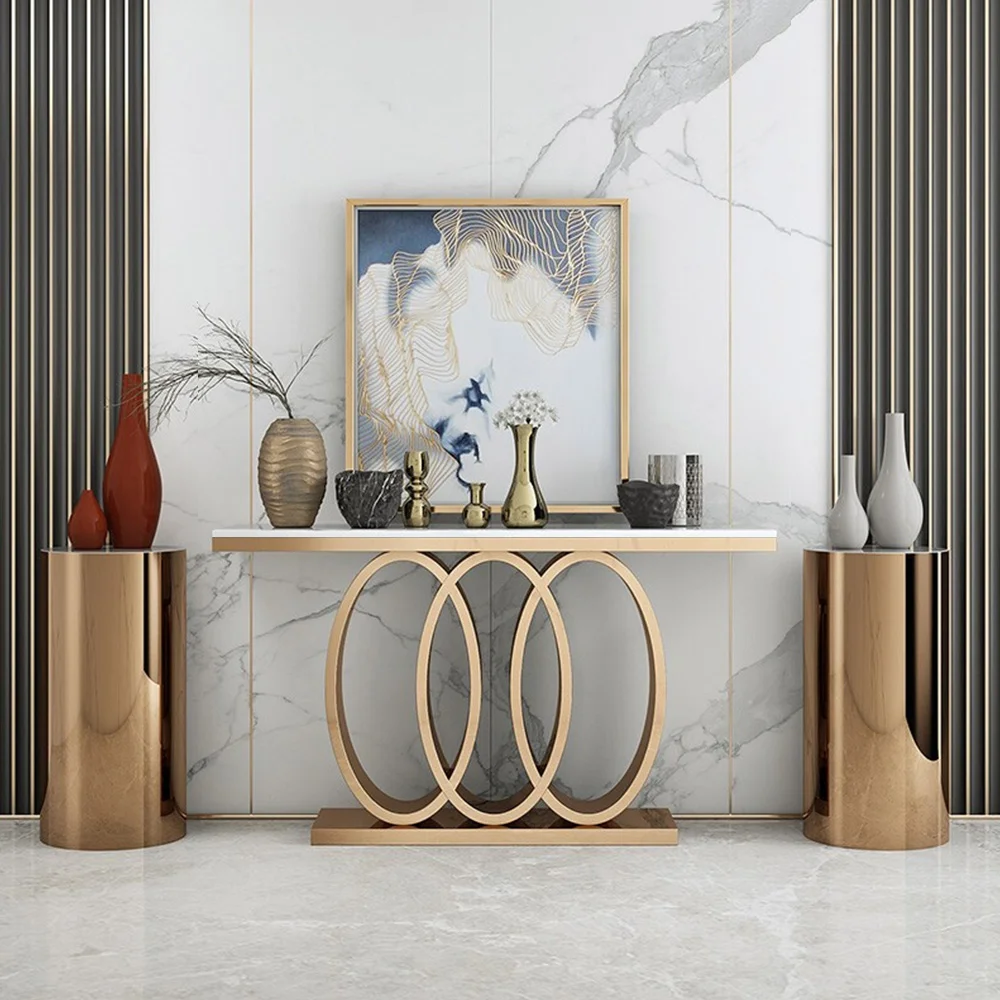
You don’t need to fill every surface, and trying to will stress you out. The big 2026 idea is something StyleBlueprint calls midimalism, a middle ground between bare minimalism and crowded maximalism. It means warmth and personality with room to breathe. Empty space is not a failure. It actually makes the pieces you do own look better and more deliberate. Before you buy something to fill a corner, ask yourself a simple question that Thrifty and Chic suggests: would you miss this if it were gone? If not, leave the corner empty for now. The best decorating ideas for first-time homeowners often come months after move-in, once you know how you really use each room. Slow is allowed. Slow is smart.
12. Add One Curved or Textural Statement Piece
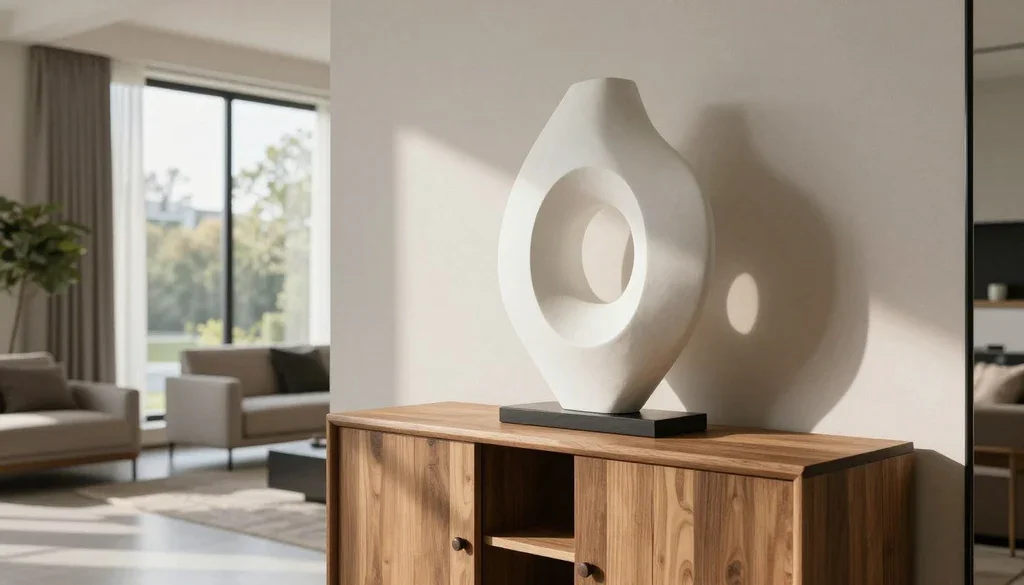
End with one piece that softens the whole room. New homes often feel like plain boxes, all straight lines and hard corners. A single curved or sculptural piece fixes that fast. Think an arched mirror, a rounded chair, a scalloped edge, or a sculptural lamp. Woodgrain’s 2026 report points to curved and organic shapes as a defining look, and modern cottage softness is having a real moment. Here’s the honest part. Some designers are already tired of curves on everything, so don’t round out your entire room. One or two curved moments against your straight-lined furniture is the sweet spot. That contrast is what makes the curve feel special instead of like a fad you went all in on.
Take It One Room at a Time
Your first home doesn’t have to be finished to feel like yours. The truth is, the best places come together slowly, piece by piece, as you figure out how you actually live. Buy the big things first, give your rooms room to breathe, and let the small stuff show up over time. None of this is a race, and an empty corner today is just space waiting for the right thing later. Pick one idea from this list and try it this week. Maybe that’s taping a paint swatch to the wall, pulling your sofa off the wall, or hanging a few plates you love. Small moves add up. Which idea are you starting with first?