18+ Decorating Ideas for an Empty New House

✔ Written & fact-checked by Sophie — last reviewed June 23, 2026
You Have the Keys. Now What?
You got the keys. You walked through every empty room. And somewhere between the excitement and the third bare wall, it hit you. You have no idea where to start.
That feeling is normal. A whole house full of empty rooms is a lot. Most people try to fix it by buying everything at once, and that’s exactly how you end up overwhelmed and broke by week two.
So here’s the plan. These 18 decorating ideas to transform an empty new house are stacked in order. The early ones are the foundation moves you do first. The later ones are the fun finishing touches you add over time. You don’t have to do all of them this month. You don’t even have to do them this year.
Here’s the good news for 2026. The trend right now is lived-in, personal homes that feel collected over time. Designers are done with the perfect showroom look. That means a slowly decorated home isn’t behind. It’s exactly right. Let’s start.
1. Live in the Empty House Before You Buy Anything
The fastest way to waste money is to fill every room the first weekend. Don’t. Live in the space for a few weeks first.
You’ll learn things you can’t know on paper. Which corner gets soft morning light. Where you actually drop your keys. Which room you keep walking into to relax. HGTV has long suggested waiting around two months before big purchases, because how you think you’ll use a house and how you really use it are almost never the same. Dan O’Malley of M/I Homes puts the biggest beginner mistake simply. People overdo it. Less is more, especially at the start.
2. Pick One Color Palette for the Whole House
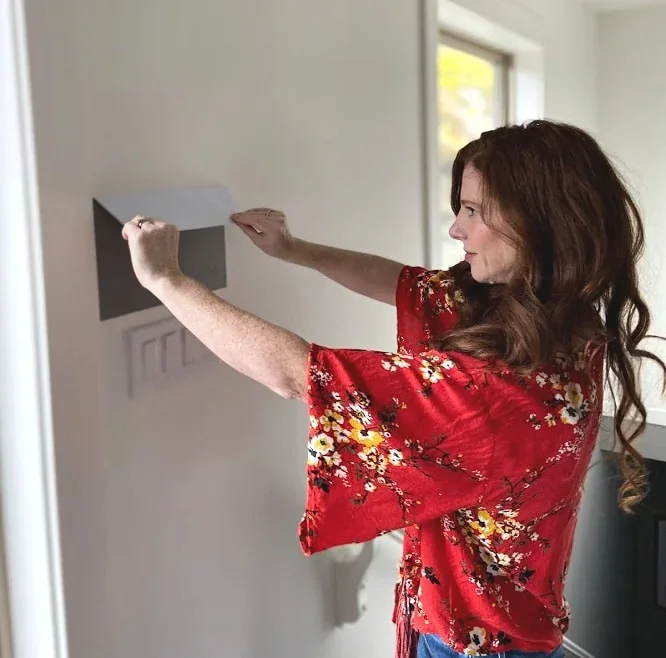
Before you paint a single wall, choose colors that work everywhere. Pick one or two soft neutral base colors, then a couple of accent colors you love. That’s it.
This keeps your home flowing room to room instead of feeling like a patchwork. And in 2026, skip cool gray. Designers are calling it dated. Nina Long, Principal Designer at Mathews Design Group, says she’s seeing a clear move away from icy grays and blue based whites. Warm neutrals have taken over. Test colors the cheap way first. Peel and stick paint samples run about $6 each, and they save you from painting a whole room the wrong shade. One thing to remember. Flow doesn’t mean matching. Every room can feel connected without being identical.
3. Find One Inspiration Piece to Build Around
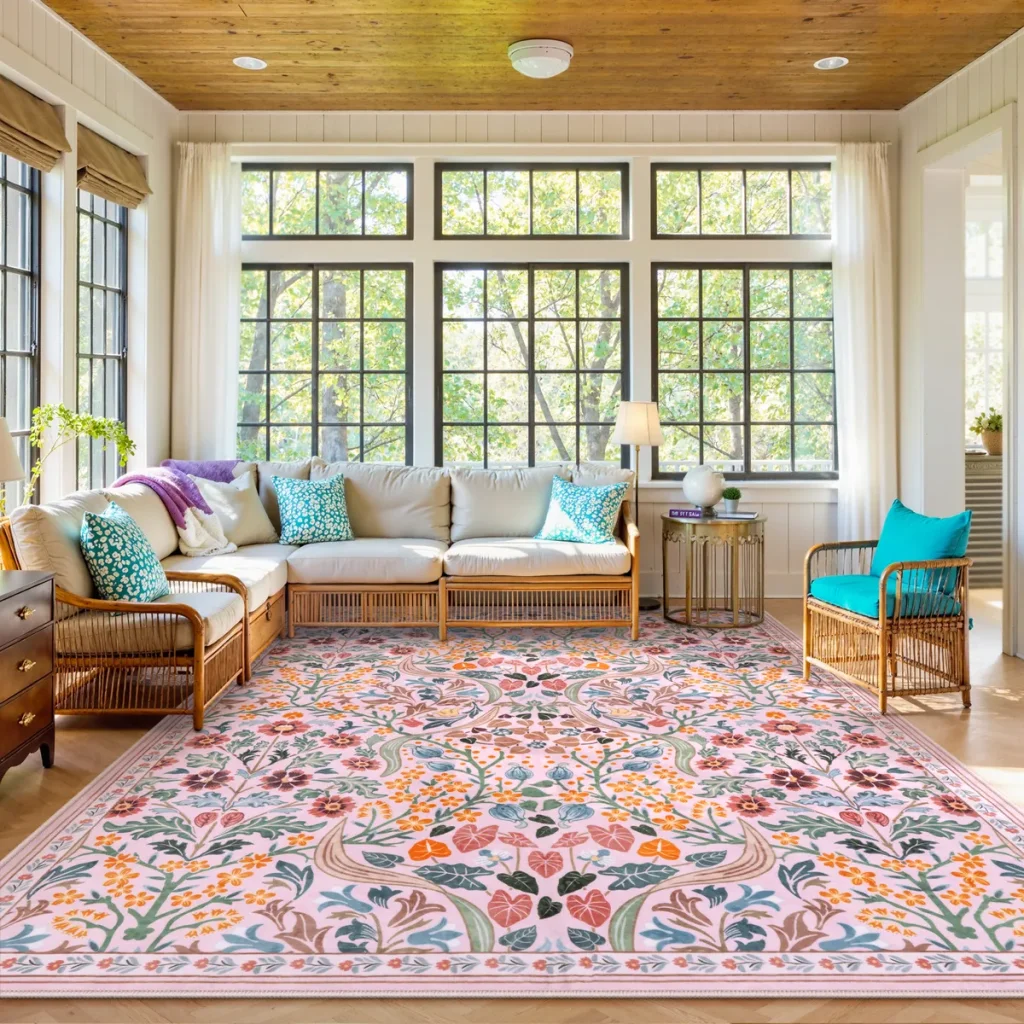
A Pinterest board with 400 pins won’t help you. One real piece will. Pick a single thing you love. A rug, a piece of art, a pillow, even a fabric.
Let that one piece set your whole color scheme. Pull two or three colors from it and use those as your guide for the room. This is how a lot of designers actually start, and it works because it gives you limits. Limits make decisions easier. Instead of choosing from every color and style on earth, you’re just asking one question. Does this go with my inspiration piece? If yes, it’s in. If no, skip it.
Image Prompt: “Slightly angled iPhone photo of a patterned area rug partly unrolled on a bare wood floor, the rug is the clear hero filling most of the frame, one corner of the rug slightly crumpled, soft daylight from a window out of frame, deep focus throughout, foreground rug pattern, background empty wall meeting floor, two to four muted tones pulled from the rug, casual iPhone photo taken by the homeowner, slightly imperfect framing, real lived-in space, not styled for social media”
Stock Image Keywords: patterned area rug floor | rug as design inspiration | colorful rug wood floor | rug unrolled new home | rug color palette decor
4. Decide Which Room to Decorate First
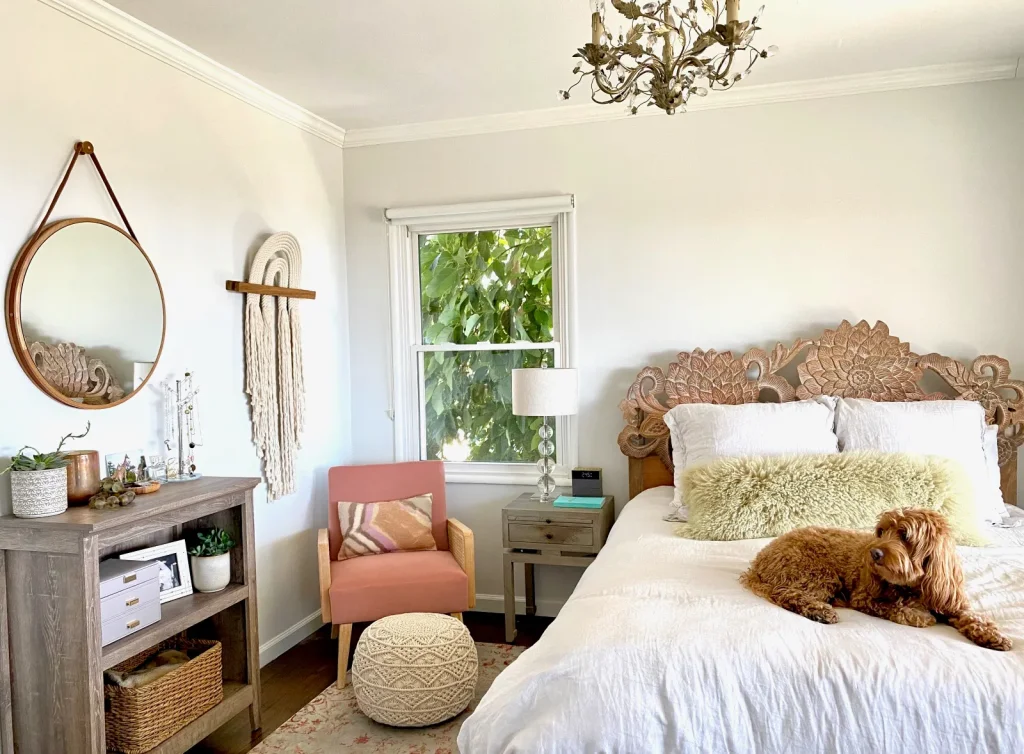
You can’t do every room at once, so don’t try. Pick two or three rooms, max. Then start with just one.
Which one? Go with the room you spend the most time in, or the one that makes you feel most at home when you walk in. For most people that’s the bedroom or the living room. Get that space working before you touch anything else. Decorating one room at a time is the advice design pros repeat over and over, and it’s the difference between a home that comes together and a house full of half finished projects. Finish one room. Feel the win. Then move on.
5. Find Each Room’s Focal Point Before Adding Anything
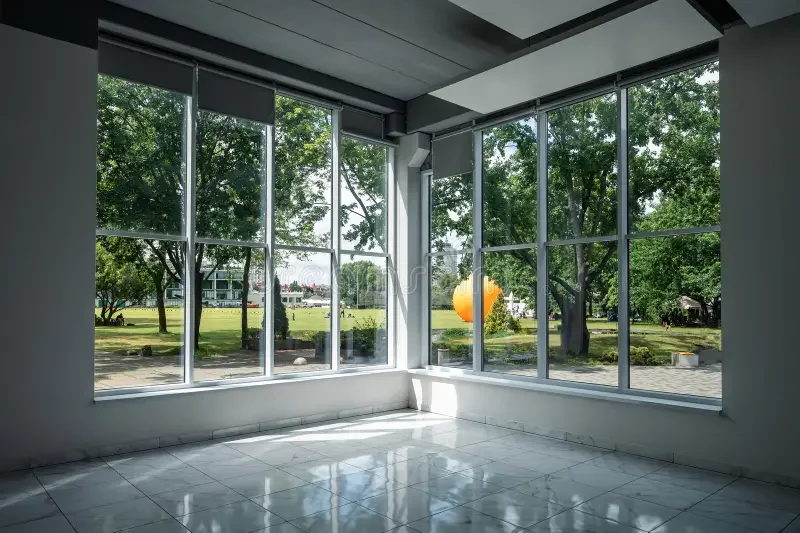
Every room already has a star, even when it’s empty. A big window. A fireplace. An arch or a built in. Your job is to spot it and decorate toward it.
Walk into the room and notice what your eye lands on first. That’s your focal point. Build the furniture layout around it instead of fighting it. If a room has no obvious feature, you can make one later with a painted accent wall or a big piece of art. The point is to use what the house already gives you. A home has a look of its own before you add a single thing. Work with those bones, not against them.
Image Prompt: “Three-quarter view iPhone photo of an empty room with a large window as the clear hero, bare walls around it, sunlight pouring in and slightly overexposing the glass, plain floor below, deep focus throughout, foreground floor, mid-ground window wall, background side wall, two to three neutral tones, casual iPhone photo taken by the homeowner, slightly imperfect framing, real lived-in space, not styled for social media”
Stock Image Keywords: large window empty room | room focal point window | bare room big window light | architectural feature empty home | sunlit empty room
6. Paint the Walls a Warm 2026 Neutral
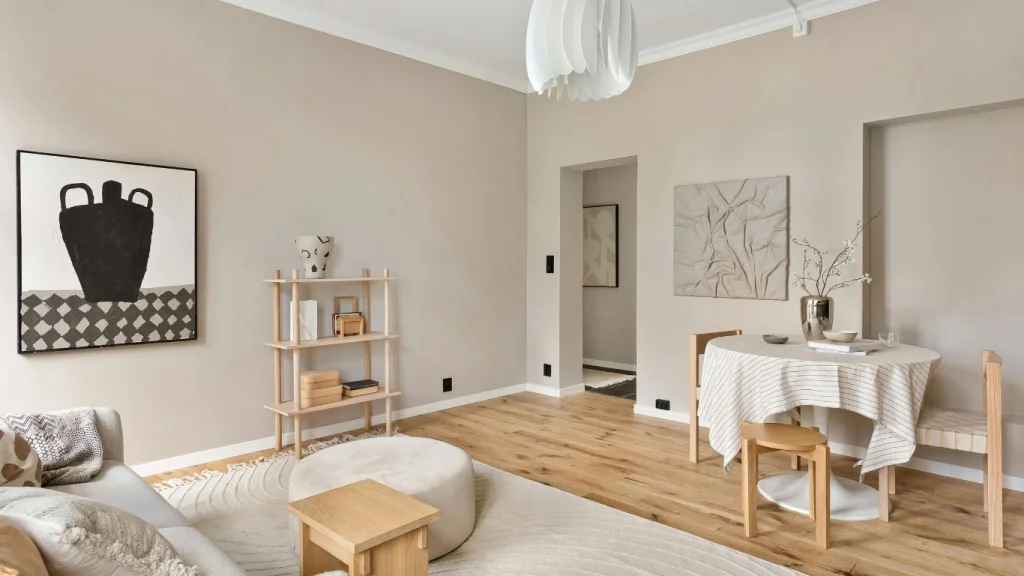
Paint is the cheapest way to change a whole room, and it’s where your foundation really starts. For 2026, go warm.
Sherwin-Williams named Universal Khaki (SW 6150) its Color of the Year. It’s a soft sandy beige with a hint of green, and the brand’s Sue Wadden calls it the easygoing neutral that makes every room feel pulled together. If beige feels too plain, a warm white like SW Alabaster or Benjamin Moore White Dove does the same job with more light. One heads up. Paint changes with the light in each room. North facing rooms pull cooler and bring out green undertones. South facing rooms read warmer and more golden. Always test on the actual wall before you commit.
Image Prompt: “Eye-level iPhone photo of a freshly painted warm beige wall, the wall and how the light hits it is the hero, a paint roller leaning against the baseboard, afternoon light grazing across the surface, deep focus throughout, foreground roller, mid-ground painted wall, background corner of the room, two warm neutral tones only, casual iPhone photo taken by the homeowner, slightly imperfect framing, real lived-in space, not styled for social media”
Stock Image Keywords: warm beige wall paint | universal khaki paint color | freshly painted neutral wall | warm white wall light | beige paint living room
7. Drench One Wall in a Dark, Warm Color
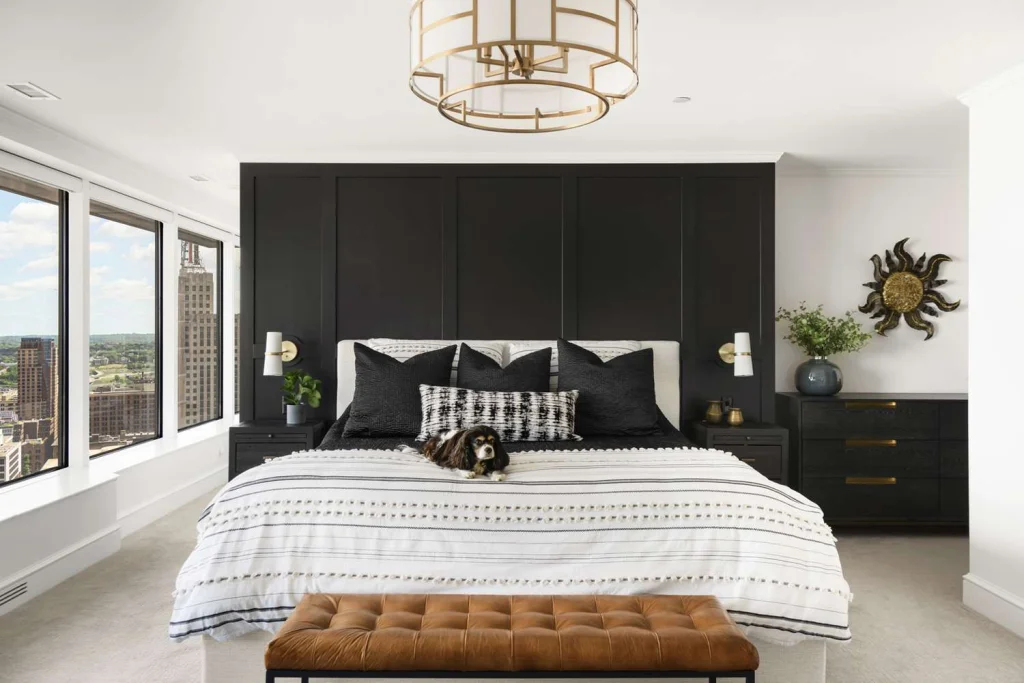
Once your base is set, pick one wall to go bold. Not the whole room. Just one.
Benjamin Moore’s 2026 Color of the Year is Silhouette (AF-655), a deep brown charcoal that works like a softer, warmer version of black. Paint one focal wall in it and the room instantly gets depth. Here’s the part people get wrong. They think a dark color makes a small room feel smaller. It usually does the opposite. A deep shade wraps a room and makes it feel calm and tucked in, not cramped. Try it behind your bed or behind the sofa for the biggest effect.
Image Prompt: “Slightly angled iPhone photo of a single dark brown charcoal accent wall behind a plain bed, the dark wall is the hero, the other walls a light neutral, soft daylight from the side, bedding with visible wrinkles, deep focus throughout, foreground foot of the bed, mid-ground dark wall, background lighter wall, three tones of dark brown and warm neutral, casual iPhone photo taken by the homeowner, slightly imperfect framing, real lived-in space, not styled for social media”
Stock Image Keywords: dark accent wall bedroom | charcoal brown wall paint | moody accent wall behind bed | silhouette benjamin moore wall | deep brown feature wall
8. Buy Your Biggest Furniture Piece First
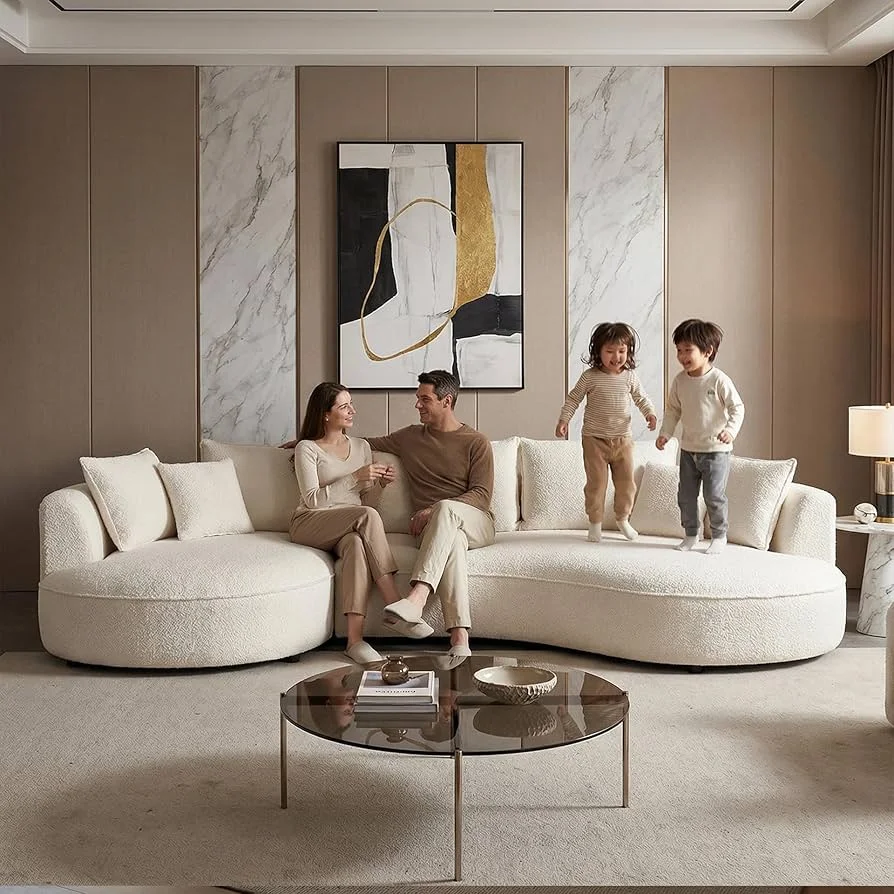
When you’re ready to spend real money, start with the biggest piece. In the living room, that’s the sofa. In the bedroom, the bed.
Buy the anchor first, then build the room around it. Industry estimates suggest furniture eats up close to 40% of what people spend on their homes, so this is the line item to plan for. Spend smart here. For the shape, 2026 is all about curves. Designers are reaching for rounded, deeper sofas because, as they put it, very straight lines can look a little cold and uninviting. A curved sofa softens the whole room the second it lands. Budget friendly curved sofas start around $700 to $1,500, with mid range options running higher.
Image Prompt: “Three-quarter view iPhone photo of a curved sofa as the clear hero in an otherwise simple living room, one throw draped over the arm, soft window light from the left, deep focus throughout, foreground floor in front of the sofa, mid-ground curved sofa, background plain wall with one small framed piece, two to three muted tones, casual iPhone photo taken by the homeowner, slightly imperfect framing, real lived-in space, not styled for social media”
Stock Image Keywords: curved sofa living room | rounded sofa neutral | modern curved couch | anchor sofa new home | deep curved sectional
9. Lay Down a Rug That’s Big Enough
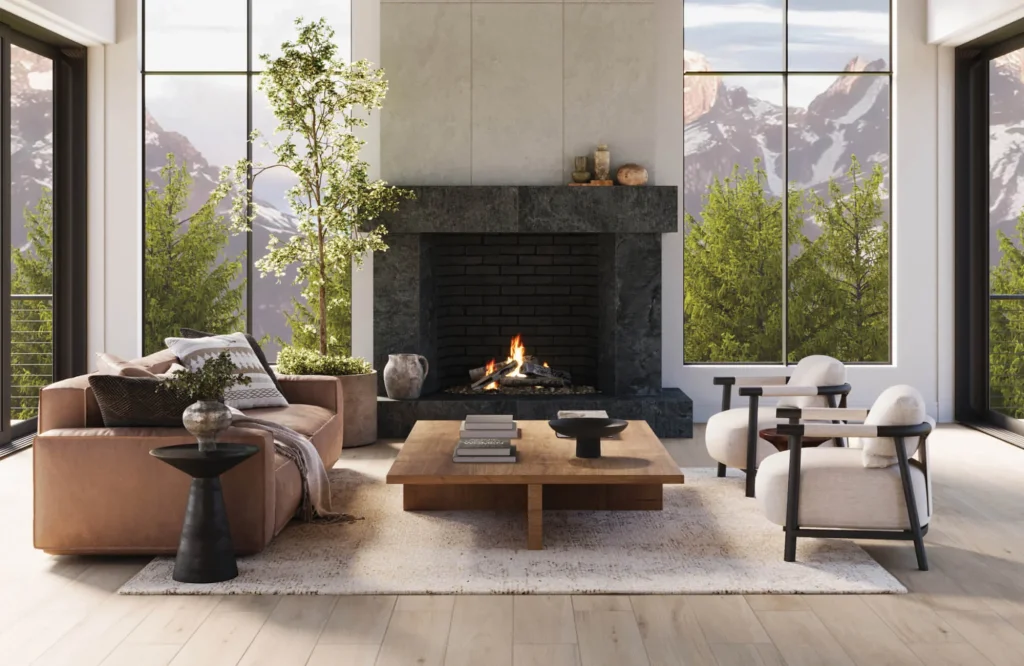
A rug pulls a room together fast, but only if it’s the right size. The mistake everyone makes is going too small.
Your rug should sit under at least the front legs of your main furniture, ideally all of it. A rug that’s too small makes the whole room look like it’s floating and unfinished. Go bigger than feels right and the space instantly settles. Texture matters too. A wool or hand knotted rug adds the kind of touchable, layered feel that’s big right now. It also softens noise in an empty echoey room, which your new house probably has plenty of. Expect to pay $150 to $600 for a good sized rug, more for hand knotted wool.
Image Prompt: “Eye-level iPhone photo looking down at a large textured rug covering most of a living room floor, the rug and how it meets the furniture legs is the hero, front legs of a sofa resting on it, one corner of the rug slightly bunched, daylight from a window out of frame, deep focus throughout, foreground rug texture, background sofa base, three cohesive tones, casual iPhone photo taken by the homeowner, slightly imperfect framing, real lived-in space, not styled for social media”
Stock Image Keywords: large area rug living room | rug under sofa legs | textured wool rug floor | big rug room size | rug placement living room
10. Hang Curtains High and Wide
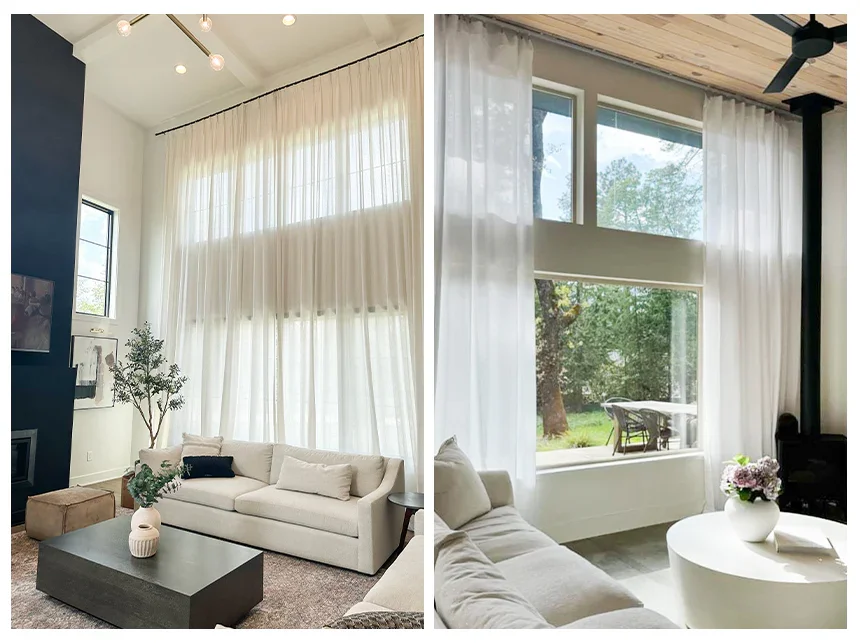
Bare windows make a room feel unfinished. Curtains fix that, but how you hang them changes everything.
Don’t mount the rod right above the window frame. Hang it close to the ceiling and let the panels stretch wider than the window on each side. This little trick makes your windows look taller and your whole room feel bigger. The fabric should just kiss the floor or pool slightly. Floods of light still come through during the day, and you get softness and privacy at night. Ready made panels are cheap, around $20 to $60 each, so this is a high impact change for not much money.
Image Prompt: “Three-quarter view iPhone photo of floor length curtains hung high near the ceiling beside a window, the curtains and their height are the hero, soft daylight glowing through the fabric, deep focus throughout, foreground floor where the curtain meets it, mid-ground curtain panel, background window slightly overexposed, two to three soft neutral tones, casual iPhone photo taken by the homeowner, slightly imperfect framing, real lived-in space, not styled for social media”
Stock Image Keywords: curtains hung high ceiling | floor length curtains window | tall curtain panels living room | neutral curtains natural light | curtains wider than window
11. Swap Out the Builder Lighting
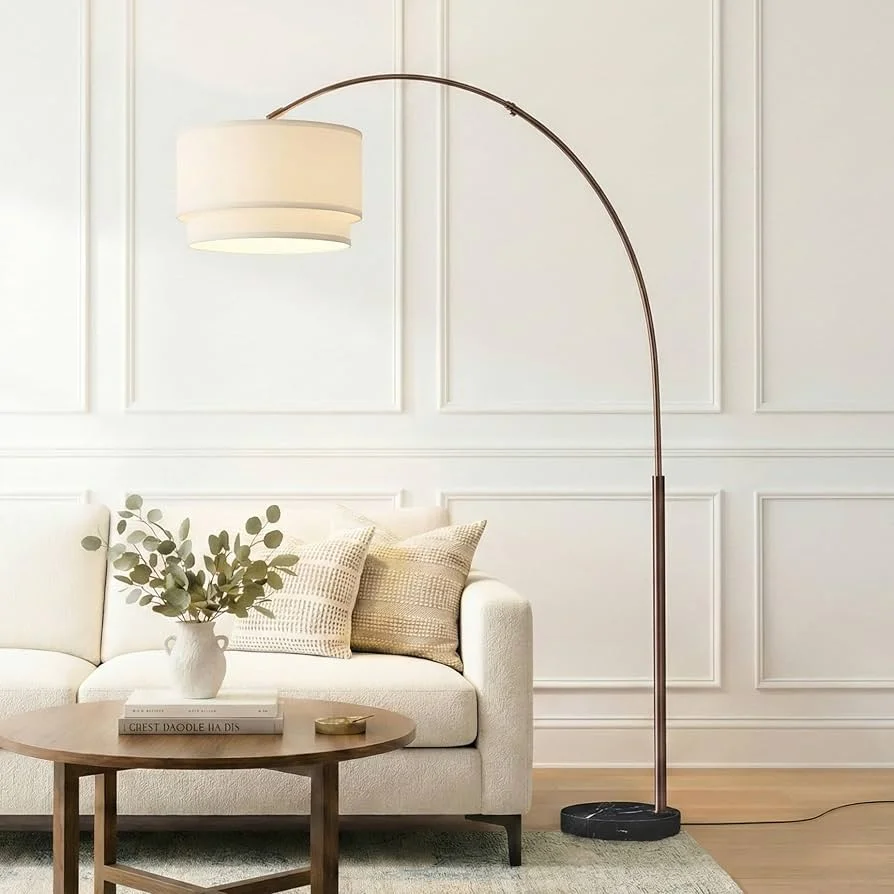
New houses almost always come with the same boring flat ceiling lights. The flush mount dome is the usual culprit. Swap it.
Those domes throw harsh, one note light that flattens a whole room. Designers now call them dated for good reason. The fix is layers. Add a floor lamp, a table lamp or two, maybe a wall sconce. Different light sources at different heights make a room feel alive instead of clinical. There’s an old design line worth remembering. Lighting is the jewelry of the home. You wouldn’t wear one piece and call it done, so don’t light a room that way either.
Image Prompt: “Eye-level iPhone photo of a corner of a room lit by a single floor lamp, the lamp and its warm pool of light is the hero, dusk light fading at the window behind it, a power cord visible running along the baseboard, deep focus throughout, foreground floor, mid-ground floor lamp, background dim wall, two to three warm tones, casual iPhone photo taken by the homeowner, slightly imperfect framing, real lived-in space, not styled for social media”
Stock Image Keywords: living room floor lamp corner | layered home lighting | warm lamp light room | replace ceiling dome light | floor lamp ambient lighting
12. Replace Cheap Hardware and Switch Plates
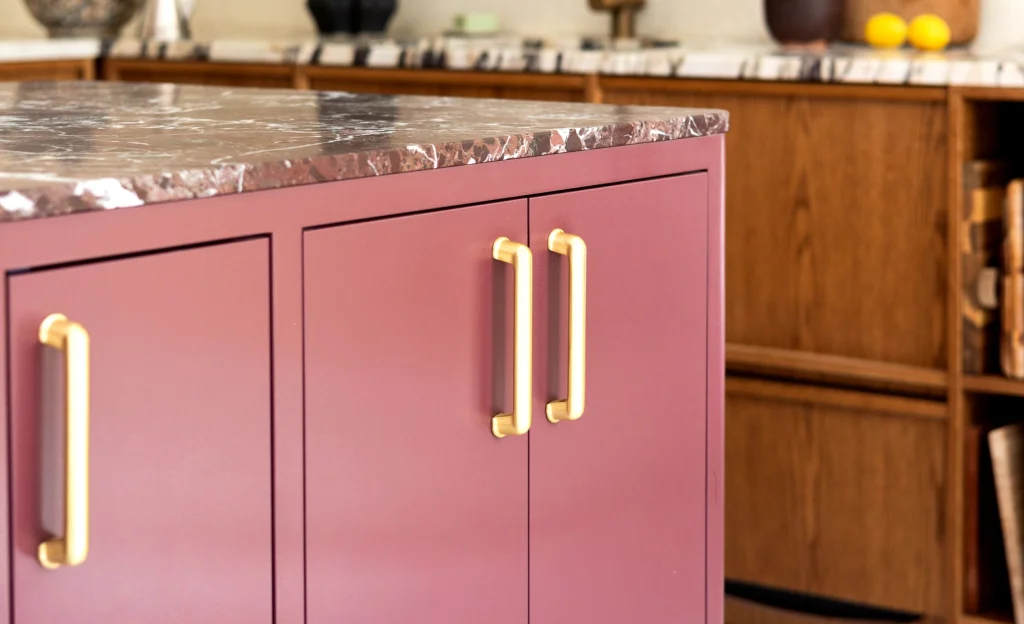
This one feels too small to matter. It isn’t. Swapping hardware is the cheapest way to make a house feel like yours.
New cabinet knobs and drawer pulls change the whole feel of a kitchen or bathroom for the price of a dinner out. While you’re at it, replace the yellowed plastic outlet covers and light switch plates the builder used. It’s a fast, almost free upgrade that instantly looks cleaner. For knobs, wood and rounded shapes are having a moment, so it’s an easy way to nod at current style. Small change, big payoff. You’ll notice it every time you open a drawer.
Image Prompt: “Three-quarter view iPhone photo of a hand attaching a new knob to a cabinet door, the knob is the clear hero, a screwdriver resting nearby, soft kitchen window light, deep focus throughout, foreground hand and knob, background plain cabinet front and a bit of counter, two to three muted tones, casual iPhone photo taken by the homeowner, slightly imperfect framing, real lived-in space, not styled for social media”
Stock Image Keywords: cabinet knobs hardware swap | new drawer pulls cabinet | changing cabinet hardware | wood cabinet knobs | updating kitchen hardware
13. Add One Real Vintage Piece to Each Room
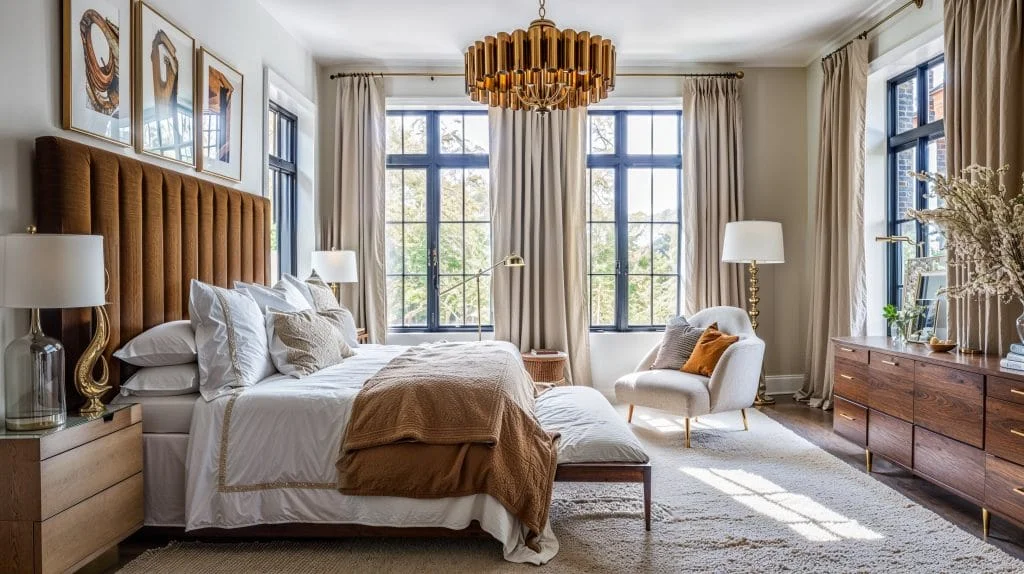
If you want a room to feel like it has a story, add something old. Designers swear by one rule. One truly vintage piece per room instantly adds soul.
A thrifted wood dresser, an old mirror, a worn side table. These break up the new build sameness and stop your home from looking like a furniture showroom. Designer Jessica Davis of JL Design says it plainly. It’s time to invest in some antiques. The best part for a new homeowner on a budget? Vintage is cheap. Estate sales, thrift stores, and online marketplace finds cost a fraction of retail, and the quality is often better than flat pack furniture. One old piece is all it takes.
Image Prompt: “Slightly angled iPhone photo of a vintage wooden dresser against a plain wall, the dresser with its worn finish is the hero, one drawer slightly open, daylight from the side, visible dust on the top surface, deep focus throughout, foreground floor, mid-ground dresser, background bare wall, two to three warm wood and neutral tones, casual iPhone photo taken by the homeowner, slightly imperfect framing, real lived-in space, not styled for social media”
Stock Image Keywords: vintage wood dresser room | thrifted antique dresser | old dresser against wall | secondhand furniture decor | vintage piece modern room
14. Mix Materials Instead of Buying a Matching Set
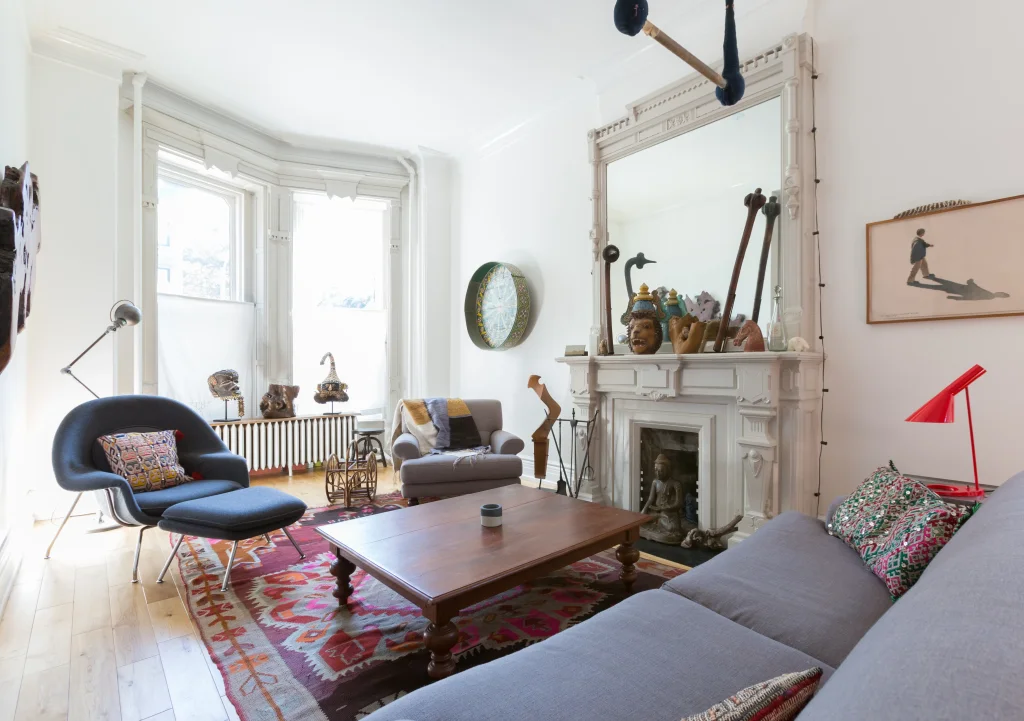
Here’s the freeing part. You don’t need a matching furniture set. In fact, you shouldn’t buy one.
Matching sets are a money trap and they’re going out of style. The collected, mixed look is what designers are after now. Instead of buying everything in one finish, mix it up. Pair wood with metal. Add something woven like a cane chair or a rattan basket. Combine a smooth surface with a rough one. The mix is what makes a room feel personal instead of ordered from a catalog. As long as your colors stay in the same family, mismatched pieces read as intentional, not accidental. Trust it.
Image Prompt: “Eye-level iPhone photo of a seating corner mixing a wood chair and a woven cane stool, the contrast between the two materials is the hero, soft window light, deep focus throughout, foreground floor, mid-ground the two seats, background plain wall, two to three natural tones, casual iPhone photo taken by the homeowner, slightly imperfect framing, real lived-in space, not styled for social media”
Stock Image Keywords: mixing wood and rattan furniture | mismatched furniture decor | wood metal cane mix | eclectic furniture corner | mixed material living room
15. Layer in Soft Textiles
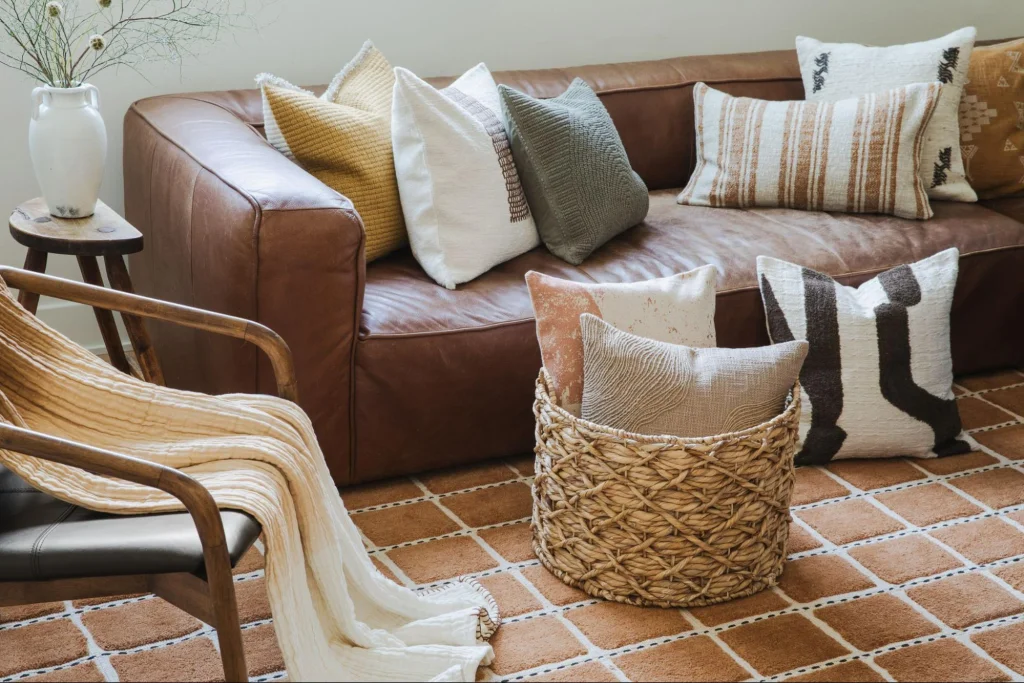
Empty rooms feel hard and echoey because there’s nothing soft in them. Textiles fix that fast and cheap.
Start with a few throw pillows and one blanket tossed over a chair or sofa. Keep them in your color family so it looks planned. Pillow covers run $15 to $40 each, so you can change the whole feel of a room for very little. The trick is texture, not quantity. Mix a chunky knit with a smooth weave, or a linen with a velvet. Different textures in the same colors give a room depth without adding clutter. Soft layers are what turn a bare room into one you actually want to sit in.
Image Prompt: “Three-quarter view iPhone photo of two throw pillows and a folded blanket on the end of a sofa, the soft textures are the hero, one pillow slightly dented like it was leaned on, afternoon light flattening the colors, deep focus throughout, foreground sofa seat, mid-ground pillows, background plain wall, three cohesive tones, casual iPhone photo taken by the homeowner, slightly imperfect framing, real lived-in space, not styled for social media”
Stock Image Keywords: throw pillows on sofa | layered textiles couch | knit blanket throw pillow | textured pillows neutral | soft furnishings living room
16. Use Plants to Fill the Empty Corners
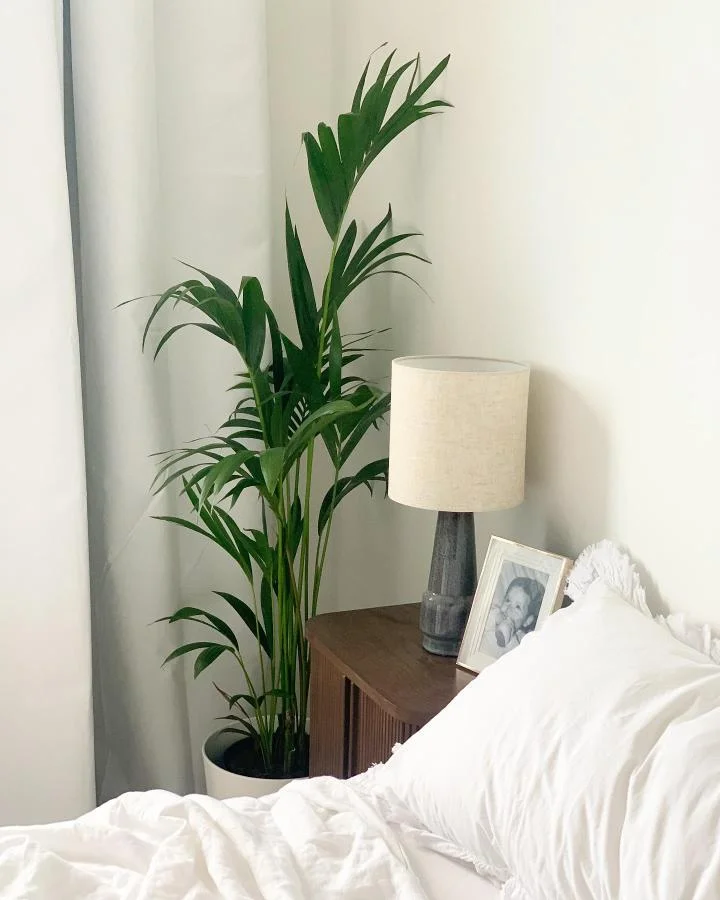
Every new house has those awkward bare corners you don’t know what to do with. A plant is the easy answer.
One tall plant, like a fiddle leaf fig or a snake plant, fills vertical space and softens a hard empty corner instantly. It draws the eye up and makes the room feel finished. If you kill every plant you touch, a good faux one does the same job with zero effort. Don’t scatter tiny plants all over. One big plant in the right corner beats five small ones cluttering your surfaces. Plants add life and a bit of nature to a brand new space that can otherwise feel a little blank.
Image Prompt: “Eye-level iPhone photo of a single tall potted plant standing in an empty room corner, the plant is the clear hero filling the vertical space, soft daylight from a nearby window, deep focus throughout, foreground floor, mid-ground plant and pot, background two bare walls meeting in the corner, two to three green and neutral tones, casual iPhone photo taken by the homeowner, slightly imperfect framing, real lived-in space, not styled for social media”
Stock Image Keywords: tall plant room corner | fiddle leaf fig corner | large indoor plant empty space | snake plant living room | potted plant bare corner
17. Put Art on the Walls in Thick Frames
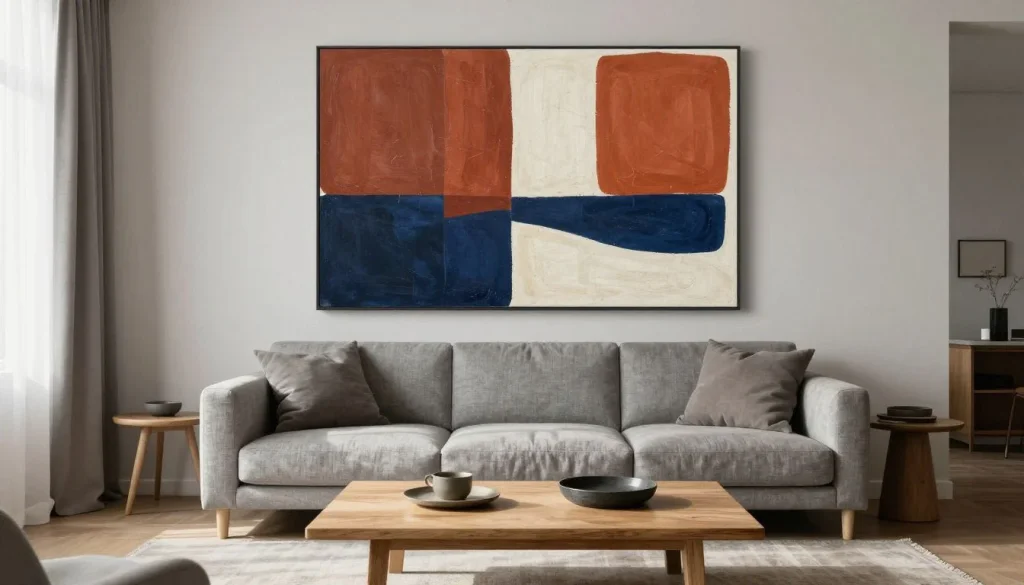
Blank walls are the loudest sign of a new house. Art quiets them down. And in 2026, the frame matters as much as the art.
Thin delicate frames are stepping back. Thicker vintage style frames are back in, and they add instant age and character to a wall. You don’t need a huge gallery wall. One large piece over the sofa or bed does the heavy lifting. Skip the mass produced word art and generic prints everyone has seen a hundred times. Go for something with personality. A thrifted painting, a framed print you love, even a piece of fabric. The story behind it is what makes it feel like yours.
Image Prompt: “Three-quarter view iPhone photo of one large framed art piece hanging on a plain wall above a sofa, the thick framed art is the hero, soft side light, the frame hanging very slightly crooked, deep focus throughout, foreground top of the sofa, mid-ground framed art, background wall, two to three muted tones, casual iPhone photo taken by the homeowner, slightly imperfect framing, real lived-in space, not styled for social media”
Stock Image Keywords: large framed art above sofa | thick frame wall art | single statement art piece | vintage frame wall decor | framed print living room
18. Style Surfaces in Small Odd Groups
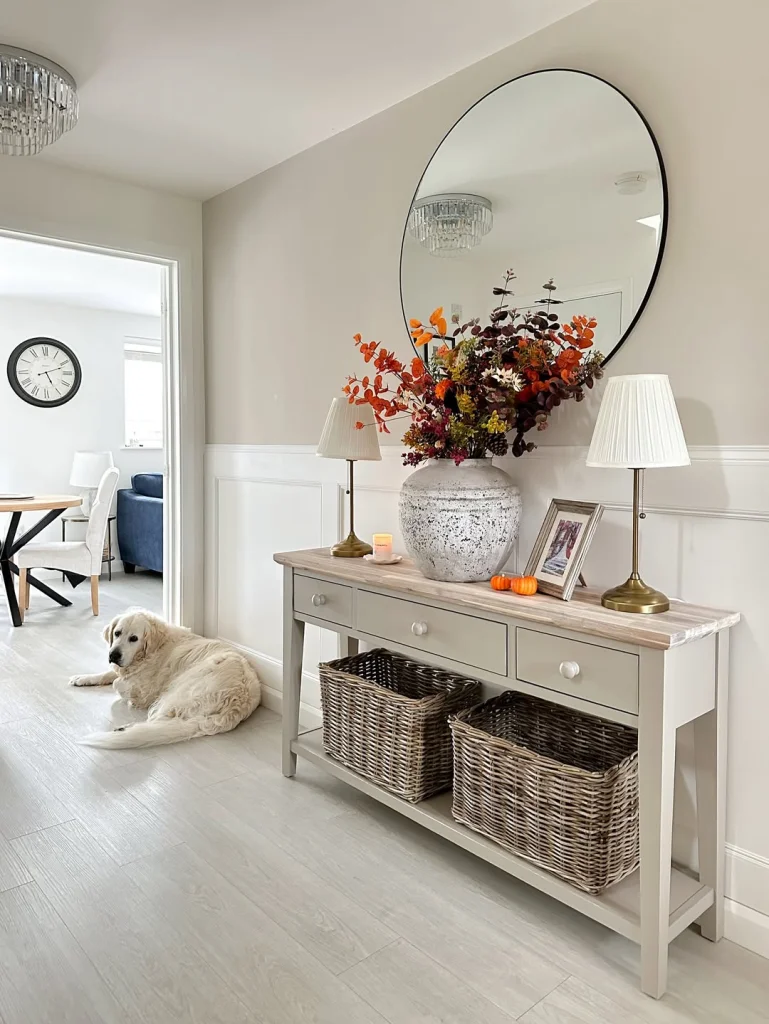
Once you’ve got shelves, a mantel, or a console, the question is what to put on them. The answer is less than you think, in odd numbers.
Group objects in threes or fives, not pairs. Odd numbers just look more natural to the eye. Mix heights too. Pair something tall like a vase or a stack of books with something low and round, like a small bowl or a candle. Leave empty space around the groupings. A surface with breathing room looks calm and finished. A surface crammed edge to edge looks cluttered and stressful. The 2026 collected look is about meaningful pieces with space to be seen, not every shelf packed full.
Image Prompt: “Slightly angled iPhone photo of a console top styled with three objects of different heights, a short stack of books, a small vase, and a low bowl, the grouping is the hero with empty space around it, soft window light, one book sitting slightly crooked, deep focus throughout, foreground console edge, mid-ground objects, background plain wall, two to three muted tones, casual iPhone photo taken by the homeowner, slightly imperfect framing, real lived-in space, not styled for social media”
Stock Image Keywords: styled console table decor | objects grouped odd numbers | shelf styling minimal | books vase grouping | console tabletop decor
Start With Just One Idea This Weekend
That’s your full plan to transform an empty new house, start to finish. The big thing to remember is that you don’t do it all at once. You start at the top, with paint and the pieces you’ll use every day, and you let the rest come together over time.
Don’t let 25 ideas overwhelm you. Pick one. This weekend, grab a few peel and stick paint samples and tape them to your walls, or unroll that one rug you love and build from there. One small move breaks the paralysis and gets you going.
Your new house is a fresh start, not a deadline. Take it room by room, piece by piece, and let it slowly become a home that feels like you. Save this list and come back to it whenever you’re ready for the next step.