The Living Room Inspiration Guide for Your First Home: A 5-Step System

✔ Written & fact-checked by Sophie — last reviewed June 26, 2026
You’re Standing in an Empty Room. Now What?
Your keys are still cold from the handoff. The walls are landlord beige or a shade of gray you didn’t choose. You’ve got a phone full of Pinterest screenshots, a secondhand armchair from your aunt, and a creeping fear that you’re about to buy the wrong sofa and hate it for five years.
This isn’t just a mood board. It’s a living room inspiration guide for your first home, built like a system. Not a list of pretty things to copy, but a sequence you can actually follow when you don’t know how to design a living room from scratch and you don’t have a designer’s budget. By the end, you’ll know exactly what to buy first, where to put it, and why most people get that order painfully wrong.
Step 1: Anchor the Room with Light, Not Furniture
The usual advice says start with the sofa. I want you to ignore that. The sofa is the most expensive, most panic-inducing decision you’ll make, and if you lead with it, you’ll pick something safe and beige because you’re scared.
Start with a lamp.
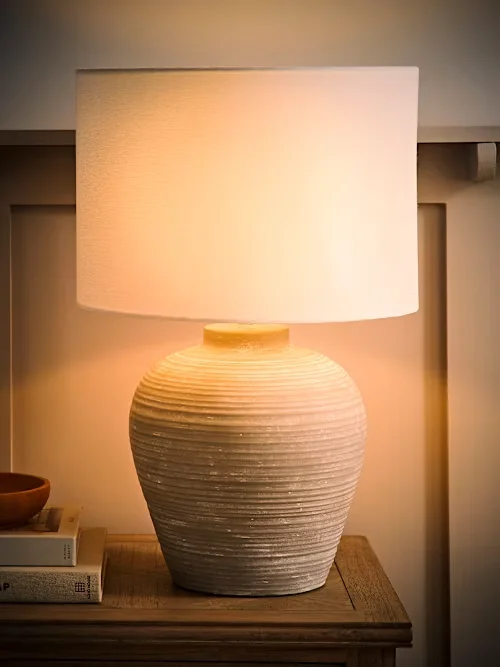
A single, sculptural table lamp or a pendant shade with some weight to it. I’m talking about the chunky ceramic, travertine, or matte grogged clay pieces that Pinterest’s 2026 home trend predictions are calling the new hero of the room. Something that feels like a piece of art, not an afterthought.
Designer Sophie Ashby put it this way in a House & Garden masterclass earlier this year: “Your living room should be a biography, not a showroom. Start with the one weird object you love and build the room’s color palette around it.” Your lamp is that weird object. It’s small enough to afford, portable enough to move from rental to rental, and it sets the mood before you’ve spent a cent on big furniture.
Here’s how it works. Say you grab the Hay PC Portable Lamp in Amber Glow. It’s a mushroom-shaped, rechargeable lamp with a satin finish, around $90 to $110. That warm, honeyed glass now dictates your whole room. Suddenly you’re not picking a gray sofa because the beige walls told you to. You’re looking for a deep caramel velvet chair, a raw oak side table, maybe a rug with a bit of rust in it. The lamp pulled a full color story out of thin air.
You just cheated the hardest part of design. The room already has a point of view.
Step 2: Design the Floor Plan for Conversation, Not TV
Before you buy anything else, you need a floor plan. Not a fancy one. Painter’s tape on the floor. That’s it.
The biggest mistake I see in first apartments and small first home living room layouts is what I call the perimeter push. You shove the sofa against one wall, the armchair against the opposite wall, the TV stand against a third. You think you’re making the room feel bigger. What you actually make is a dead zone in the middle that nobody uses and a seating arrangement that forces you to shout across a void.
In 2026, the smartest first apartment living room ideas flip that script. ELLE Decor’s trend forecast for this year highlights a conversation pit revival, deep, low seating pulled away from the walls to face other seating, not a screen. Even if you don’t have a sunken lounge, the principle still works in a 600-square-foot flat. Float your sofa. Put it in the middle of the room, facing a pair of chairs or a fireplace, with its back creating a natural walkway behind it.
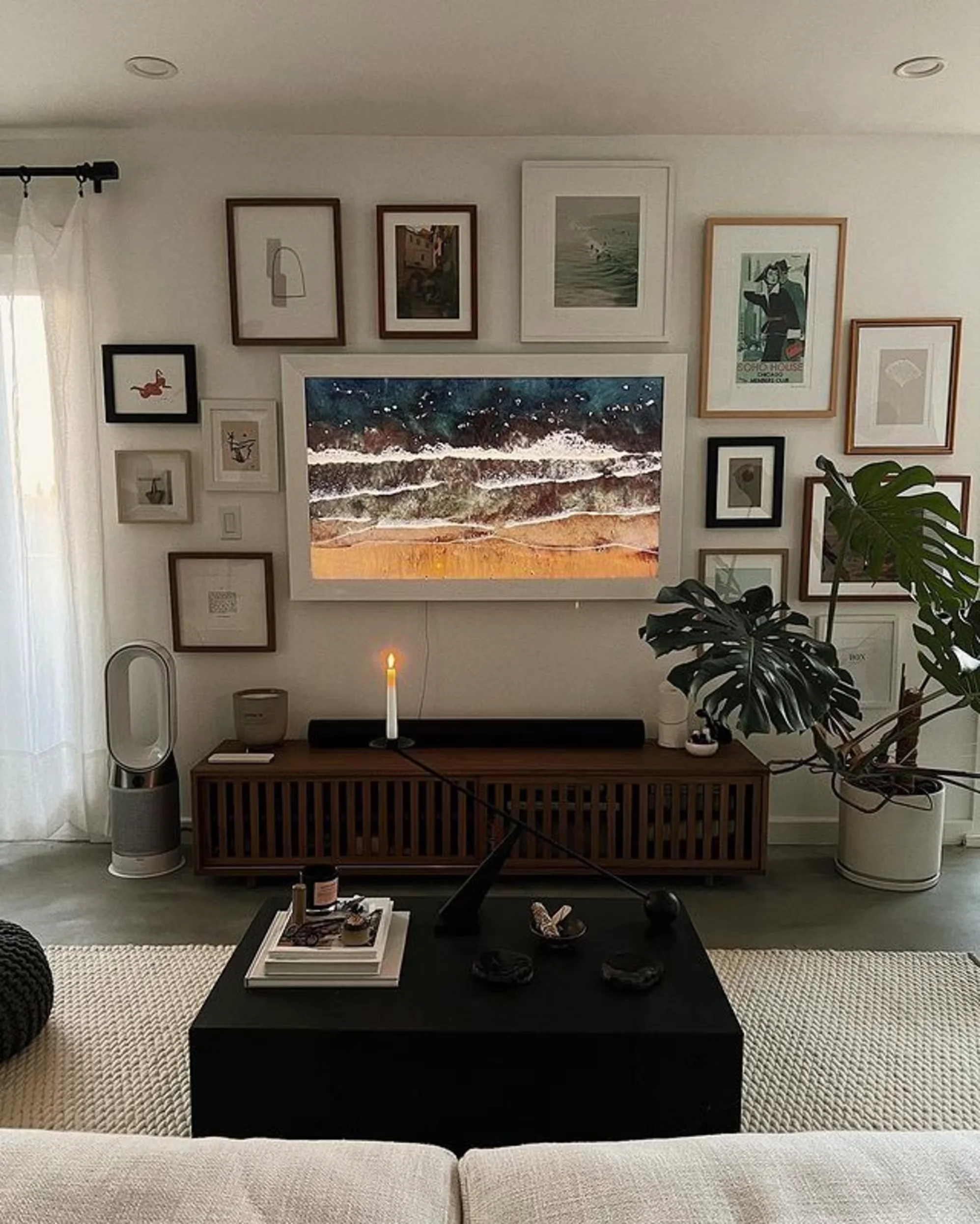
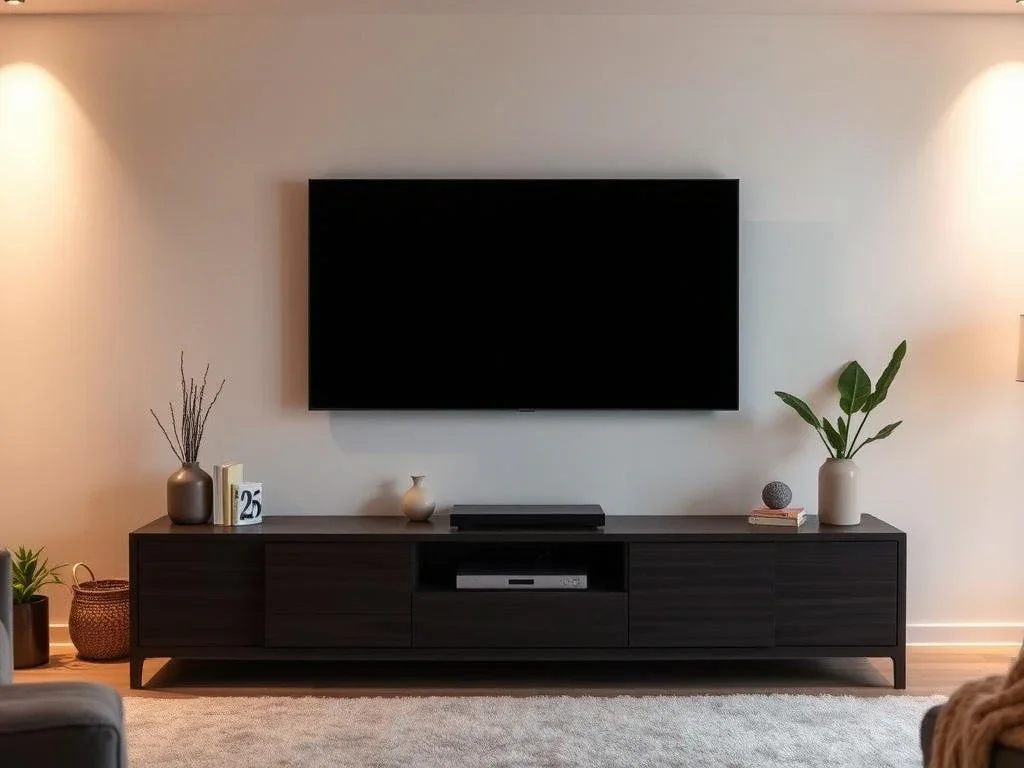
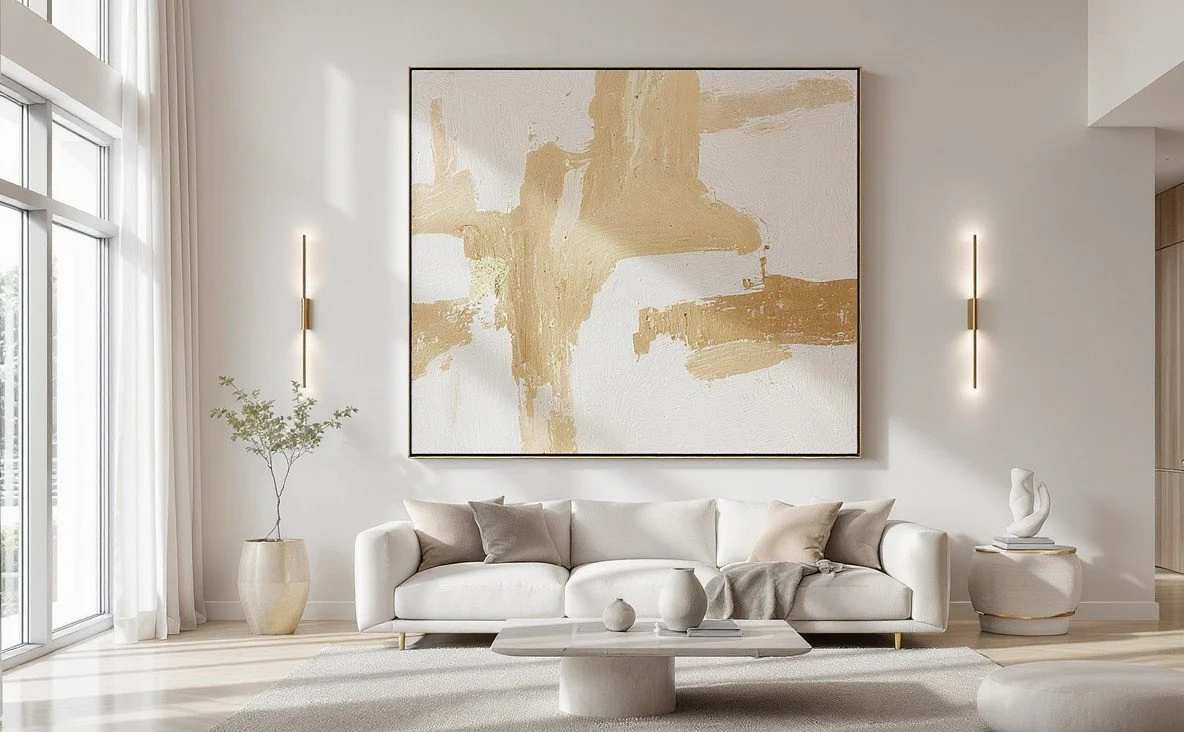
Architectural Digest’s 2026 Design Forecast quoted designer Brigette Romanek on exactly this shift: “For 2026, we are completely rethinking the media wall. The TV is being dethroned by the sculptural fireplace or a large-scale art piece, with screens hidden in sideboards or behind projectors.” You don’t have to hide your TV, but don’t make it the sun your whole room orbits.
Grab a roll of blue painter’s tape. Mark out the footprint of a sofa. Mark out a coffee table. Walk around it. If you’re bumping your shins, shrink it. If you can’t reach the coffee table from the sofa, pull it closer. This costs four dollars and saves you from ordering a sectional that eats your living room alive.
Step 3: The Living Room Inspiration Guide’s Secret: Start Ugly
Now you buy the big thing. And I want you to buy it ugly.
Not ugly-ugly. I mean sculptural, bulbous, chunky, the kind of piece that looks almost too big and too weird on the showroom floor. Livingetc’s 2026 trend report calls this sculptural “lump” furniture. Think the reissued Mario Bellini sofas, all rounded edges and exaggerated proportions, or newer designs that look like they were carved from a single block of foam.
This is your visual anchor. It does 80% of the heavy lifting so the rest of the room can be simple and cheap. If your sofa is a boring gray sectional, you have to work twice as hard with pillows, art, and rugs to inject personality. If your sofa is a low, deep, rounded bouclé beast in oatmeal, you could put a milk crate next to it and people would still call it design.
For a first home budget, the IKEA JÄTTEBO modular chaise in the soft bouclé-like cover sits right in this sweet spot. It’s $800 to $1,200, low-slung, with that bulbous silhouette the trend demands, but it’s modular so you can reconfigure it when you move. You can also hunt secondhand. Search Facebook Marketplace for “rounded sectional,” “cloud sofa dupe,” or “deep seat sofa.” The algorithm will start showing you lumpy, wonderful things.
Step 4: Layer a Non-Beige Color Story Affordably
Your room has a lamp and a sofa. It’s starting to feel like something, but it’s probably still a sea of neutrals. Time to add color without painting the walls, because you might be renting, or you might be too exhausted to tape baseboards.
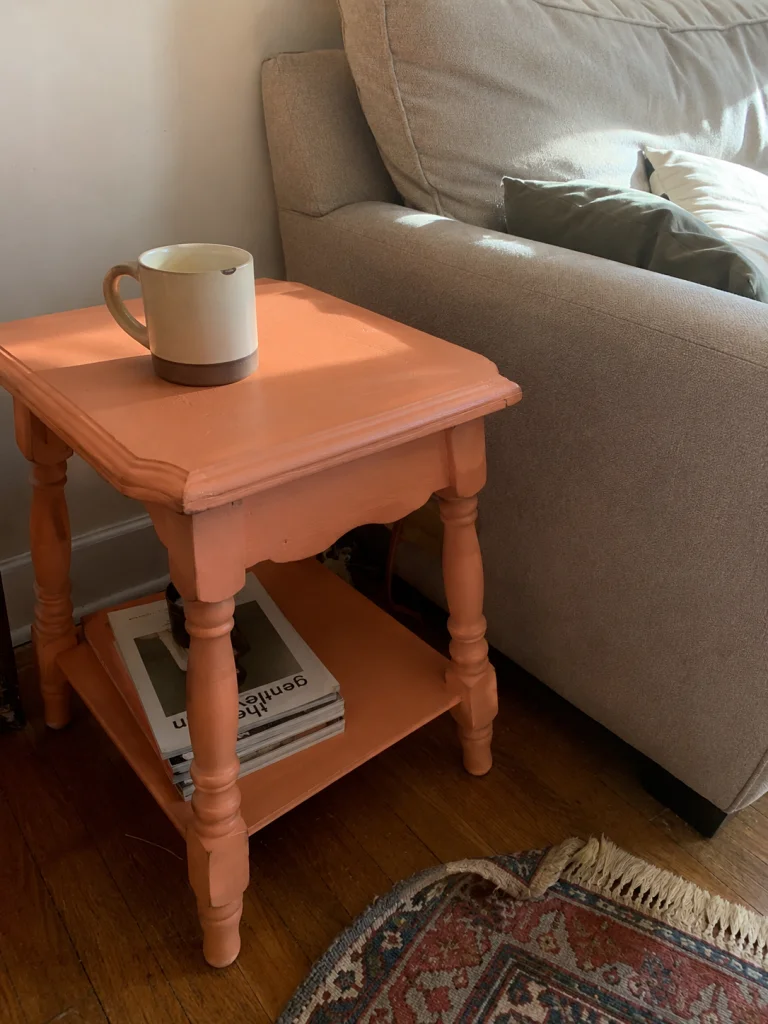
The 2026 color that actually works as a neutral is a deep, saturated amber-peach called Apricot Crush. It’s a warmer, more grown-up evolution of the Peachy Fuzz trend, and you’ll see it popping up across paint brands like Lick and Backdrop this year. It sounds scary until you see it next to wood and denim. It makes thrifted oak furniture glow and turns a basic white wall into something intentional.
Here’s the cheapest way in. Buy a sample pot of Lick’s “Orange 02” or Backdrop’s “Mojave,” somewhere around $35. Find a $10 beat-up wooden side table at a charity shop. Sand the top for ten minutes. Paint it. Now you’ve got a little lacquered apricot moment that sits next to your bulbous sofa and ties directly back to the amber lamp you bought in Step 1.
Step 5: Program the Personal Biography
The room is almost there. You’ve got mood, layout, a hero piece, and a hit of color. Now you need the part that makes it yours, not a West Elm catalog from 2023.
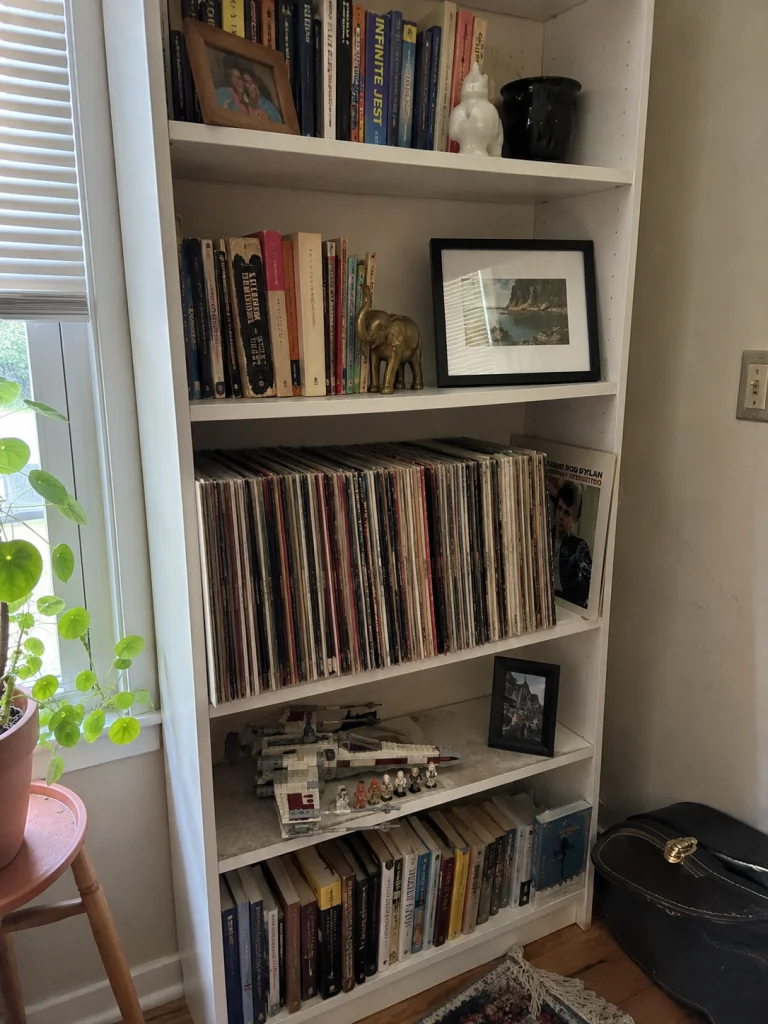
No word art. No “Gather” signs. The quickest way to make a first home feel generic is to fill it with objects that have no memory attached. The TikTok design crowd has been calling this shift the “Dopamine Den,” an evolution of the Bookshelf Wealth trend. It’s a room that displays your actual life. Your vinyl collection. The stack of vintage sci-fi paperbacks from your grandad. The wonky ceramic dish your kid made. The Lego bonsai tree you built during a snowstorm.
IKEA Billy bookcases are trending again for this exact reason. They’re cheap, hackable, and they hold a lot of weird stuff. Paint the back panel in a deep color, add some trim to the front, and suddenly you have a built-in library wall that costs a tenth of custom millwork. Fill it with books, yes, but also with objects that pass the three-legged stool test. If something is weird, loving, or useful, it stays. If it’s a filler, it goes. A shiny decorative ball from the home section has no memories. It’s just taking up shelf space that could hold your grandmother’s brass elephant.
The counter-intuitive thing you just did throughout this whole process is start small and let the room reveal itself. You bought a lamp first, not a sofa. You let a single object’s personality ripple outward into every other choice. That’s how you end up with a living room that feels like you, not a showroom staged for an open house that never happens.
Your First Living Room Is a Biography
You don’t have to get it right in one weekend. The best rooms, the ones that actually feel like someone interesting lives there, take time. They accumulate a weird lamp, a lumpy sofa, a painted table, a shelf of strange little things over months and years.
What you’ve done here is build a skeleton. A system that started with light, moved through layout, anchored on one bold piece, added a specific hit of color, and finally let your real life fill in the gaps. You skipped the matching furniture set trap. You didn’t push everything against the walls. You didn’t buy a gray sofa just because it was safe.
Hold onto this mantra: buy the lamp, tape the floor, wait for the perfect ugly chair. The rest will follow.