18+ Entryway Ideas to Make a Stunning First Impression at Your New Home (Without a Major Reno)

✔ Written & fact-checked by Sophie — last reviewed June 26, 2026
The entryway is the first thing you see when you walk through the door exhausted, and the last thing guests see when they leave. Most people treat this space like a glorified dumping ground for mail, shoes, and stray keys. It ends up being a chaotic drop zone that leaves you feeling cluttered the second you step inside. You deserve an entrance that feels like a breath of fresh air. I am going to show you how to turn your foyer into a structured, high-design threshold that handles your daily life without looking like a mess. These are the top entryway ideas to make a stunning first impression in 2026.
1. Embrace Curated Calm Over Clutter
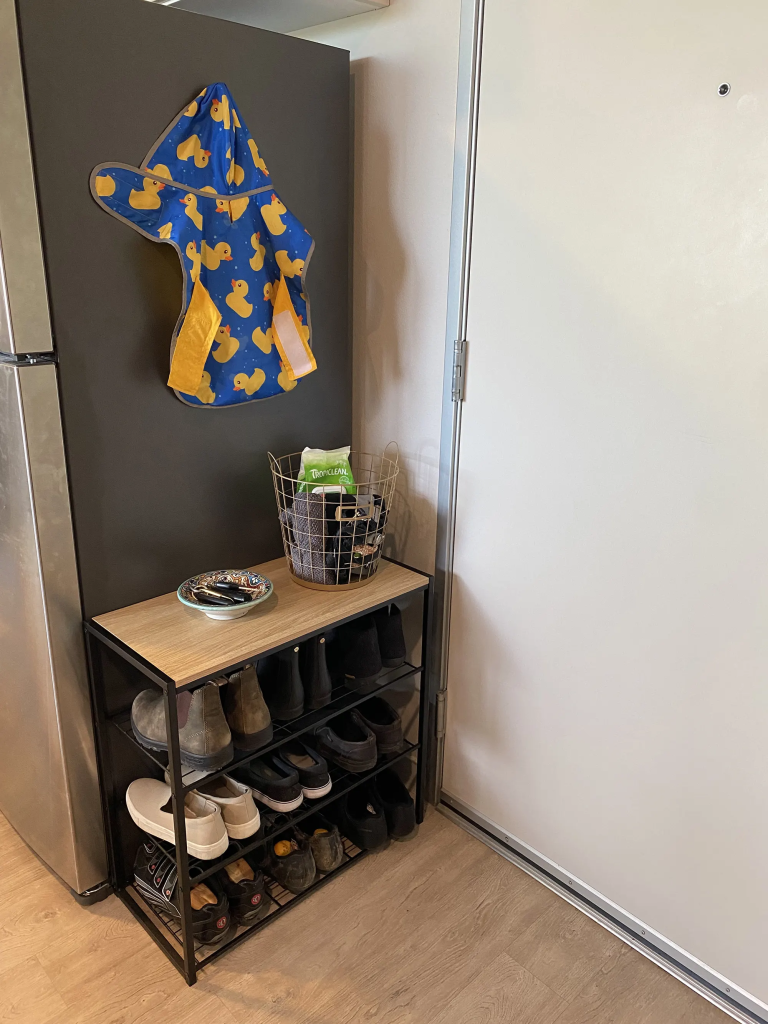
The days of over-filling every square inch of your foyer are behind us. Designers like Andre Fu are moving away from maximalist displays and stark minimalism. Instead, the focus for 2026 is on quiet authenticity. You want a space that feels personal but not messy. Keep at least 40 percent of your surfaces empty to give your eyes a place to rest. A bowl for keys and one piece of art are enough to make a statement.
2. Swap Warm Brass for Cool Chrome
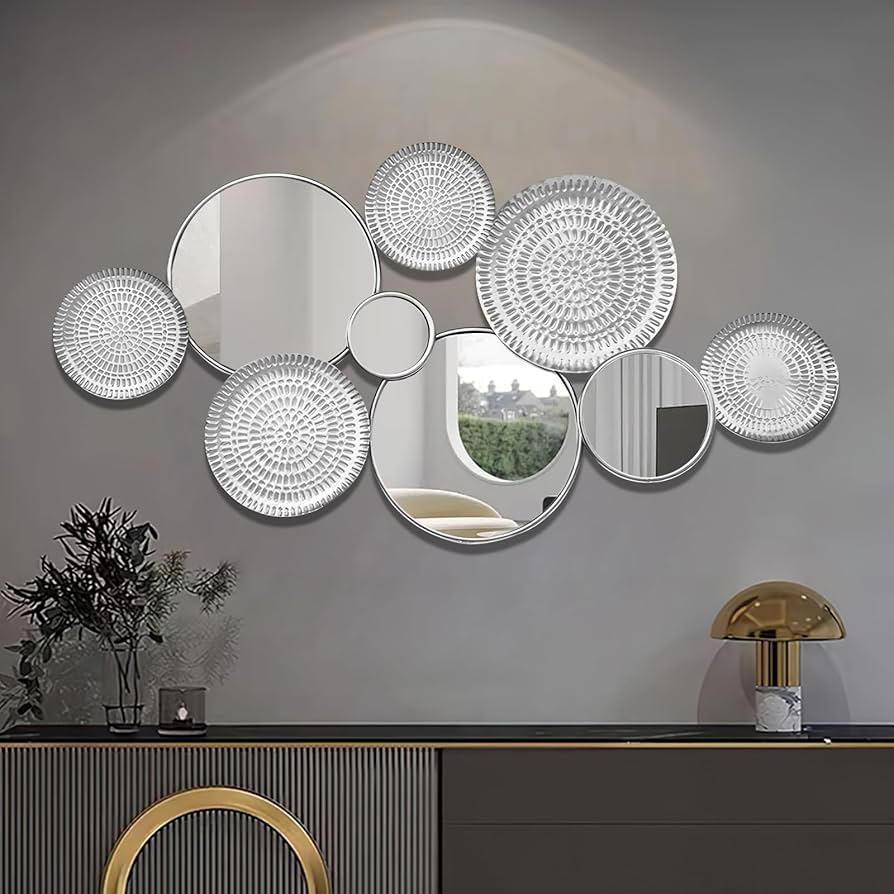
If you are looking for an instant way to make your home feel fresh, look at your metals. Warm brass and gold hardware have been everywhere for years, but the tide is turning. Andreas Christodoulou, the founder of House of Dré, notes that 2026 is the year chrome officially replaces brass. You can swap out your overhead light fixture for a sleek chrome pendant or hang an asymmetrical chrome-framed mirror. It feels cool, clean, and modern.
3. Anchor Wide Spaces with a Central Table
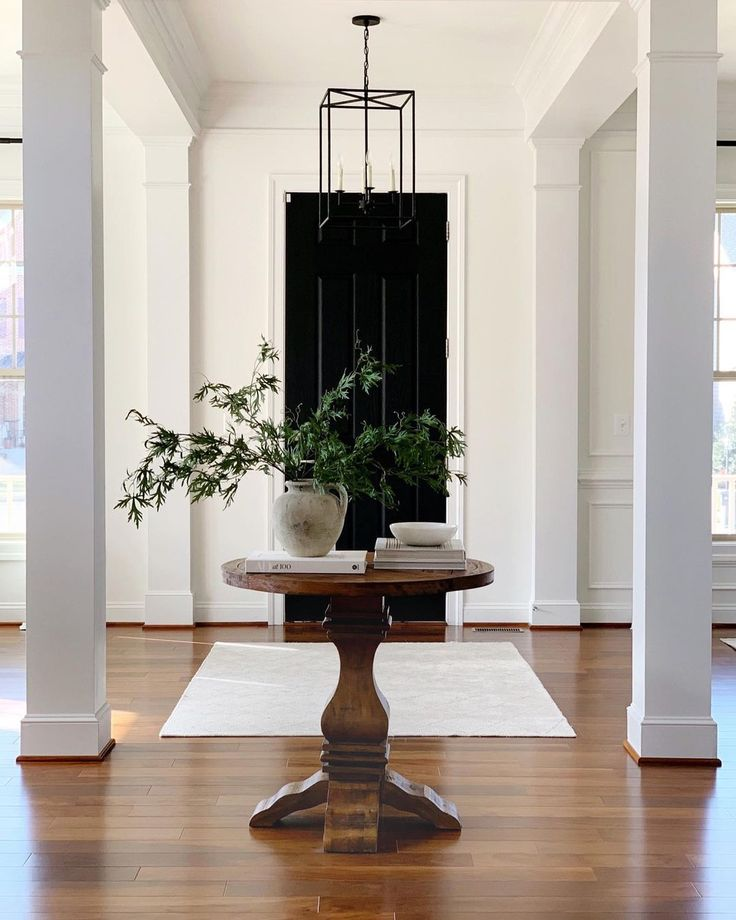
If you have a larger foyer, stop pushing your console table flat against the wall. That layout can make a space feel like a hallway rather than a room. Try placing a round pedestal table in the center instead. It creates a natural pivot point that guides movement around the room. Style it with a low tray or a tall vase of branches to add height. It turns a boring entrance into a hotel-like experience.
4. Paint with Low-Saturation, Matte Colors
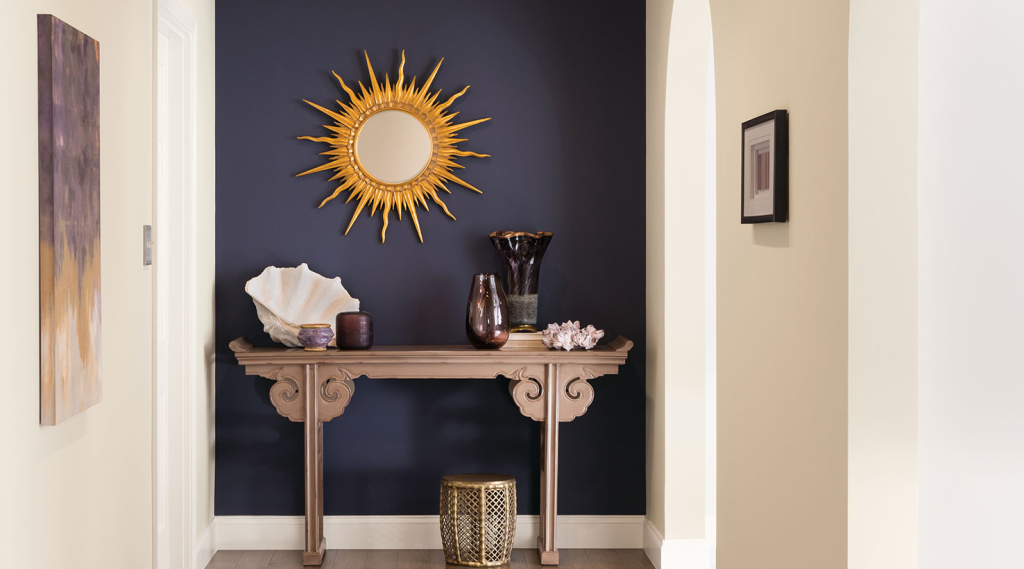
The color of your entryway sets the mood for your entire house. When you walk in from the bright sun or a busy street, you want your home to feel like a transition. Designers are using low-saturation, matte paints to reduce visual glare. Colors like muted sage, soft clay, or warm greige work well. Because they lack high shine, they help your brain shift into a more relaxed state the moment you enter.
5. Lean Into Space Perception with Dark Paint
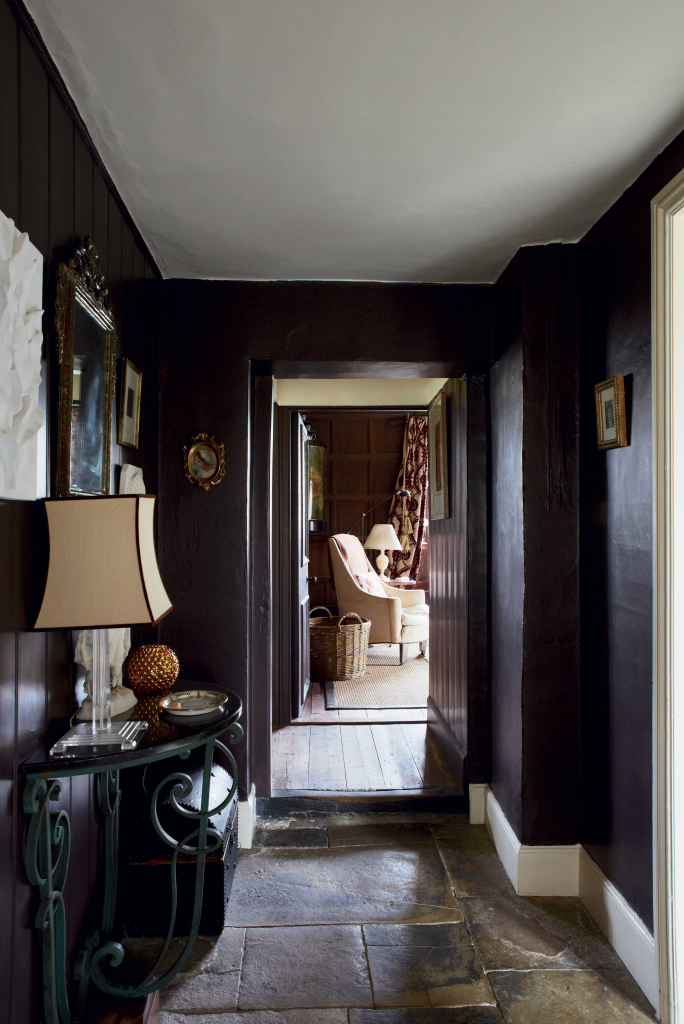
Many people are terrified of using dark colors in small spaces, but it is one of the best tricks for narrow entryway decor. A dark, moody color like charcoal or deep olive makes the walls feel like they are receding. It creates a jewel box effect that makes your living room feel much larger and brighter once you pass through the threshold. It turns a tiny hallway into a dramatic introduction to the rest of your home.
6. Introduce Organically Flowing Wood Consoles
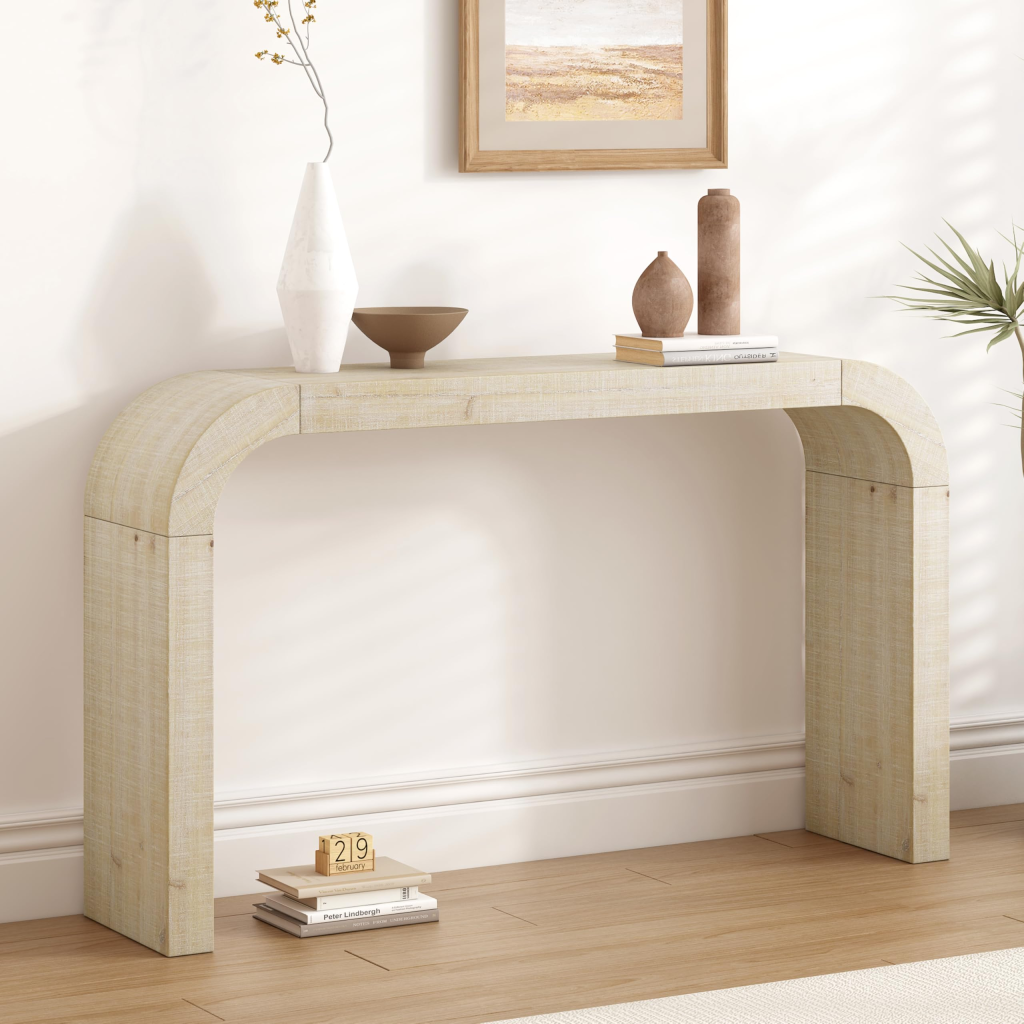
Sharp corners can make a small entryway feel cramped and aggressive. Move toward furniture with softer, rounded silhouettes. A steam-bent wood console table adds a touch of natural, organic movement to the space. The curved edges make it easier to walk past without bumping your hip. It feels more like a sculpture than just a place to dump your stuff.
7. Layer Your Lighting
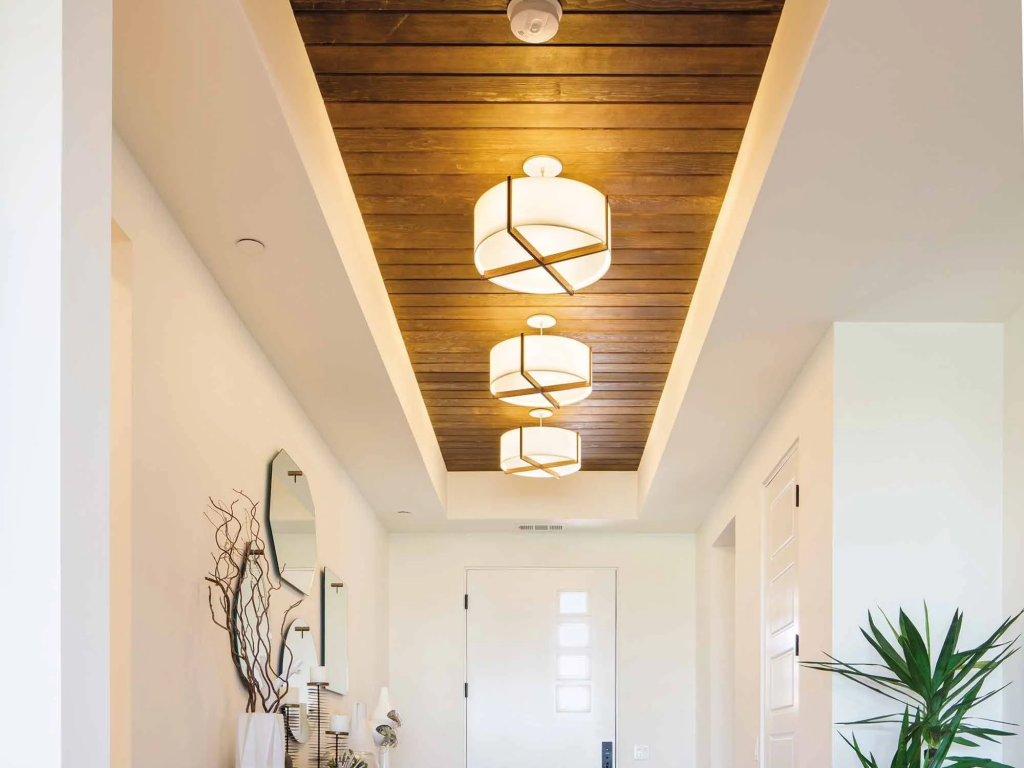
If your only light source is a single, harsh overhead bulb, you are missing out. That builder-grade light creates deep shadows and makes your entryway feel cold. You need layers. Add a rechargeable LED wall sconce or a small table lamp on your console. Lighting at eye level creates a much softer, more inviting glow that makes the space feel expensive.
8. Add Nature-Mimicking Wall Textures
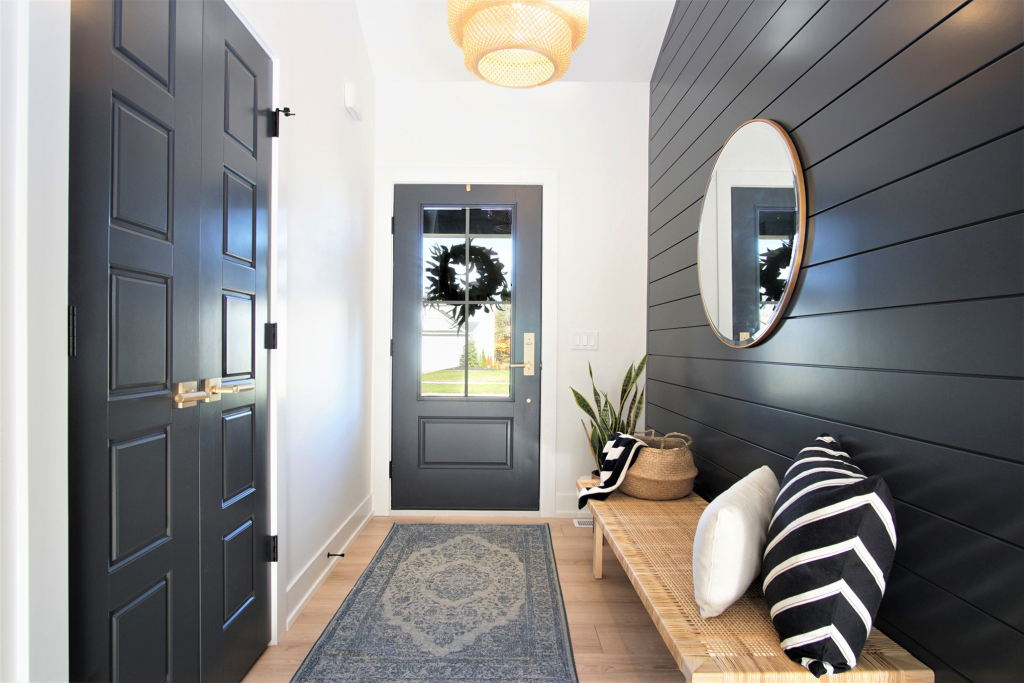
Flat drywall is starting to feel a bit stale. 2026 is all about surfaces that want to be touched. Look for textured plaster or even recycled cork carved to mimic the look of water ripples. These treatments catch the light in a way that flat paint cannot. It creates a high-end feel that relies on tactile experience rather than just color.
9. Ground the Floor with a Hand-Knotted Runner
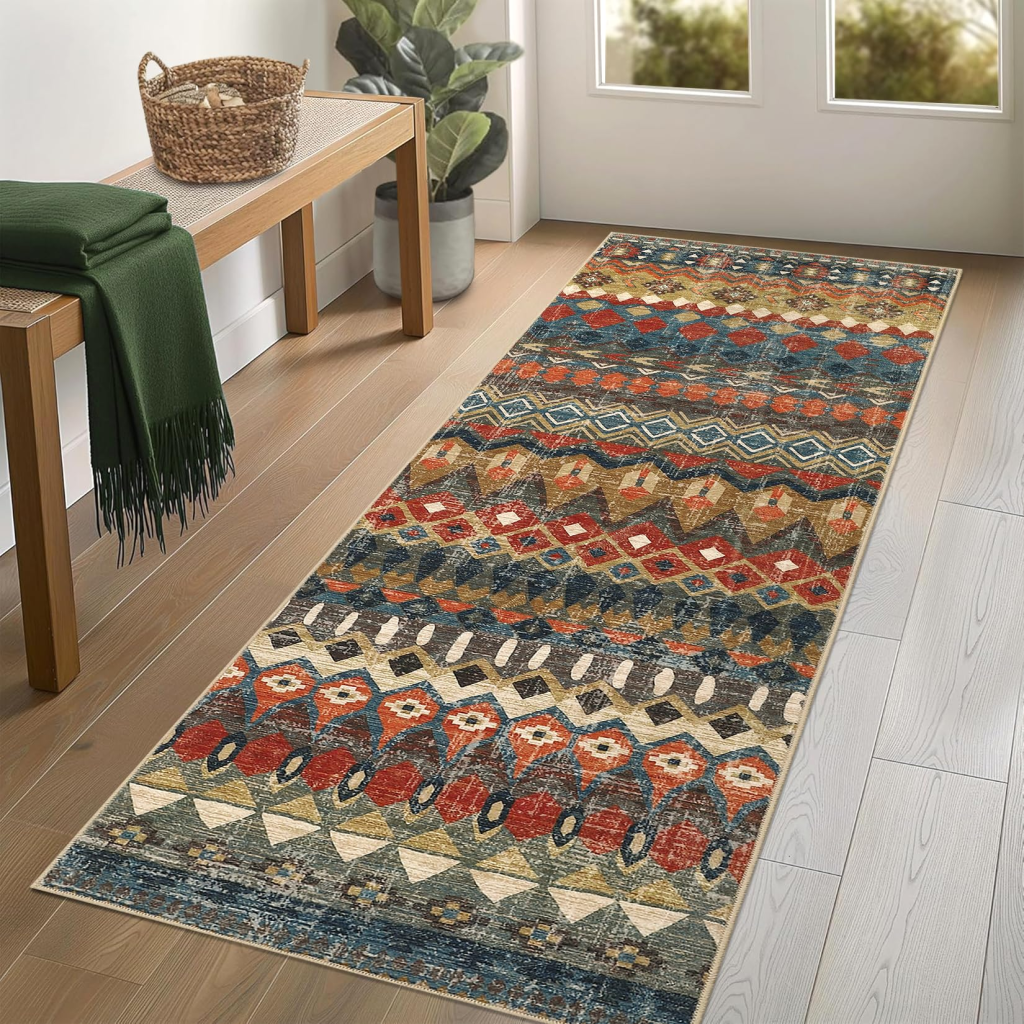
A rug does more than protect your floors. It anchors the entryway and dampens the echo that happens in hard-surfaced foyers. Look for a hand-knotted runner in a geometric pattern. It hides dirt and wear from high traffic while adding a bit of personality. Choose something with enough weight that it does not slide around when you walk on it.
10. Stop the Furniture Push Mistake
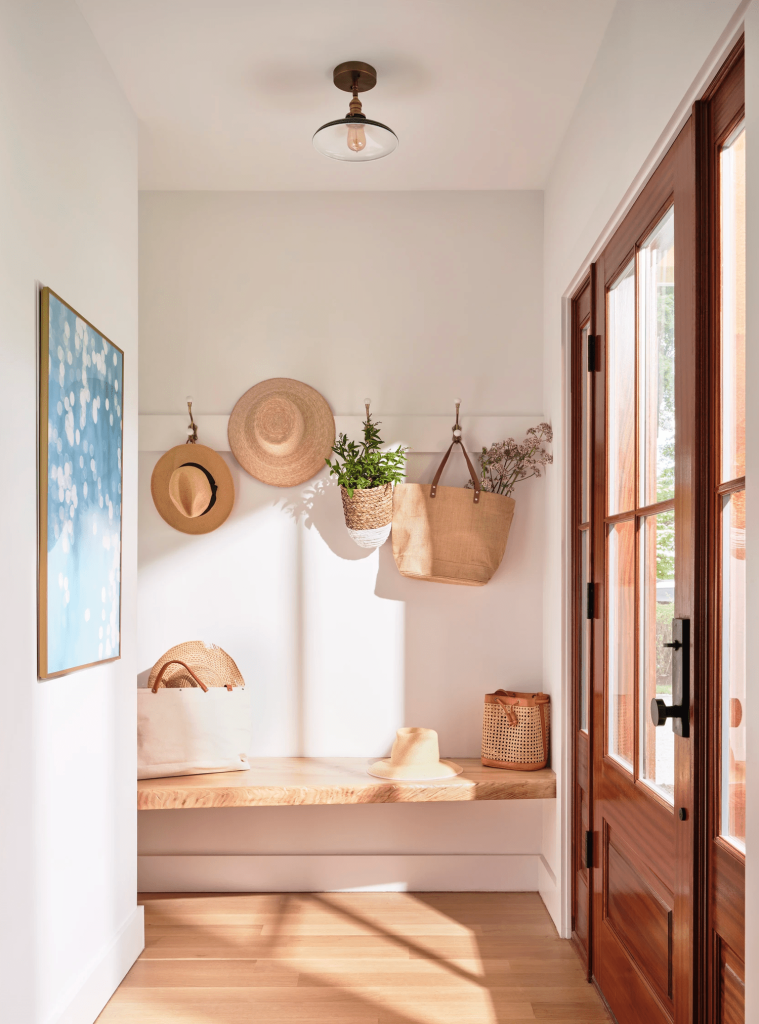
One common mistake is shoving a tiny, delicate console table flat against a massive, empty wall. It looks like the furniture is lost in the room. If you have a large wall, your console needs to be scaled to fit. If you cannot afford a larger piece, group your furniture with a tall mirror or a piece of art to help fill the vertical space. This prevents the “furniture push” look that makes your entryway feel like an afterthought.
11. Define the Zone with Symmetrical Transom Framing
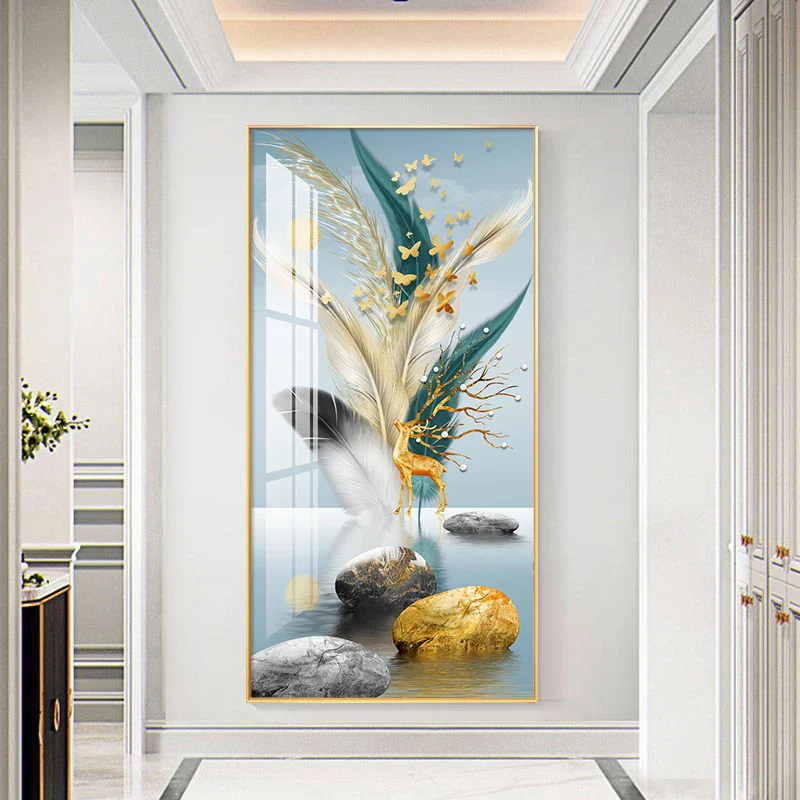
You can create a sense of architecture even if your builder did not include it. Frame your door or the entrance to your living room with symmetrical items. Two sconces flanking a mirror or two tall pieces of art on either side of the doorway help define the transition. It tricks the eye into thinking the space is more intentional and custom-built than it really is.
12. Ditch Monochromatic Gray for Earthy 70s Tones
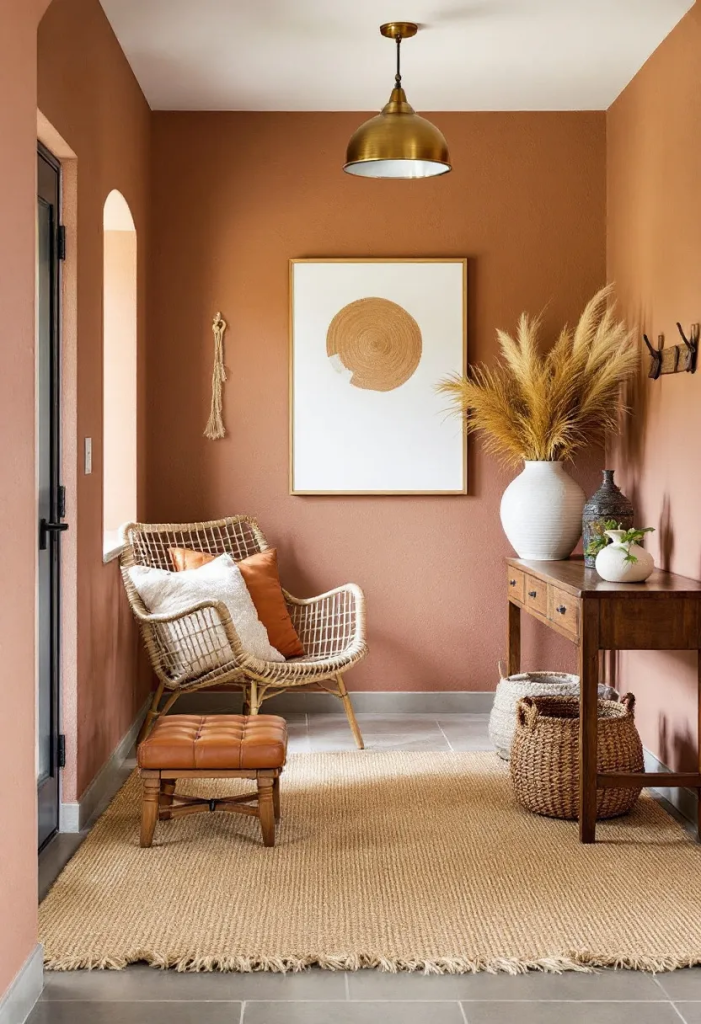
Gray floors and gray walls dominated for too long. They often make a house feel cold and sterile. Designers are moving toward warmer, earthier tones now. Think rust, soft brown, and warm terracotta. These colors provide a beautiful contrast to the cool tones of your appliances and hardware. Huma Sulaiman notes that people are looking for homes with more character, and these tones are a simple way to bring that in.
13. Utilize the Dead Space Under the Stairs
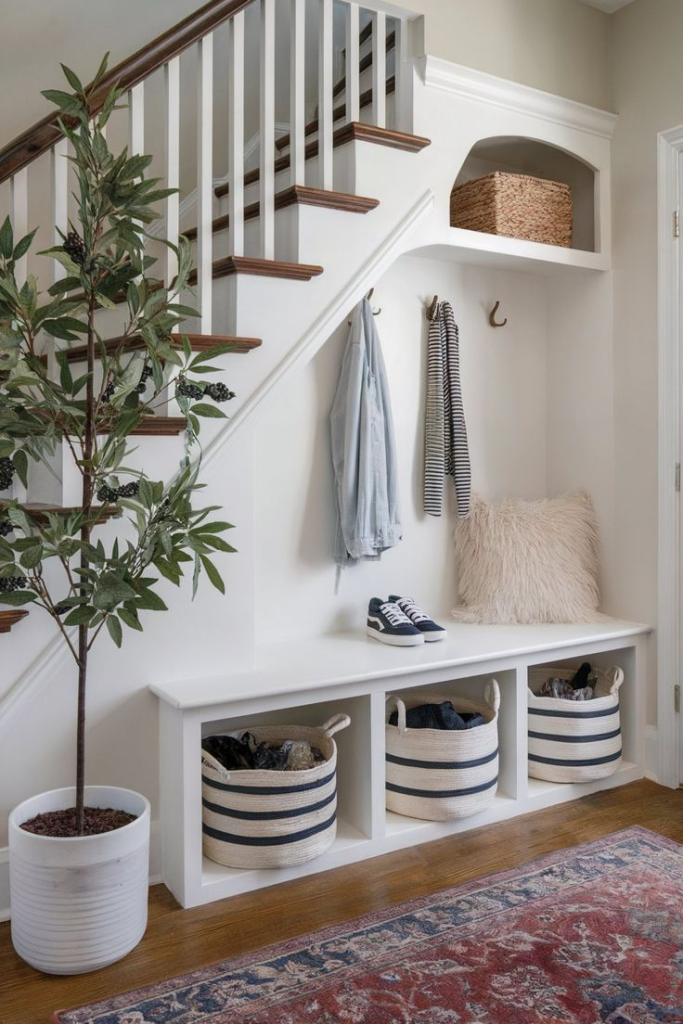
If you have a staircase in your foyer, that space underneath is prime real estate. Do not just leave it as a dark, empty hole. Add a built-in bench or a set of floating shelves. It gives you a place to sit and put on your shoes without taking up precious floor space.
14. Hide Everyday Chaos in Closed Storage
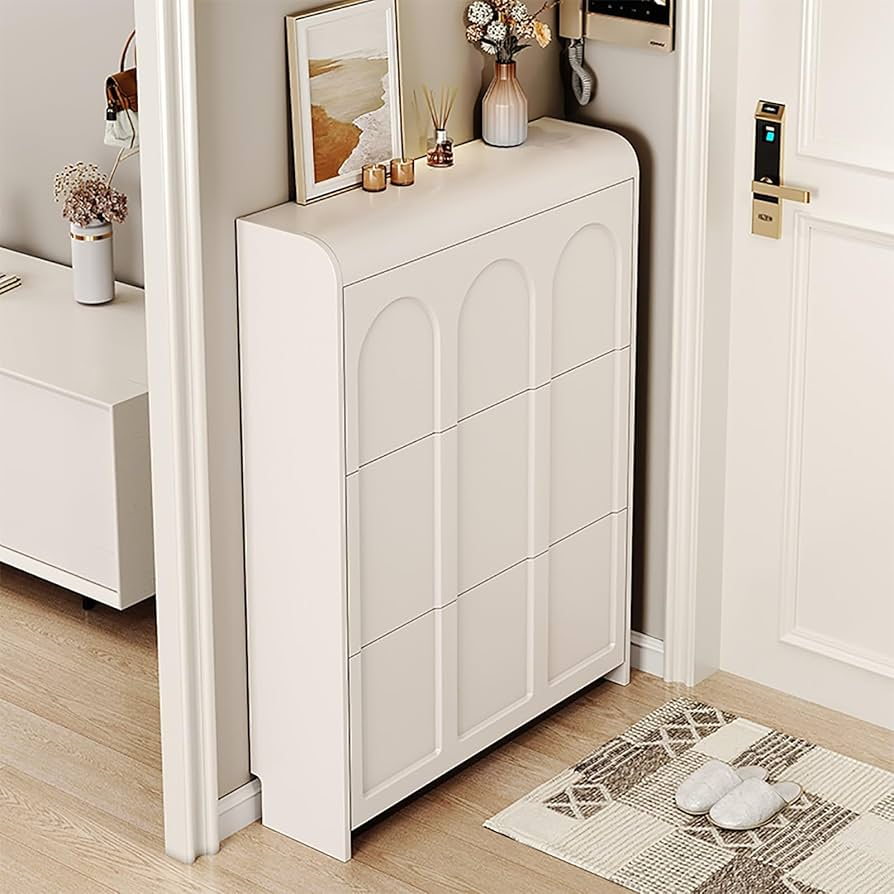
Open shoe racks are a trap. They always look messy, no matter how hard you try to organize them. If you need storage for shoes or bags, go for closed options. A tilt-out shoe cabinet is slim enough for a hallway but deep enough to hide everything. It keeps the visual noise down and keeps your entryway looking clean.
15. Create a Faux Built-In Look with Panel Molding
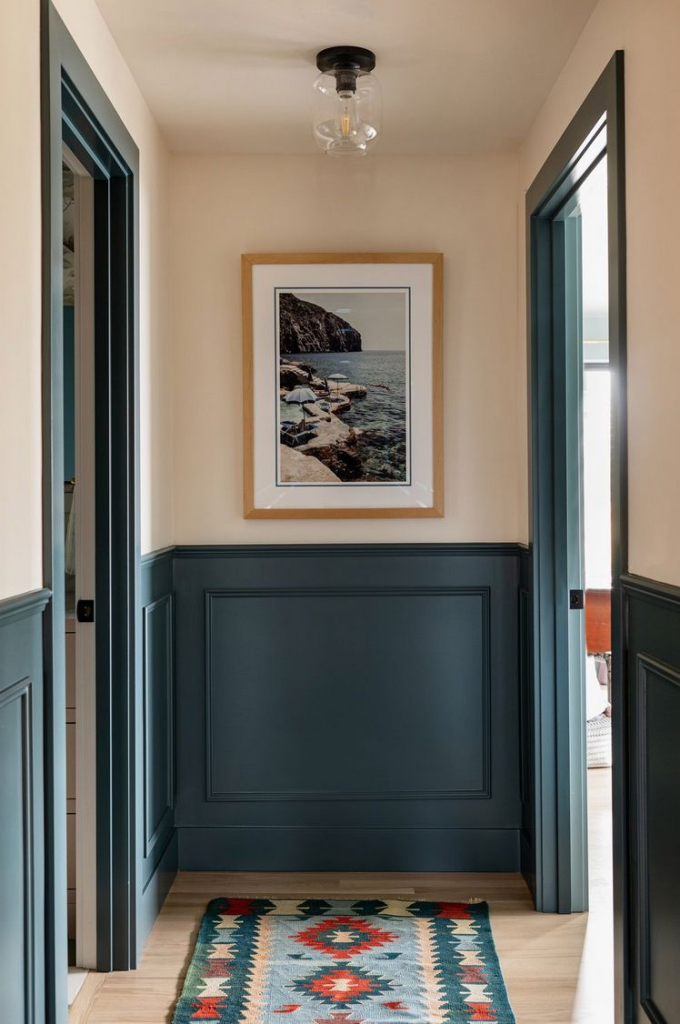
Panel molding is one of the easiest DIY projects that makes a room look custom. Add some simple picture-frame molding to the lower half of your entryway walls. Paint the molding and the wall the same color to keep it modern and understated. It adds architectural character to otherwise plain drywall.
16. Incorporate a Tactile Drop Zone Catchall
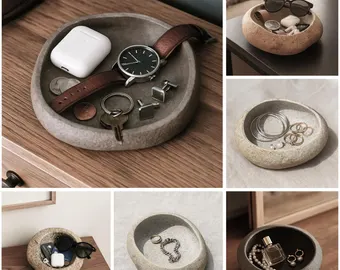
You need a spot for your keys and coins, but that spot should look good. Stay away from plastic trays. Use a heavy, natural material like travertine, raw-edge wood, or stone. A tactile catchall feels weighted and deliberate. It is a small detail, but it elevates the entire experience of walking through the door.
17. Use Oversized Art to Stretch Vertical Space
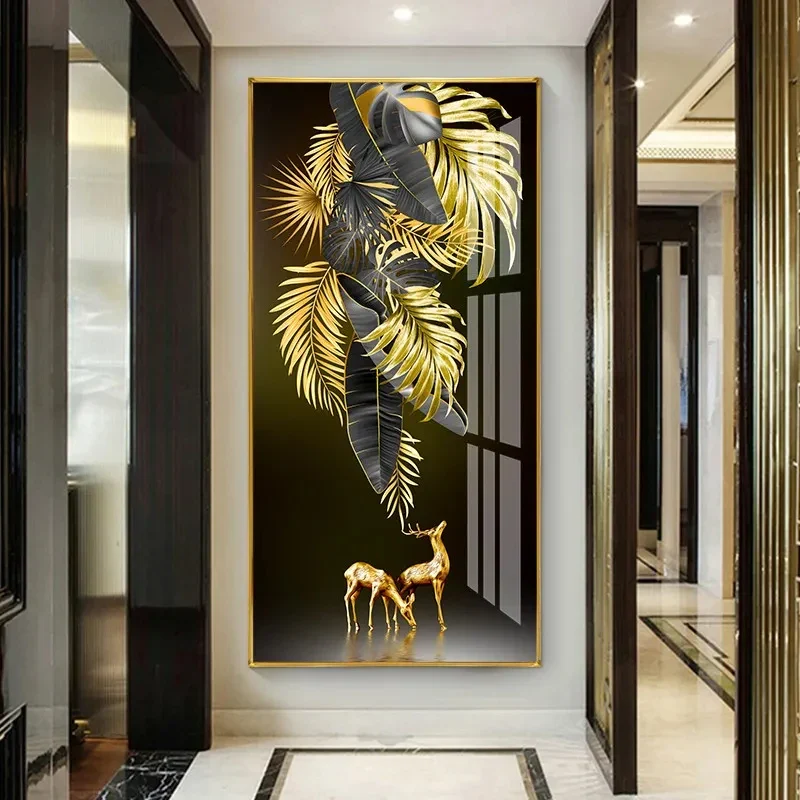
Avoid the urge to create a crowded gallery wall in a small entryway. It usually just makes the space feel smaller and more cluttered. Instead, go for one massive piece of art. A single, large-scale print draws the eye upward, which helps standard ceilings feel much taller. It is a bold move that makes the foyer feel like a curated gallery.
18. Bridge the Inside and Outside with Biophilic Elements
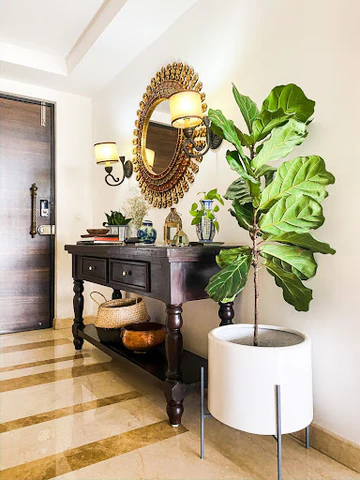
Bring a little bit of the outside in to keep the entryway feeling alive. If you have low light, look for hardy sculptural plants. If you want something more tech-forward, there are some great wall-mounted hydroponic systems that handle their own watering. A touch of green connects your home to the outdoors and provides a nice pop of color.
Elevate Your Arrival
You don’t need to tackle all 18 of these ideas at once to change how your home feels. Even small changes, like upgrading your hardware to chrome or adding a textured bowl for your keys, can fundamentally shift the narrative of your entrance. Start by choosing two or three ideas that solve your biggest pain points. Focus on reducing visual noise and adding things that bring you a sense of calm. Your entryway should be the part of your home that welcomes you back, not one more thing on your to-do list. Try one of these updates this weekend and see how much lighter your home feels the next time you walk through the door.