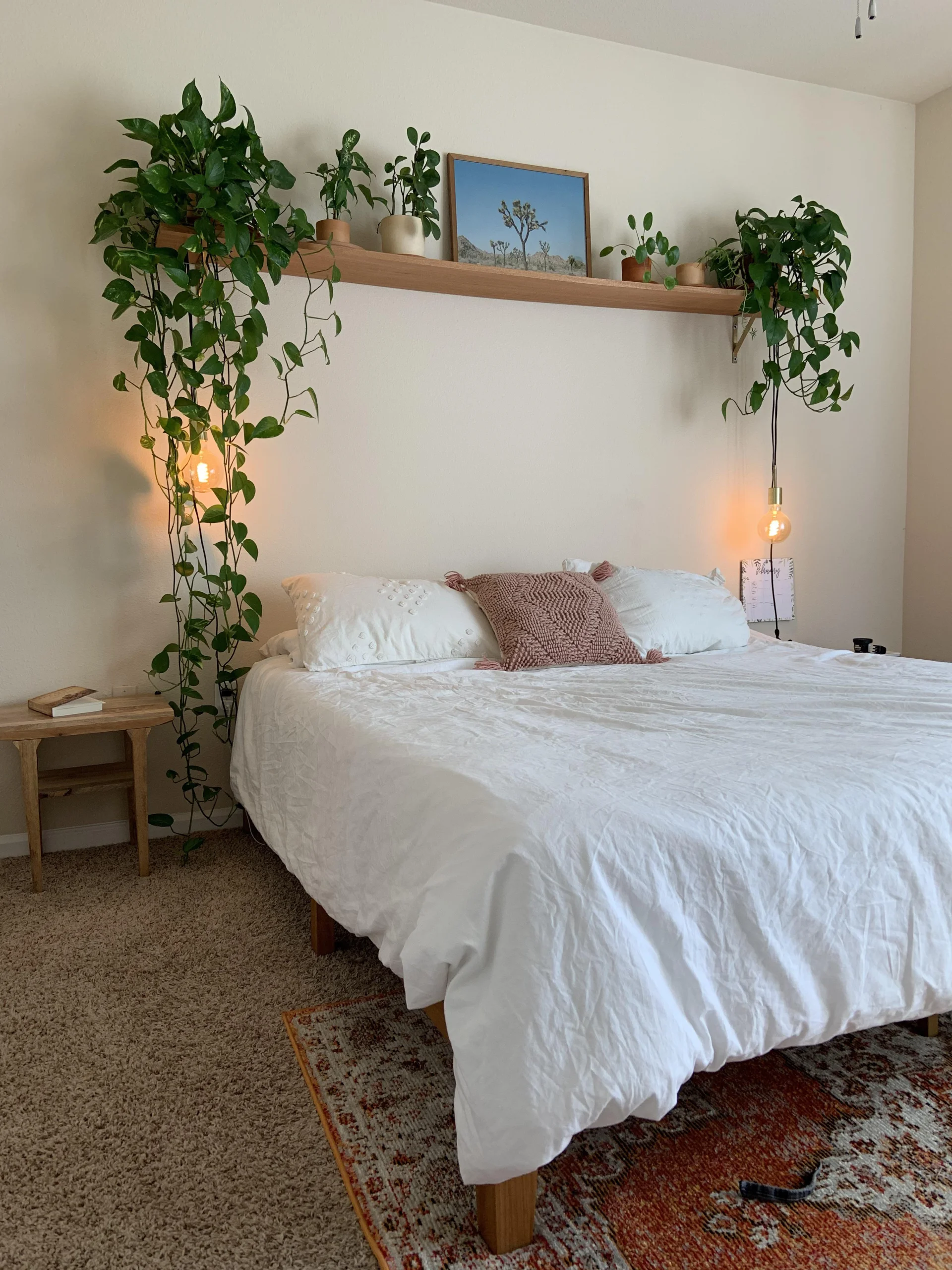
20 Room Decor Ideas to Style Your First Home

✔ Written & fact-checked by Sophie — last reviewed June 12, 2026
Where to Start When Every Room Looks Empty
Standing in your first place with bare rooms is a weird mix of exciting and stressful. You’ve got the keys, a small budget, and maybe a lease that says no drilling and no painting. So where do you even begin?
This guide walks you through how to style your first home room by room, with 20 ideas that won’t wreck your deposit or your bank account. Most of them come right back out when you move. None of them need a designer.
Here’s the one thing to know before you buy anything. You don’t need a matching furniture set or a big budget to make a room look good in 2026. Designers are actually moving the other way. Mixed pieces, warmer colors, and a little personality beat the flat showroom look every time.
We’ll go living room, bedroom, kitchen and dining, entryway, bathroom, then your work corner. Take the rooms one at a time. Start with the space you actually live in most.
1. Anchor the Living Room With a Right-Sized Rug
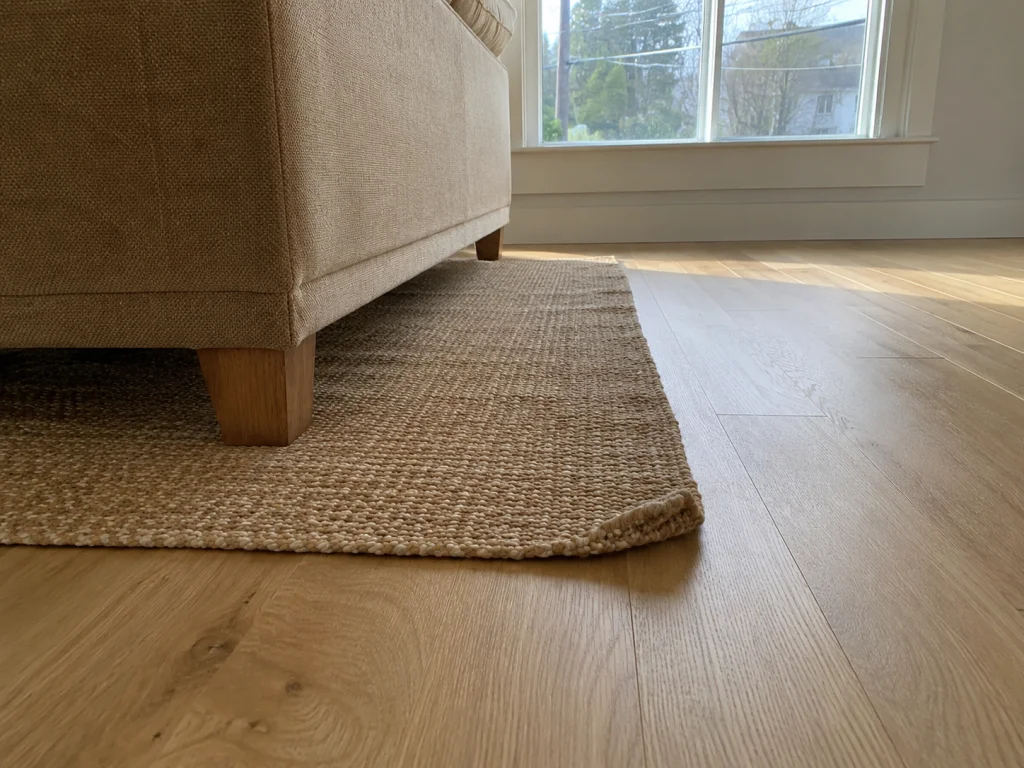
The fastest way to make a room look cheap is a rug that’s too small. A design piece on HomeTriangle put it well in 2026: budget decorating is a game of inches, and a rug that’s even a few inches short can sink the whole look no matter what you paid.
Get the size right and the front legs of your sofa should sit on the rug, not float behind it. For most living rooms, an 8×10 is your safe bet. If your only affordable option is small, layer it. Put a big plain jute rug down first, then your prettier one on top.
2. Mix Your Furniture Instead of Buying a Matching Set
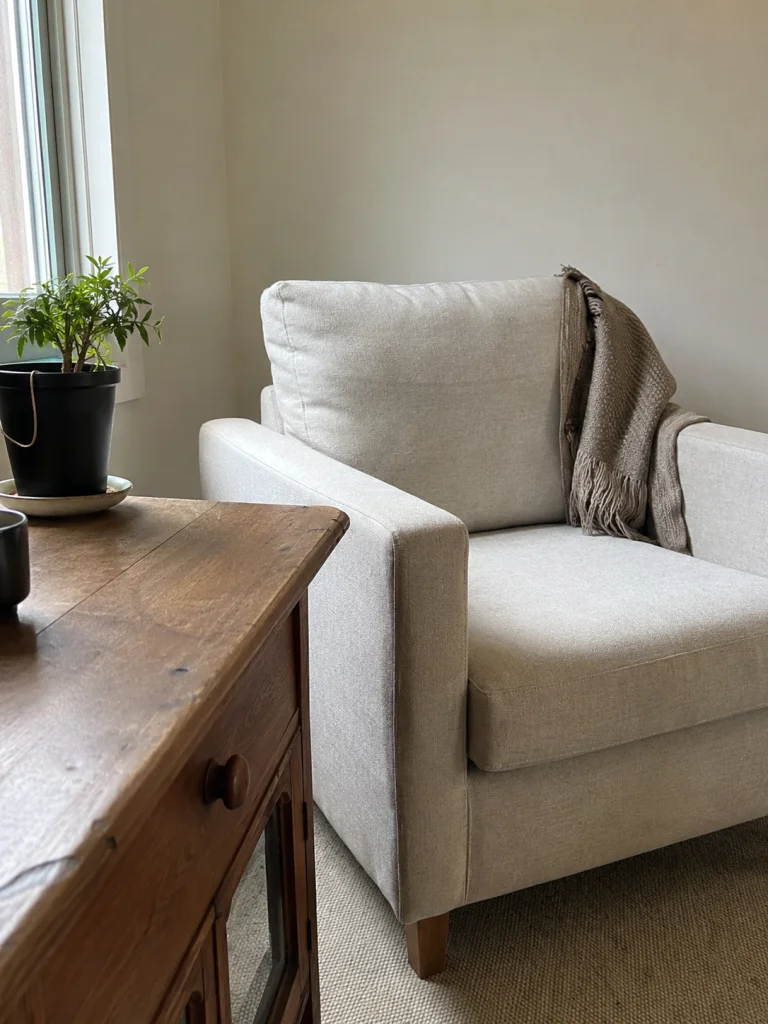
Skip the matching set. It’s tempting because it feels like one easy decision, but designers say that look is fading fast. Kailee Blalock of House of Hive Design Co. told Homes & Gardens in 2026 that overly minimal, pale, matchy furniture can make a home feel “more like a showroom than a space with personality.”
Mix instead. Pair a new sofa with a thrifted coffee table. Add one older piece with a curve to it. Living Etc’s 2026 living room report flagged mismatched furniture and softer shapes as the look of the year.
The best part? This frees you up. You don’t have to afford a whole set anymore. A few pieces that talk to each other look better than five that match.
3. Swap Cool Grey for Warmer 2026 Neutrals
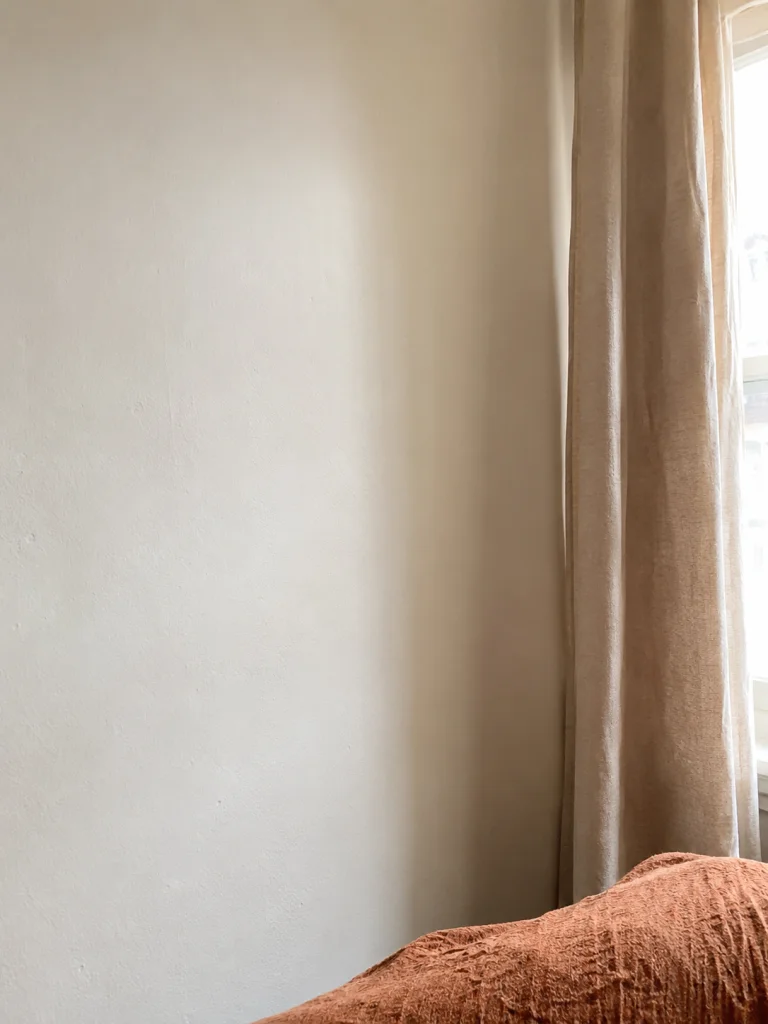
If you’re picking a base color, drop the cool grey. The big paint brands all leaned warm for 2026. Sherwin-Williams and HGTV Home named Universal Khaki, a sandy neutral with a soft green undertone. Benjamin Moore picked Silhouette, a deep espresso brown. Pantone went with Cloud Dancer, a soft white that doesn’t read cold.
Can’t paint? No problem. You get the same shift through your stuff. Pick curtains, throws, and a rug in warm sand, clay, or soft brown. Lean your whites warm instead of bright blue-white.
The grey-on-grey look that ruled the 2010s now reads dated. One swap to warmer neutrals makes everything else in the room feel current, even your cheaper pieces
4. Create a Reversible Accent Wall
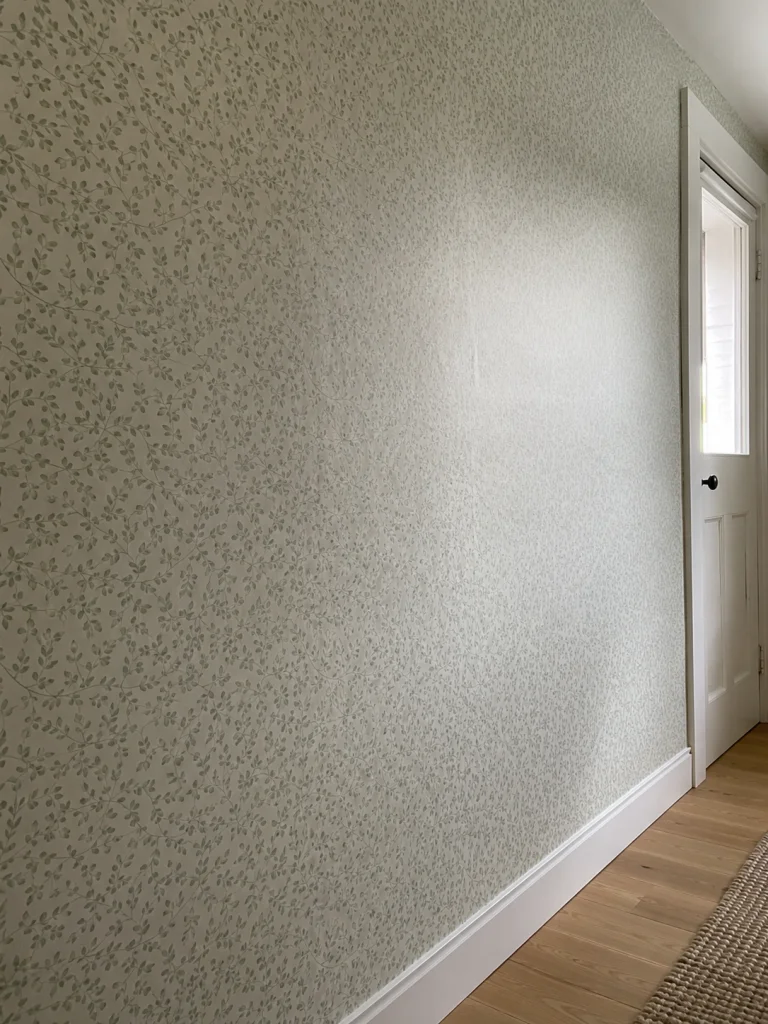
Renters, this one’s for you. Peel-and-stick wallpaper gives you a real accent wall with zero damage. Sites built for renters, like Giffy Walls and Tucked Nook, have pushed this hard through 2026 because it works.
A few rules so it actually comes off clean later. The wall needs to be smooth, clean, and dry first. Bumpy texture under it can show through. When you move out, peel it slowly at a low angle, and warm any stuck spots with a hairdryer to loosen the glue.
You don’t have to do a whole wall either. One short section behind a shelf or in a hallway counts. This is one of the easiest renter-friendly decor ideas that makes a flat box feel like yours.
5. Lean a Floor Mirror to Double the Light
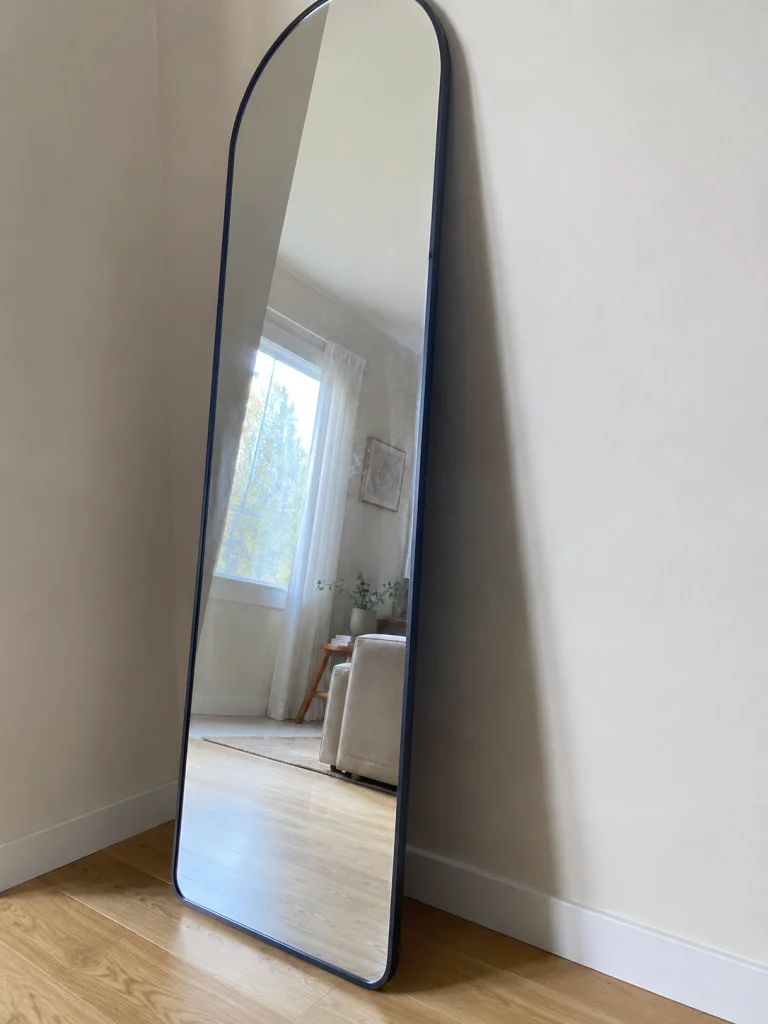
A big leaning mirror is a cheat code for a small first place. It bounces light around and makes the room feel twice as open. And you don’t drill a single hole. The renter site No Damage Decor calls leaning mirrors and oversized leaned art two of the best damage-free tricks going for 2026.
Place it across from a window so it catches the daylight. A spot in a dark corner works too, since it pulls light into the gloom. Look for one around $80 to $200.
One safety note. If you’ve got kids or pets, anchor the top to the wall with a removable strip so it can’t tip.
6. Wrap Your Bedroom in a Soft, Enveloping Color Scheme
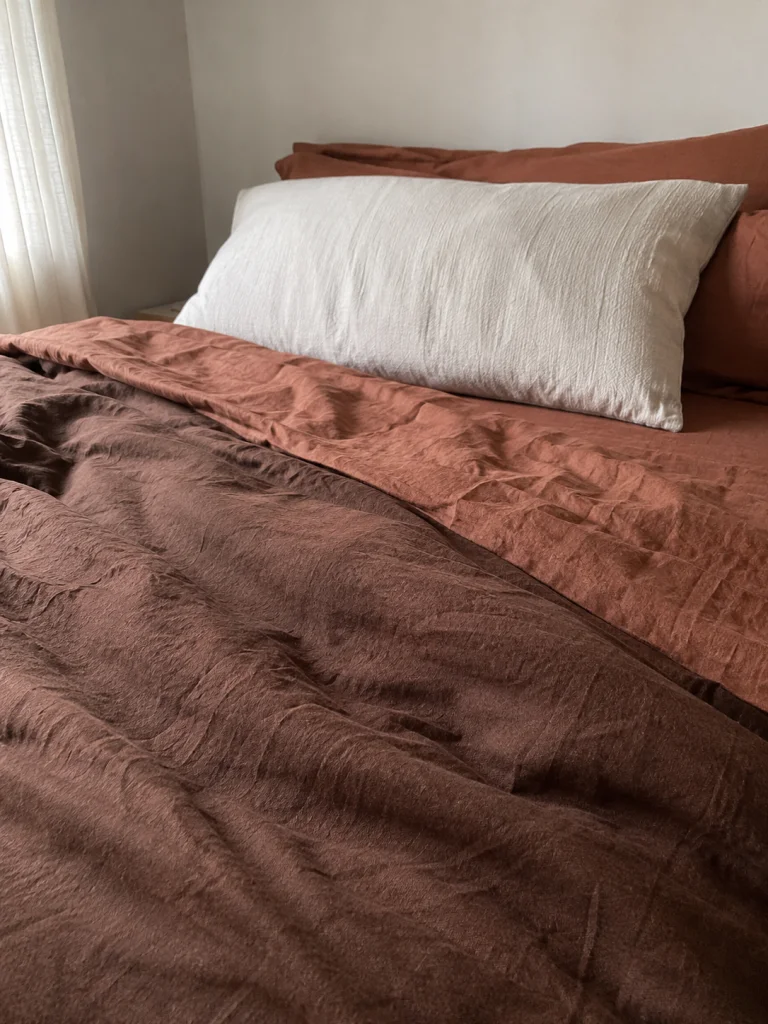
Your bedroom is where you can go a little deeper and softer. Good Housekeeping’s 2026 bedroom report named a trend that designer Marie Cloud of Indigo Pruitt Design Studio calls “Earthy Cocooning.” Think tonal layers of cocoa brown and clay that feel calm and grown-up, not stark.
You don’t need paint to get it. Build the color through bedding, a throw at the foot of the bed, and a clay or brown accent on the curtains. Keep the tones close to each other so the room feels wrapped in one mood.
This look photographs beautifully, which is a bonus if you save bedroom ideas to Pinterest. And it hides a cheap bed frame better than bright white ever could.
7. Fake a Headboard With Peel-and-Stick Panels
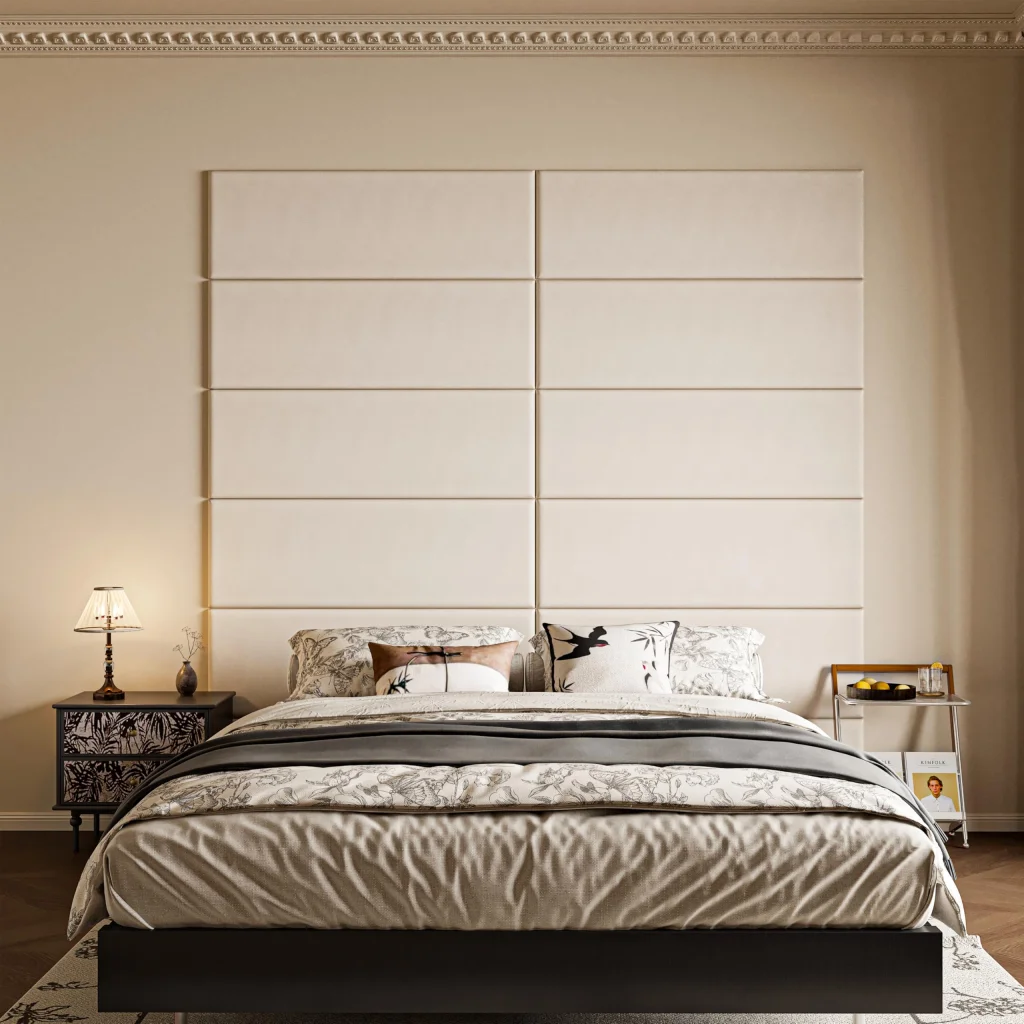
No headboard, no budget for one? Make a faux one. The renter site My Rental Nest shared a 2026 hack that’s almost too easy. Stick two or three panels of bold peel-and-stick wallpaper on the wall right behind your bed. It frames the spot and tricks the eye into reading a headboard.
The whole thing runs about $40 to $120 depending on the paper. Way cheaper than a real upholstered headboard, and it comes off when you leave.
Match the panel width to your bed so it sits centered. Pick a pattern that plays nice with your bedding colors from the last idea, and the wall and bed start to feel like one designed piece.
8. Dress the Bed Well Instead of Piling on Pillows
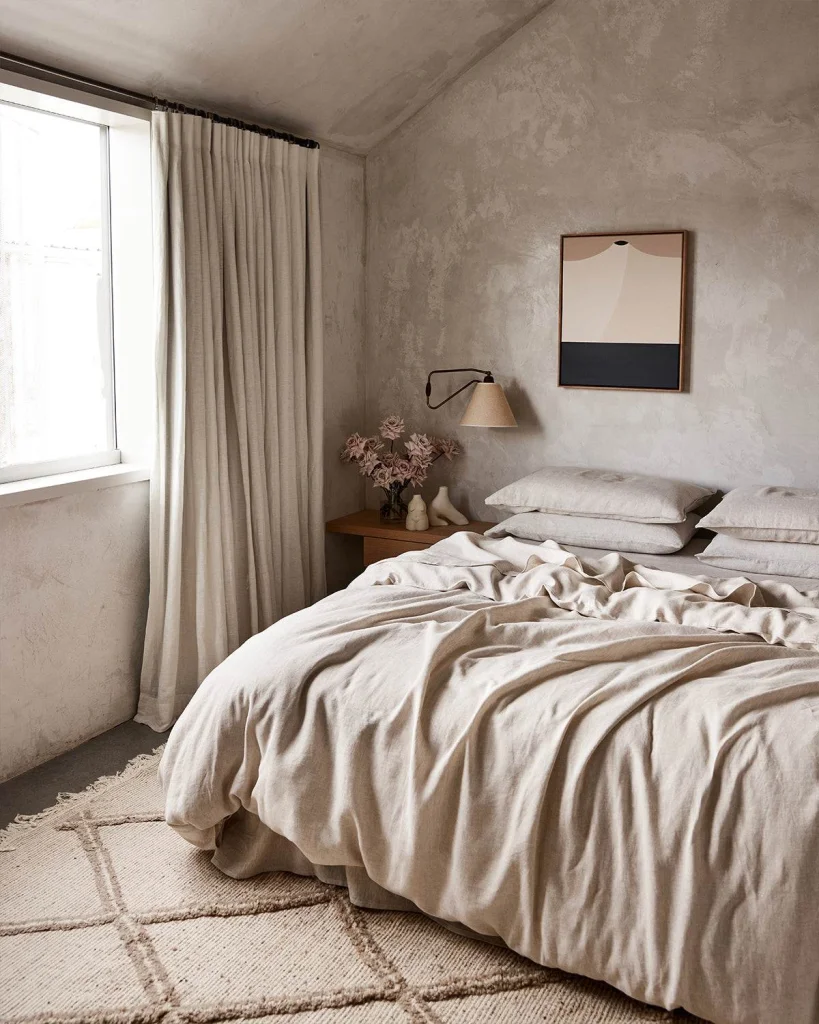
The mountain of throw pillows is over. Designer Abigail Kahan told Living Etc in 2026 that decorative throw pillows “have largely had their moment.” The new move is bedding that’s actually made well, with maybe one long bolster pillow instead of a stack you toss on the floor every night.
This saves you money too. Good sheets and a nice duvet cover beat eight cushions you never use. Pick a duvet you like the feel of, make the bed each morning, and call it done.
Honestly, the pile-of-pillows look always was a hassle. Less stuff on the bed reads calmer and a little more expensive. Your future tired self will thank you.
9. Add a Little Drama Overhead
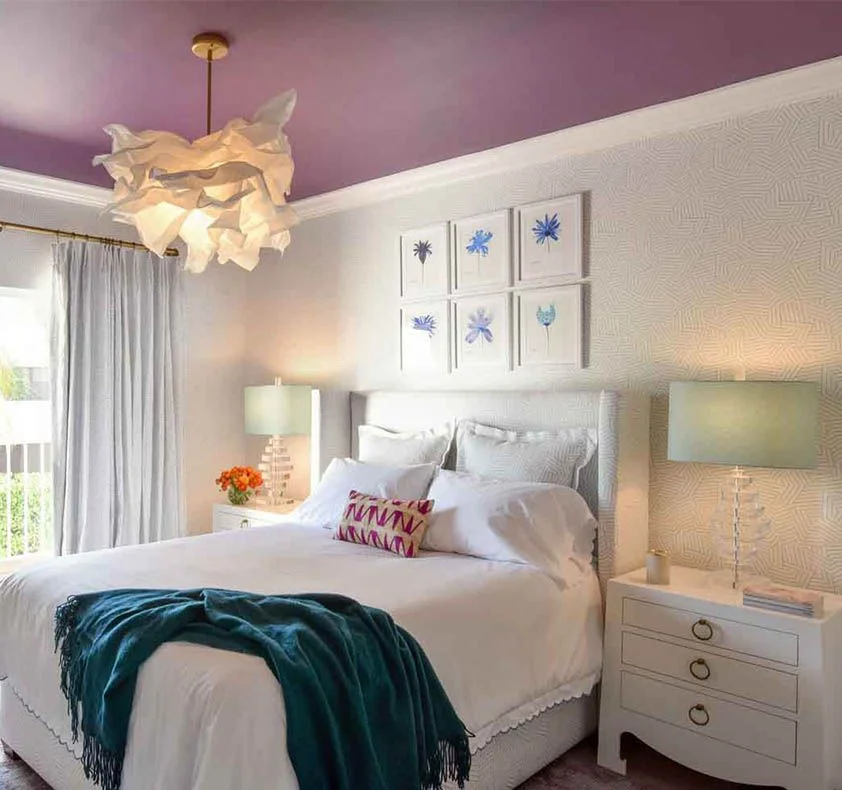
People forget the ceiling, which designers now call the fifth wall. Good Housekeeping’s 2026 bedroom roundup quoted Paige Williams of Paige Williams Interior Design on textured ceilings adding depth and turning a plain box into something with character.
As a renter, you skip the paint and go reversible. A peel-and-stick ceiling medallion around a light fixture does a lot for a few dollars. Or pick one zone, like the wall behind your bed, and run color or pattern up a bit higher than normal so your eye travels up.
Even a string of soft fairy lights tucked along the ceiling edge counts. The point is simple. Give the top of the room something to do.
10. Go Bold in a Tiny Kitchen
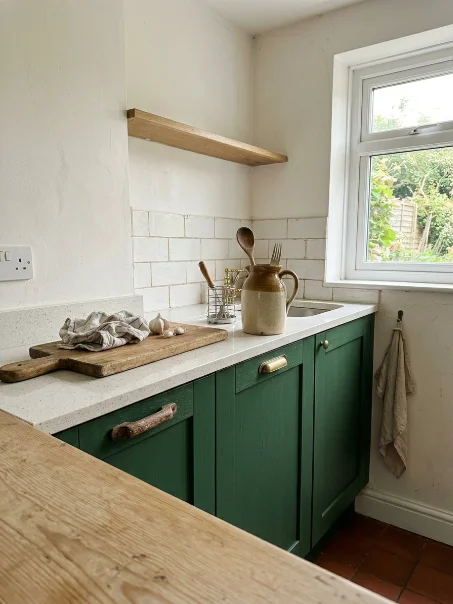
Here’s the surprising one. You’d think a small kitchen needs to stay all white to feel bigger. The opposite can be true. The Coolist’s 2026 apartment kitchen feature found that deep green or moody cabinets, paired with light counters and wood, make a small kitchen feel “more designed, not smaller.”
Renting? You can fake it. Removable cabinet film or contact paper in a deep green skins your cabinet fronts and peels off later. Keep the counters and walls light so the dark reads as a choice, not a cave.
It feels scary to go dark in a small space. Try it on the lower cabinets only first. The color reads as confident, and confident always looks more expensive than safe.
11. Warm Up the Counters With a Lamp and Soft Color
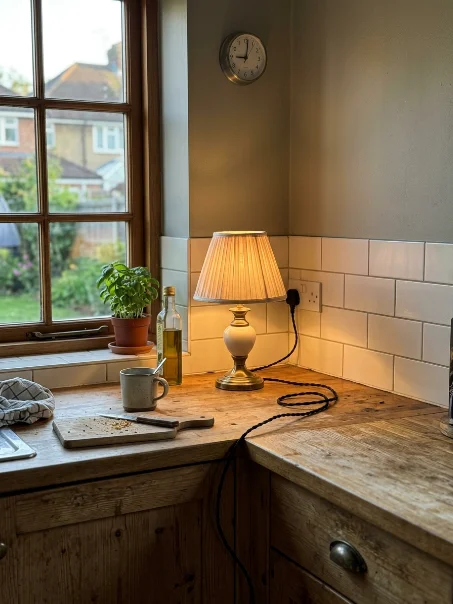
Kitchens feel cold under that one harsh overhead light. The fix is a small lamp on the counter. Homes & Gardens called the countertop lamp a must for a softer kitchen in its 2026 small-kitchen piece. A little warm glow in the corner changes the whole mood at night.
For color, designer Marissa Stokes told The Spruce she loves soft hues like putty, mushroom, taupe, and clay in small kitchens. So bring those in through a runner, a couple of canisters, or your dish towels.
A countertop lamp runs about $30 to $80. It’s a tiny spend for how much warmer the room feels the second you click it on.
12. Add Storage You Can Take With You
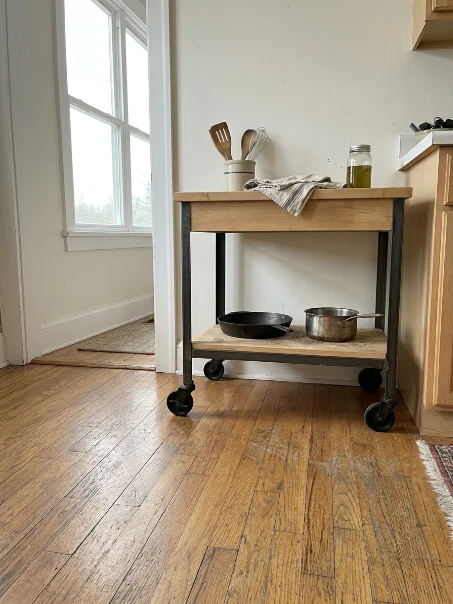
First kitchens never have enough storage. The big-design answer for 2026 is hidden, built-in stuff. Designers like Jennifer Kole of Jenami Designs told The Spruce that built-ins which link two rooms make small spaces feel bigger and more planned.
You can’t build in anything you’ll have to leave behind. So go portable. A rolling kitchen cart gives you a shelf, a surface, and wheels for about $50 to $90. A freestanding pantry cabinet or a tall vertical shelf does the same in a corner.
When you move, it rolls right out the door with you. That’s the whole point. Buy storage that’s furniture, not fixtures, so every dollar comes with you to the next place.
13. Carve Out a Real Dining Nook
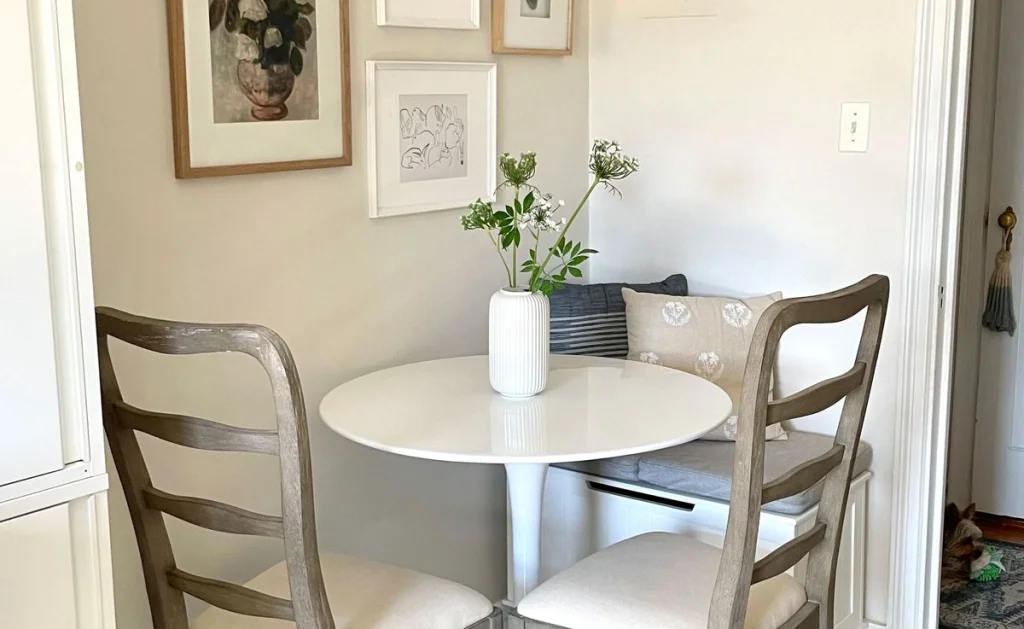
You don’t need a full dining room. A small nook does the job and feels charming. Jane at Home’s 2026 breakfast nook ideas show corner setups built around a small round table and a bench tucked against the wall.
Pick a round table if you can. The soft edge fits tight corners better and seats one more friend than you’d think. Push a bench against the wall to save floor space, then add a couple of chairs on the open side.
Drop a small rug under the whole thing to mark it as its own spot. If your lease allows it, a plug-in pendant overhead seals the deal. Now you’ve got a place to actually sit and eat, not just stand at the counter.
14. Give Your Entryway One Real Job
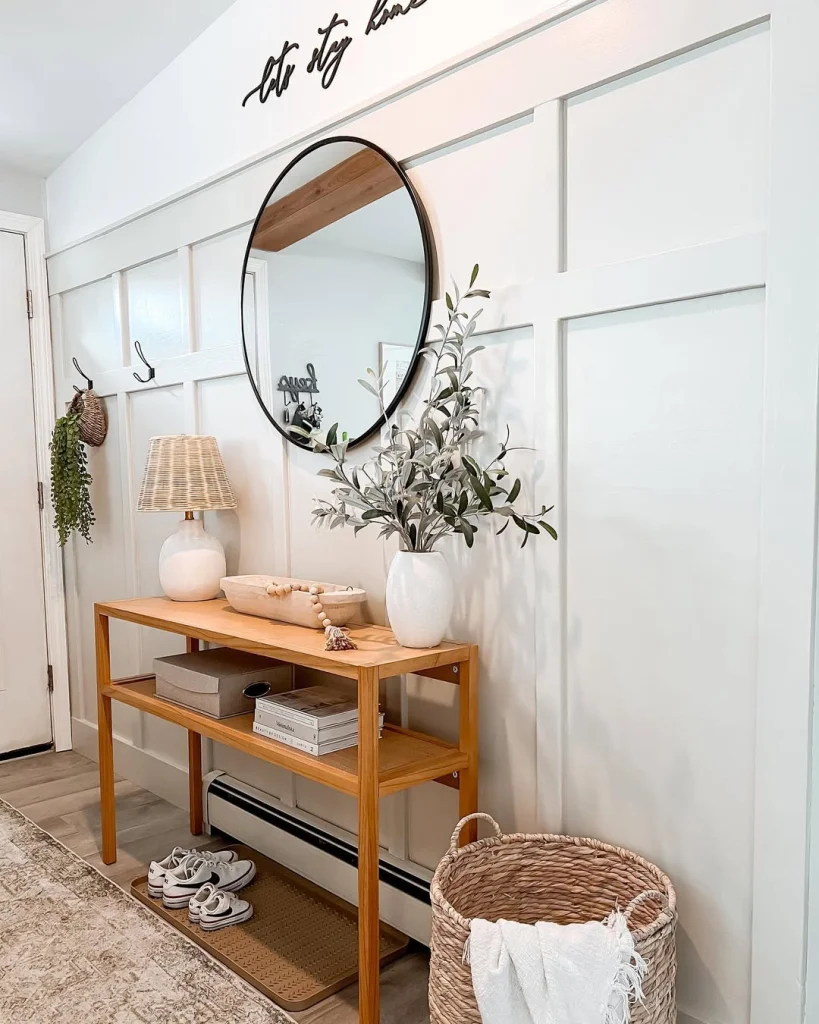
The entryway sets the tone the second you walk in, so don’t leave it bare. Houzz’s 2026 trend report noted that even entryways are getting warmer colors and a more welcoming feel, instead of looking cold and unused.
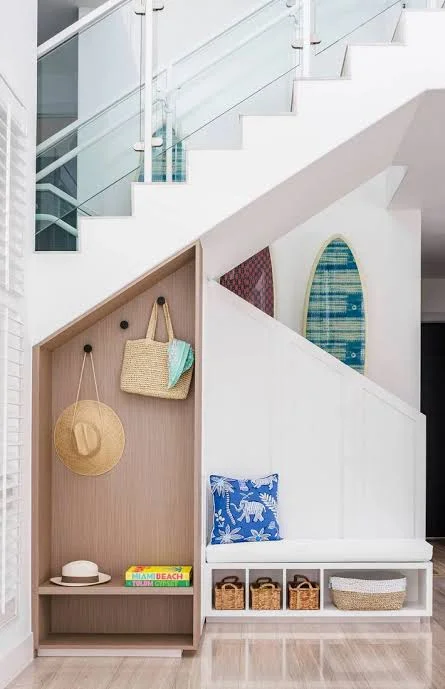
Keep it simple and useful. A slim console table or a row of wall hooks gives you a drop zone for keys and bags. Add a small tray for the random pocket stuff and a mirror for a last look before you leave.
That’s it. Restraint reads better here than a packed coat rack and a pile of shoes. One good piece doing one clear job beats five things fighting for the same small space. This is where first apartment decorating ideas often get skipped, and it’s an easy win.
15. Hang One Personal Display
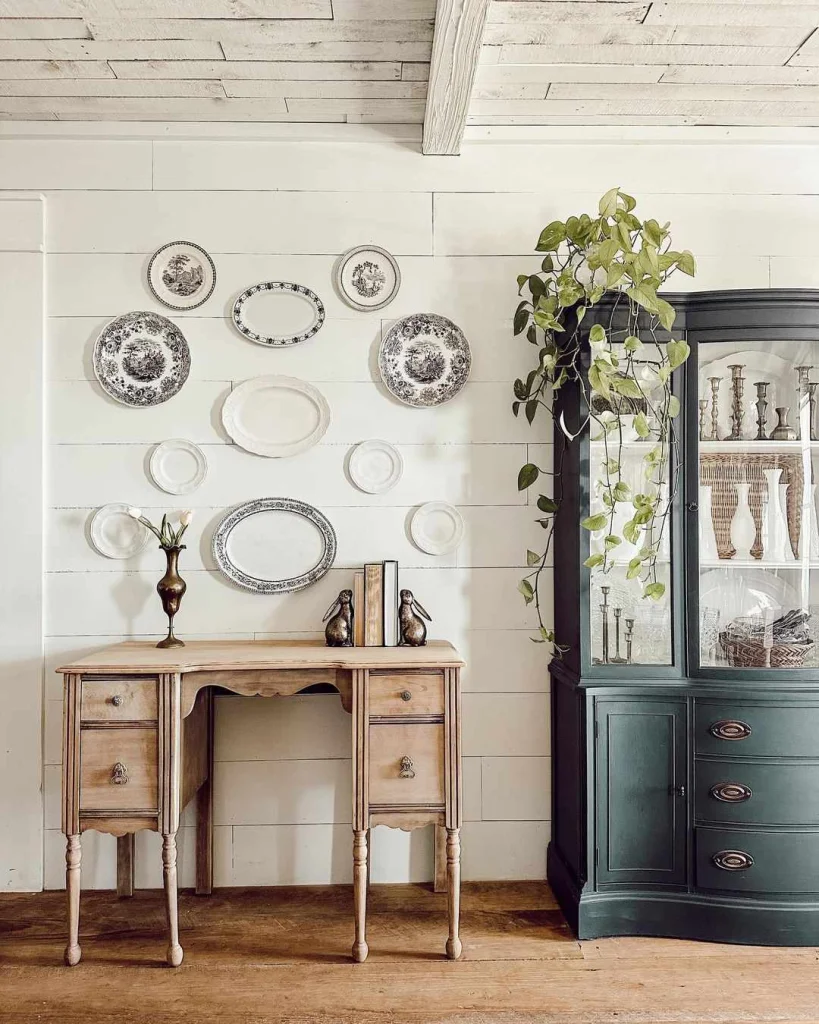
A first home can feel like a hotel until you put something of yours on the wall. The fix doesn’t have to be expensive. Emily Henderson’s 2026 trend post showed wall plates popping up in living rooms, kitchens, and bedrooms, because no two plate walls look the same.
Plates not your thing? A small grid of framed photos works. So does a shelf with a few books and one object that means something to you. Designer Bunny Chauhan told The Spruce that those little personal touches are what make a room feel real and lived-in.
Pick one wall or one shelf. Just one. The goal is a spot that says a person lives here, not a catalog page.
16. Refresh a Rental Bathroom Without Damage
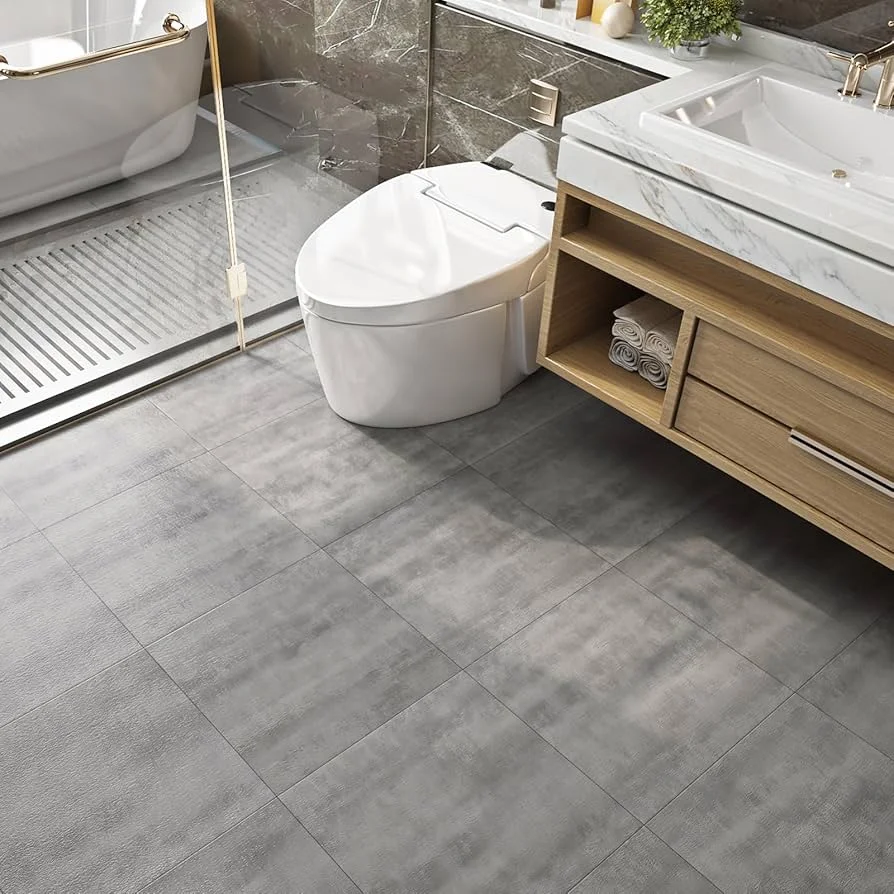
Rental bathrooms are usually the saddest room in the place. Good news, you can fix yours without losing your deposit. Luxury SoCal Realty’s 2026 budget guide loves peel-and-stick floor tiles, like FloorPops, that lay right over an ugly floor and trim with a utility knife.
For the walls, a small panel of removable wallpaper adds color. Keep it back from the splash zone around the sink and tub, since direct water and steam can lift the edges. A clean, dry wall holds it best.
Swap in one nice folded towel and a plant that likes humidity. Two small changes, and the room stops feeling like a place you just rush through.
17. Upgrade the Small Boring Stuff
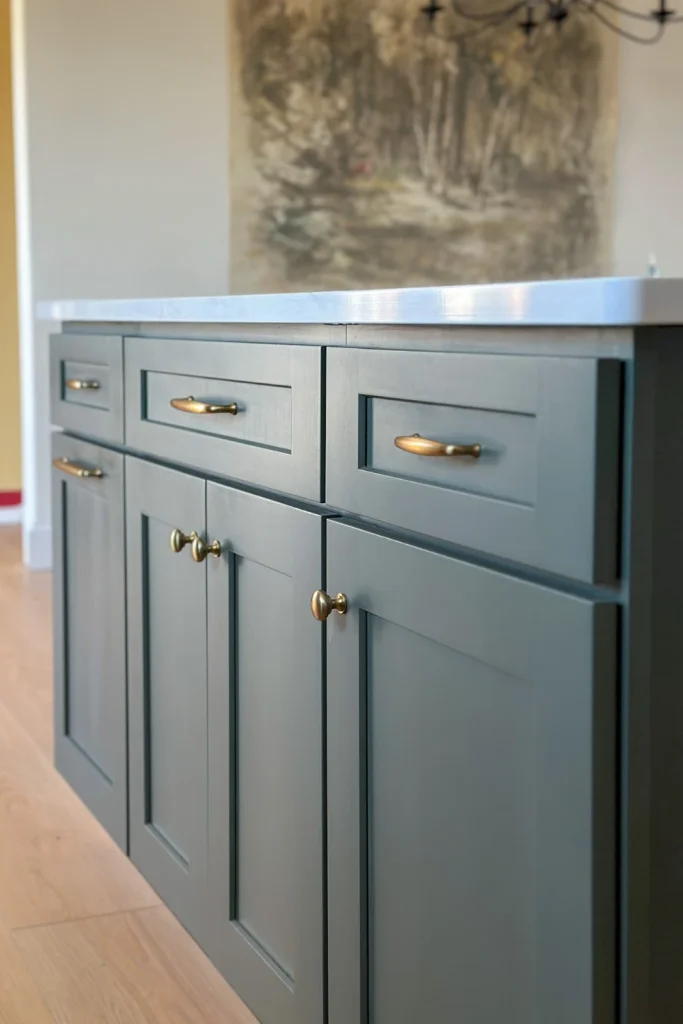
Some of the cheapest changes make the biggest difference. The design service Decorilla pointed this out in its 2026 budget tips. Swapping cabinet knobs, door handles, and even light switch plates instantly lifts a room from builder-basic to thought-out.
A pack of nice knobs runs a few dollars and takes a screwdriver and ten minutes. Same with a fresh switch plate. Most landlords are fine with it as long as you keep the old ones in a drawer to put back when you leave.
This is the heart of decorating a home on a budget. Tiny upgrades stack up. Do a few of these around the place and the whole home feels a notch more finished, with barely any spend.
18. Build a Work Corner That Isn’t an Eyesore
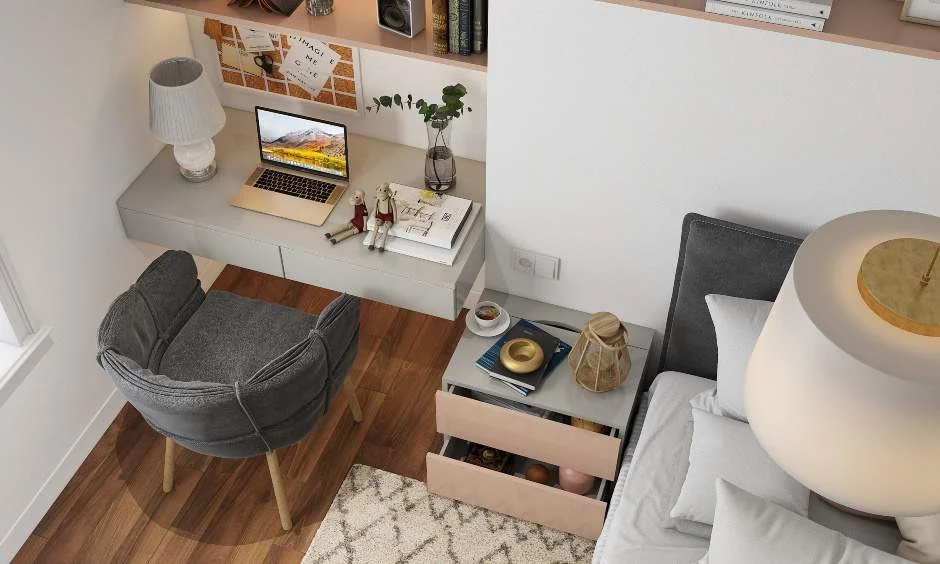
If you work from home, your desk lives in your home all evening too. So it shouldn’t feel like an office that wandered into your living room. Houzz’s 2026 report noted home offices moving to warmer colors that feel inviting rather than clinical.
Start with a warm desk lamp instead of harsh white light. Add one small shelf above or beside the desk for a couple of books and a plant. Pick a desk in wood or a warm tone over cold black metal if you can.
Tuck the corner near a window for daylight. When the laptop closes, the spot should read as part of your home, not a reminder of work waiting for you.
19. Use Real Plants, Not Cheap Fake Ones
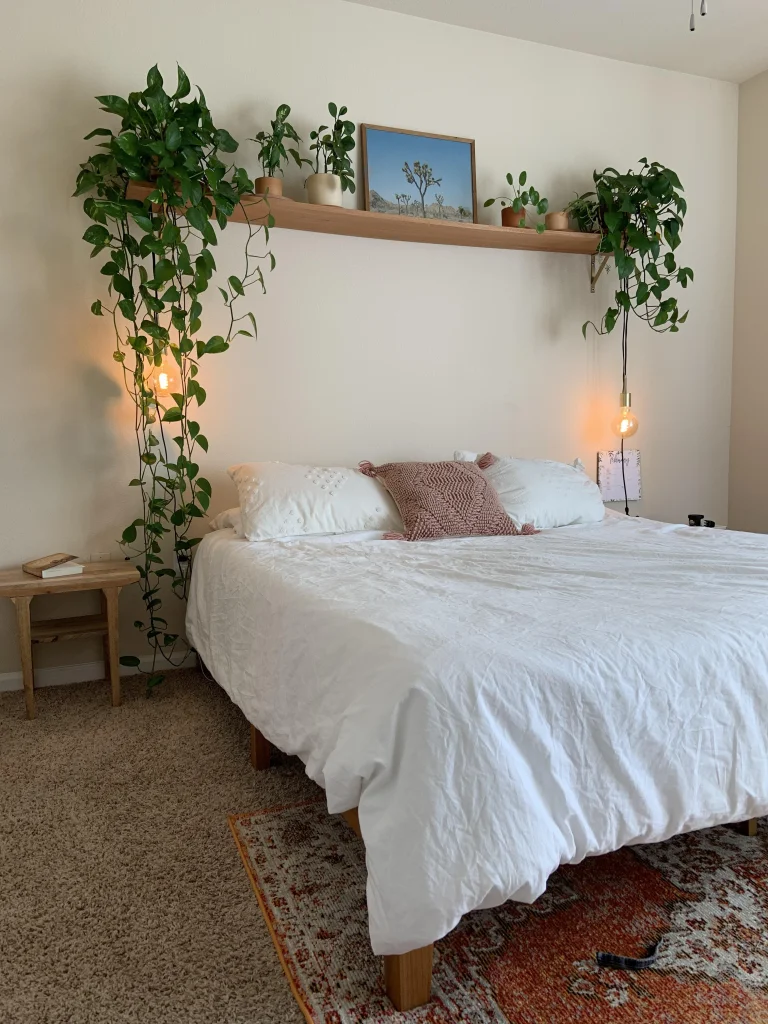
Plants bring a room to life, but the fake ones can give you away. Designer Fariha Nasir told Better Homes & Gardens in 2026 she’s not a fan of faux plants unless they’re high quality enough to make you look twice. A dusty plastic fern in the corner reads cheap fast.
So go real where you can. A pothos or a snake plant is hard to kill and happy in low light, which is perfect for a first place with one small window. A couple of healthy real plants beat a shelf full of obvious fakes.
If you truly can’t keep anything alive, buy one good fake, not five bad ones. Quality over quantity wins here every time.
20. Edit Before You Add More
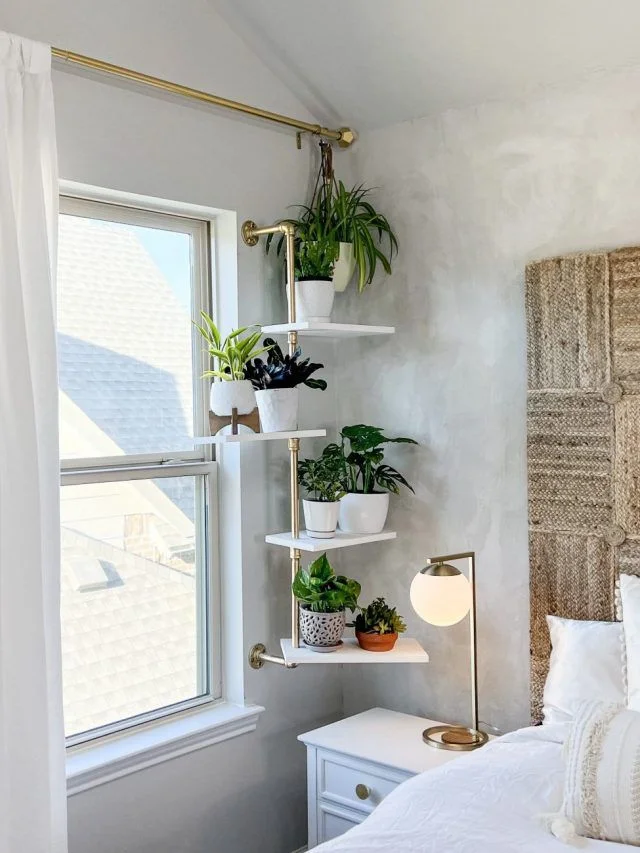
The last idea is to stop adding. Once a room feels mostly there, the move is to take a step back and pull a couple of things out. Restraint reads as more expensive, which The Coolist hit on again and again in its 2026 budget rooms.
Keep your colors tight. Three or four tones across the whole room beats a rainbow of random buys. And go easy on the trendy stuff everyone has. Fariha Nasir specifically called out cane and rattan showing up on everything, saying it starts to look generic when it’s everywhere.
Leave a little breathing room on shelves and tables. Empty space isn’t a gap to fill. It’s part of the look, and it makes the pieces you do love stand out more.
Take It One Room at a Time
Your first home doesn’t get finished in a weekend, and it isn’t supposed to. The warm, mixed, personal look designers love right now is meant to come together slowly, piece by piece. So don’t pressure yourself to do all 20 ideas at once.
Pick the room you spend the most time in and start there. Maybe that’s a right-sized rug in the living room, or a softer color scheme in the bedroom. One real change beats a long list you never touch.
Most of these ideas come straight back out when you move, which means nothing here is a risk. Save the rooms you’re tackling first, grab one thing this week, and let your first place become yours one corner at a time.