25+ Home Office Decor Ideas That Make You Actually Want to Sit Down and Work

✔ Written & fact-checked by Sophie — last reviewed April 23, 2026
Why Your Home Office Deserves More Than a Desk and Good Intentions
I used to work at my kitchen table. For almost two years, I told myself it was fine — laptop open, a mug of coffee, pretending the pile of dishes behind me didn’t exist. It was not fine. The moment I finally carved out a real, intentional home office space — one that I actually liked being in — everything shifted. How I worked, how long I could focus, even how I felt at the end of the day.
A home office doesn’t need to be a whole room. It doesn’t need to cost a fortune. But it does need to feel like yours. In this post I’m sharing 25+ home office decor ideas pulled from some of the most inspiring spaces I’ve come across — organized, cozy, moody, colorful, small, and maximalist. There’s something here for every kind of worker and every kind of space.
1. Go Bold with Color Drenching
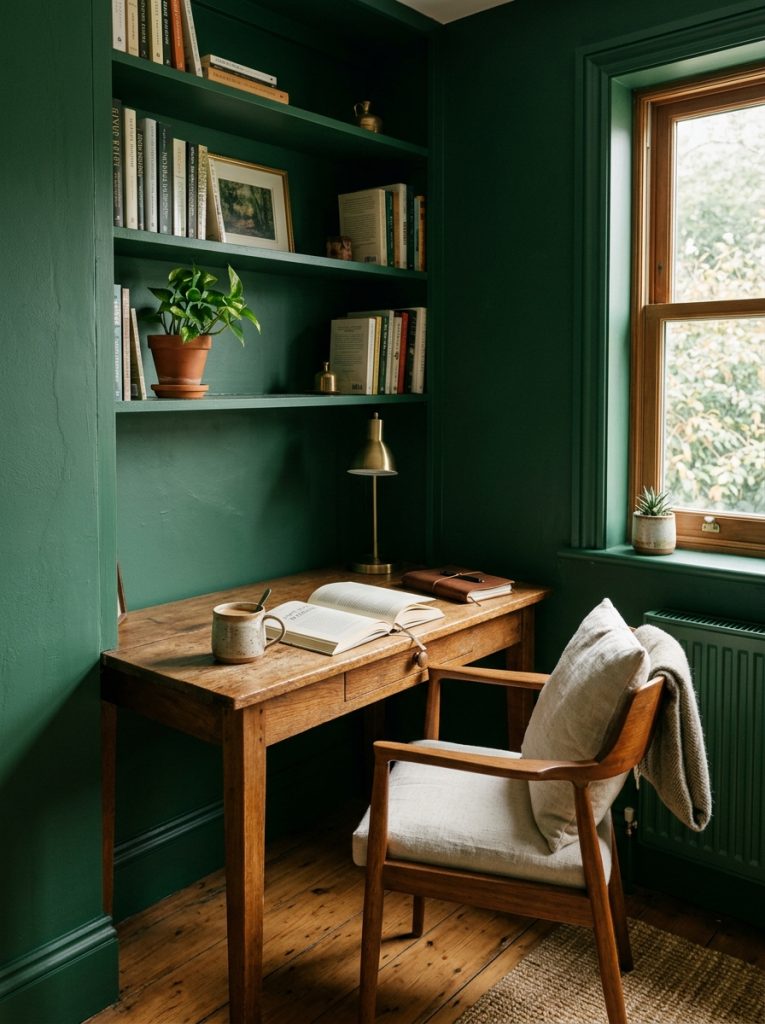
If you’ve been hovering over a boring greige paint chip for the last six months, I’m giving you permission to just go for it. Color drenching — painting walls, trim, and built-ins all in the same saturated hue — is one of the most transformative things you can do to a home office. Kelly green, deep coral, inky blue. Pick one and commit.
I painted a small study alcove in a deep forest green once and fully expected to regret it within a week. Instead, I sat in that room more than any other space in the house. Something about being wrapped in a strong color made it feel intentional, private, almost like a proper workspace. It cut out the noise from the rest of the house in a way that had nothing to do with soundproofing.
If you’re nervous, start with the back wall only — but honestly, the full drenched effect is where the magic happens.
2. Build a Dedicated Lounge Zone
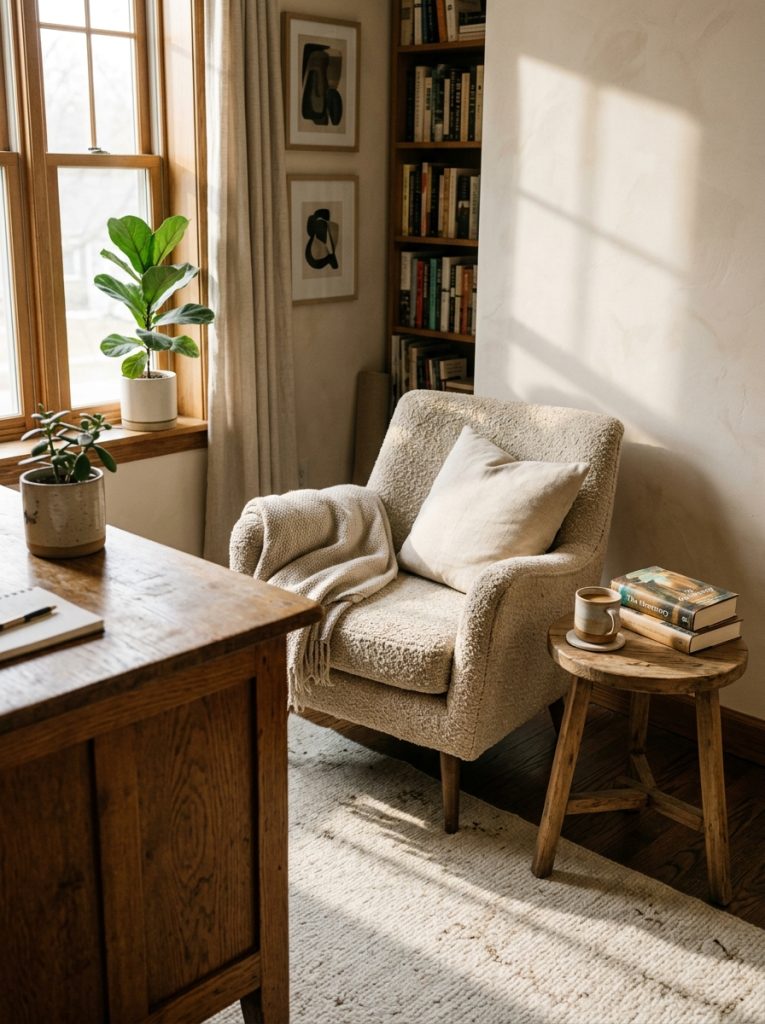
Here’s something I genuinely didn’t expect to need in a home office: somewhere to sit that isn’t my desk chair. A small armchair, a reading nook with a cushion, even a vintage lounge chair tucked into the corner — it changes everything. You’re not leaving the room for a break, you’re just moving across it.
That sounds small, but it keeps you in the working headspace without chaining you to a screen. A shearling rug underfoot and a good lamp overhead are all you need to make a corner feel like a destination. I’ve also found that when I’m stuck on something, moving to the chair with a notebook rather than staring at my laptop screen tends to actually produce ideas. The lounge zone pays for itself in problem-solving alone.
3. Use Wallpaper to Do the Heavy Lifting
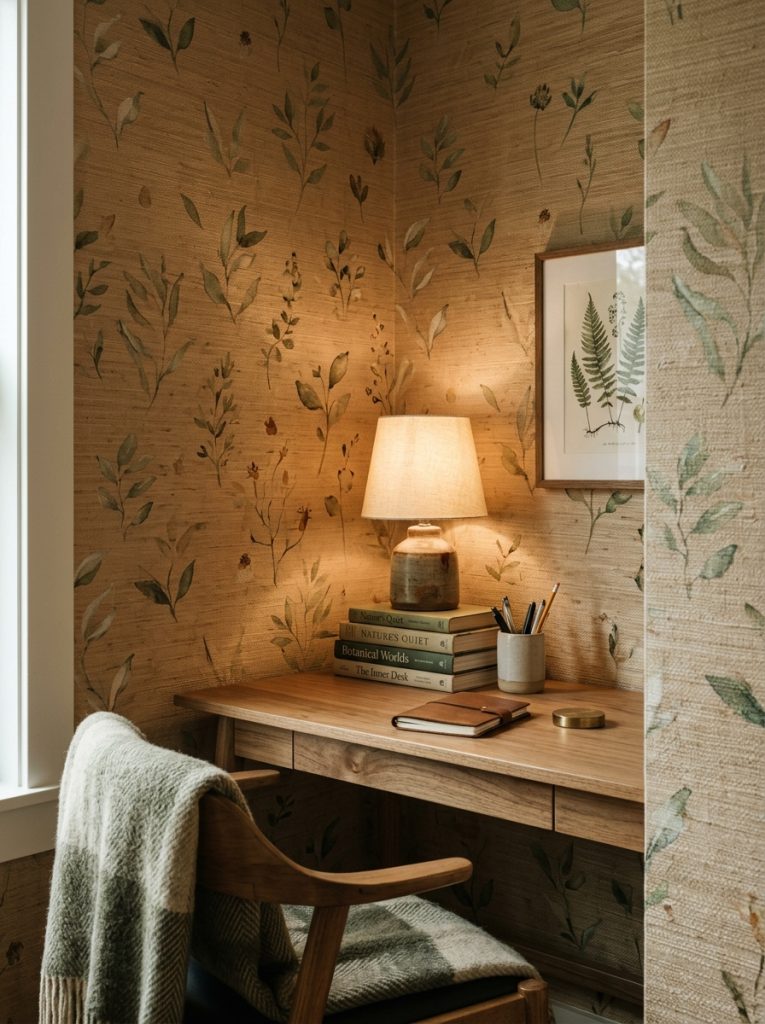
If a room has no natural light, no great view, and no architectural interest — wallpaper is your best friend. I’ve seen grasscloth with a watercolor floral pull a dark, windowless desk nook into something people actually stop and look at. Chinoiserie, botanical prints, bold stripes, even a simple textured grasscloth in warm caramel — all of them give the eye somewhere to travel when you look up from the screen.
One thing I will say: don’t pick a pattern that’s going to make your Zoom background chaotic. A medium-scale print in soft tones reads beautifully on camera. A wild, busy repeat can be distracting for everyone on the call. Test it on camera before you commit to hanging all four walls.
4. Add Floating Shelves in Warm Wood
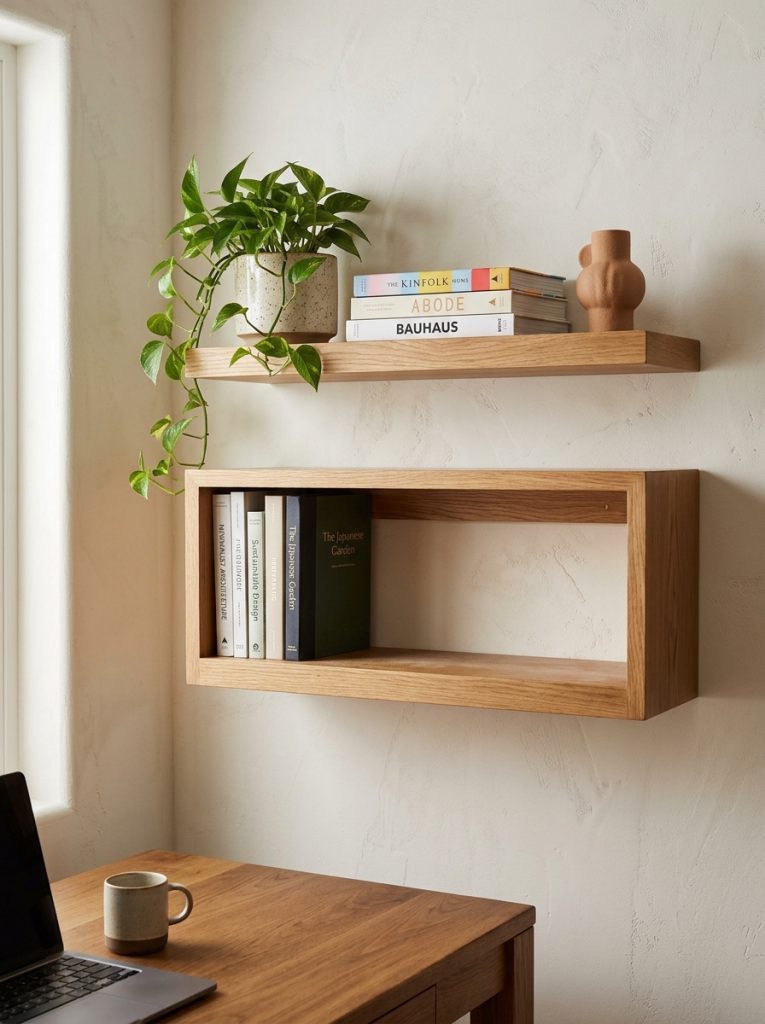
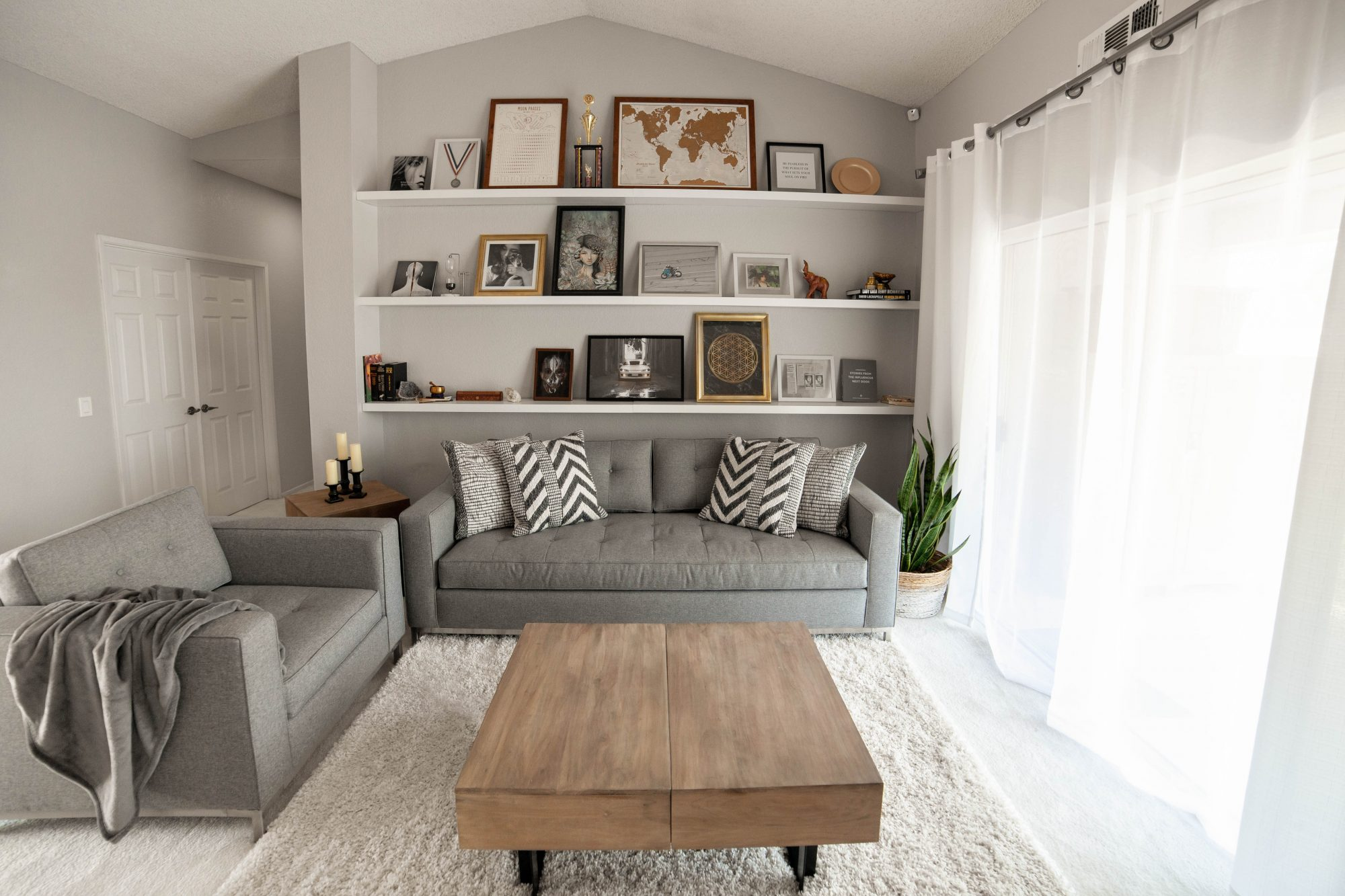
I am a float-shelf convert and I’ll stand by that. Built-in floor-to-ceiling shelving is wonderful if you have the budget and the walls for it, but a few well-placed floating shelves in white oak or walnut do almost the same visual job at a fraction of the cost. Style them with a mix of books, a small plant, maybe a piece of art leaning against the wall — and suddenly your home office has depth and personality.
The trick is restraint. Three shelves styled with breathing room will always look better than five shelves crammed with everything you couldn’t find another home for. Alternate between books spine-out and books stacked flat, and leave at least one section completely clear. The empty space is part of the display.
5. Embrace a Moody Dark Palette
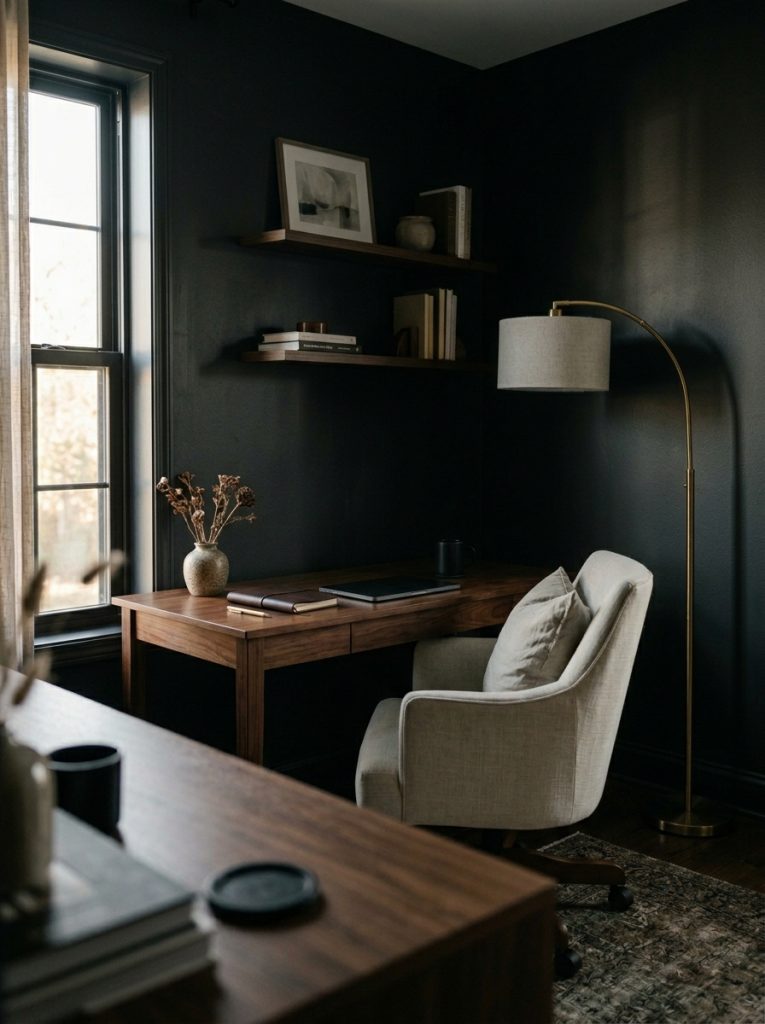
Moody doesn’t mean depressing. Some of my favorite home office setups I’ve ever seen are the darkest ones — charcoal walls, deep walnut furniture, low layered lighting. The key is contrast and warmth. You need something light to bounce off: a cream linen chair, a pale rug, a white lamp shade.
Dark rooms can feel cozy in a way that pale rooms struggle to achieve, and that coziness turns out to be really good for focused work. I’d pair deep walls with warm-toned wood (not cool grey wood — warm brown wood) and at least two light sources so the space doesn’t feel like a cave after sunset. An arched floor lamp in the corner does a lot.
6. Choose a Statement Desk as the Focal Point
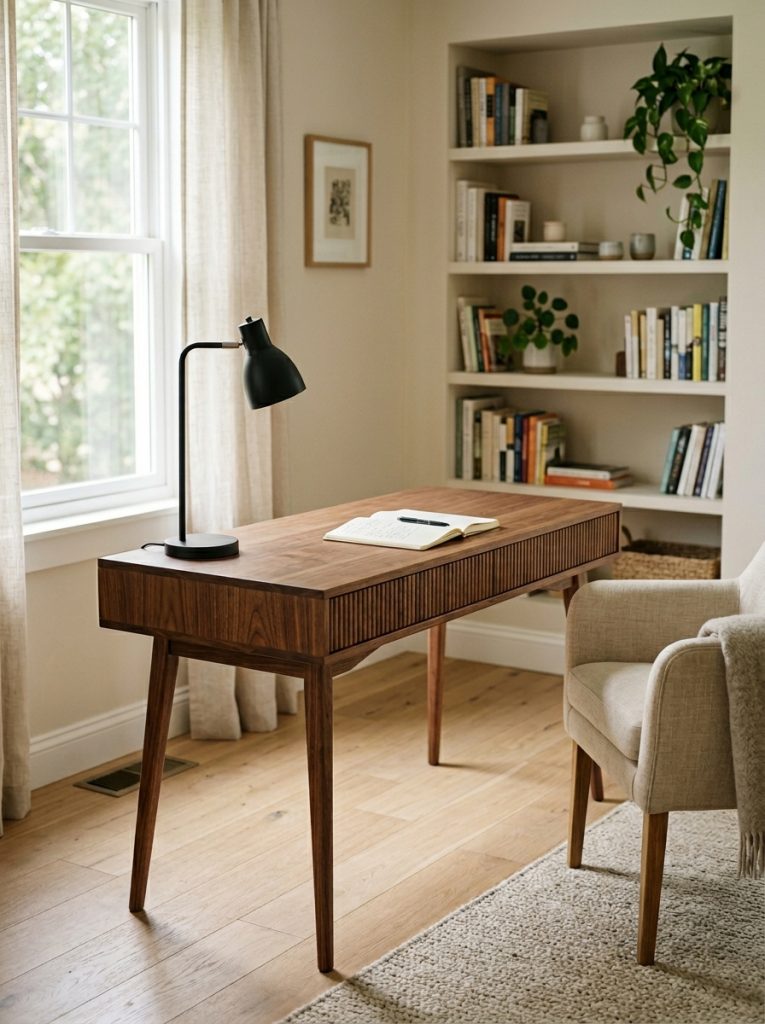
The desk is the one piece of furniture in a home office that earns being beautiful. Everything else can be found, thrifted, or simple — but if you’re going to spend money anywhere, put it here. A sculptural desk with interesting legs, a reeded front, an unusual material like stone-top or lacquered wood — it changes the entire register of the room.
I once paired a very plain, bare room with just one genuinely interesting desk and the room looked designed. Nothing else needed to happen. If a custom piece isn’t in the budget, vintage is your answer. Antique desks are often extraordinary objects that also happen to function perfectly, which as a practical matter is hard to argue with.
7. Incorporate Vintage Finds
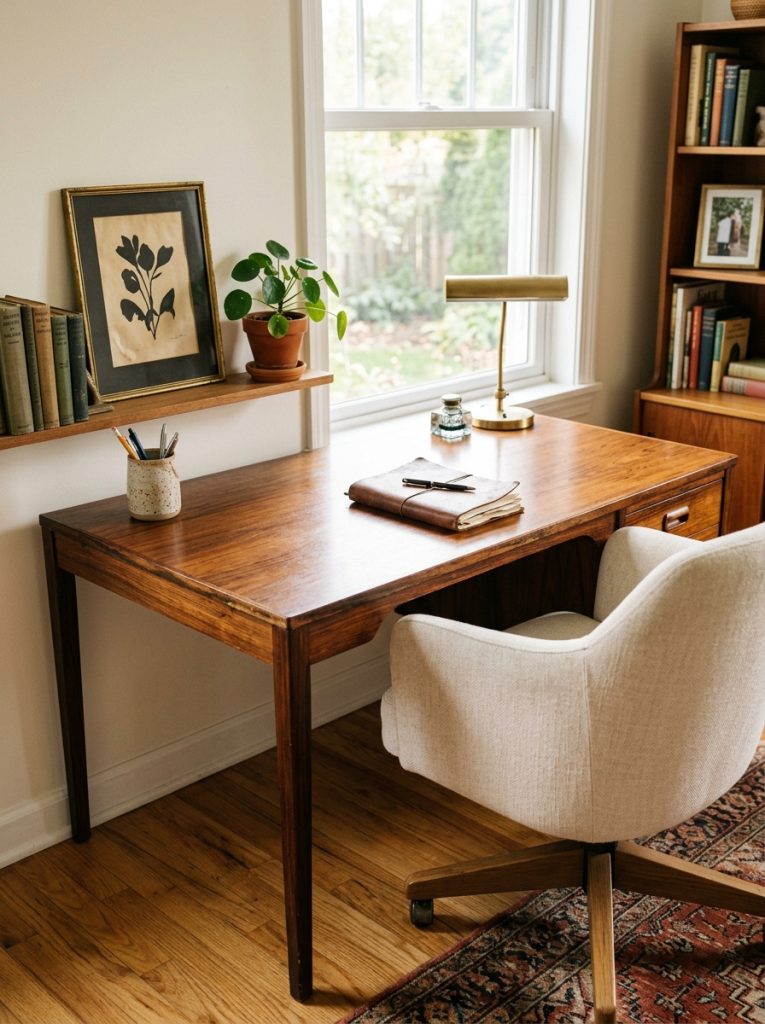
New furniture is fine. Vintage furniture is better. There’s a reason antique desks still function after a century — they were built to last, and the quality of the materials and joinery is almost impossible to replicate at modern price points. Mixing one or two vintage pieces into an otherwise contemporary setup gives a home office that layered, collected-over-time feeling that styled rooms always chase but rarely achieve.
A circa-1950s desk chair, an antique writing table, a Danish rosewood bookshelf — any of these will make the space feel like it has a history, which makes it feel more personal. Chairish, 1stDibs, and local estate sales are worth the hour you’ll spend scrolling.
8. Create a Gallery Wall That Earns Its Keep
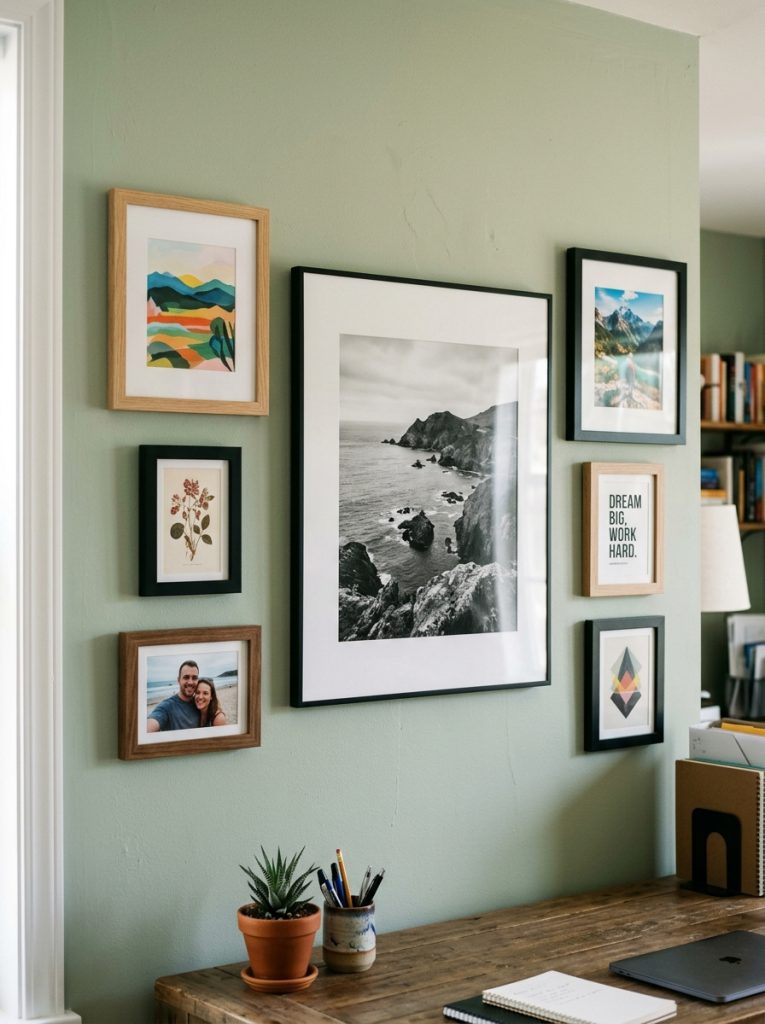
A gallery wall in a home office is different from one in a living room. In an office, it’s doing double duty — it’s the backdrop you stare at when you’re stuck, and it’s what everyone on a Zoom call sees. Both of those things matter.
I’d go for a mix of sizes with a dominant central piece, rather than a perfectly even grid (which reads as corporate, not personal). Frames can match or vary — matching frames with varied art tends to look more intentional. One or two personal photos tucked in among prints gives the whole thing warmth. And honestly, the gallery wall is one of the few office decor moves you can rearrange every few months without any real commitment.
9. Try a Built-In Niche or Alcove Desk
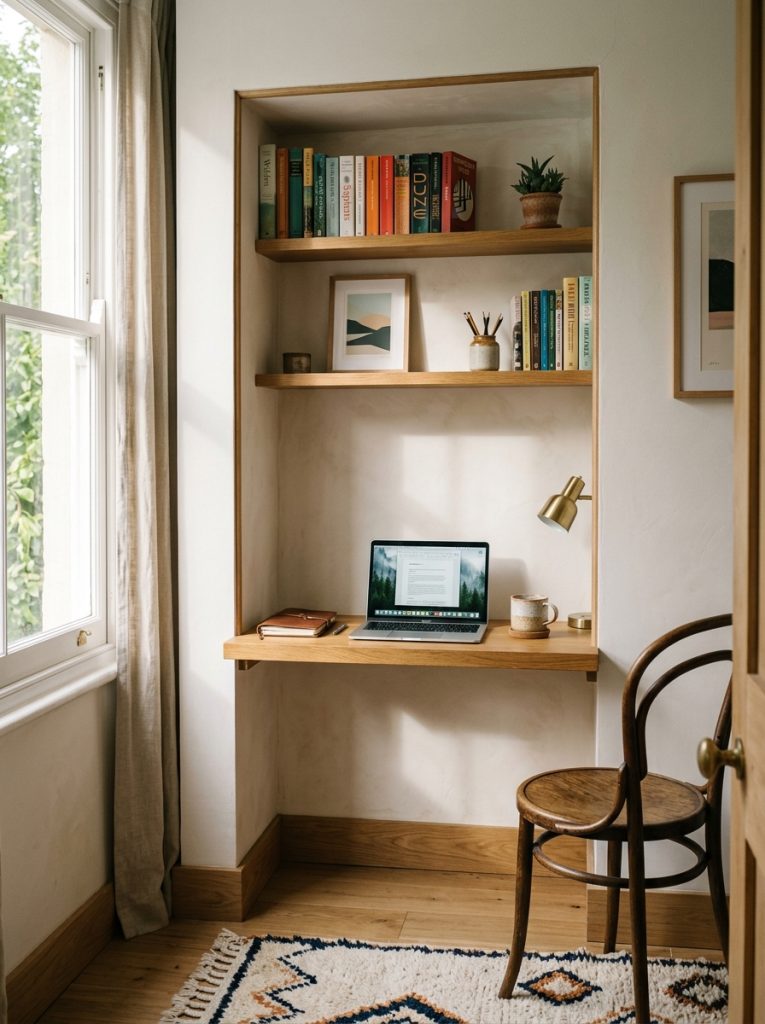
If you’re working with a small apartment or a room that needs to serve multiple purposes, a built-in alcove desk is one of the cleverest solutions I know. It uses space that would otherwise just be wall, it keeps the desk from dominating the room, and when you add pocket doors or a curtain across the front, you can close the whole thing off — invisible, gone, not your problem until morning.
I’ve seen this done in a bedroom corner, under a staircase, and recessed into the side of a chimney breast. All of them worked beautifully. The key is getting the depth right — you want at least 20 inches of desk depth to work comfortably, plus overhead storage above.
10. Layer Textures for a Sensory-Rich Space
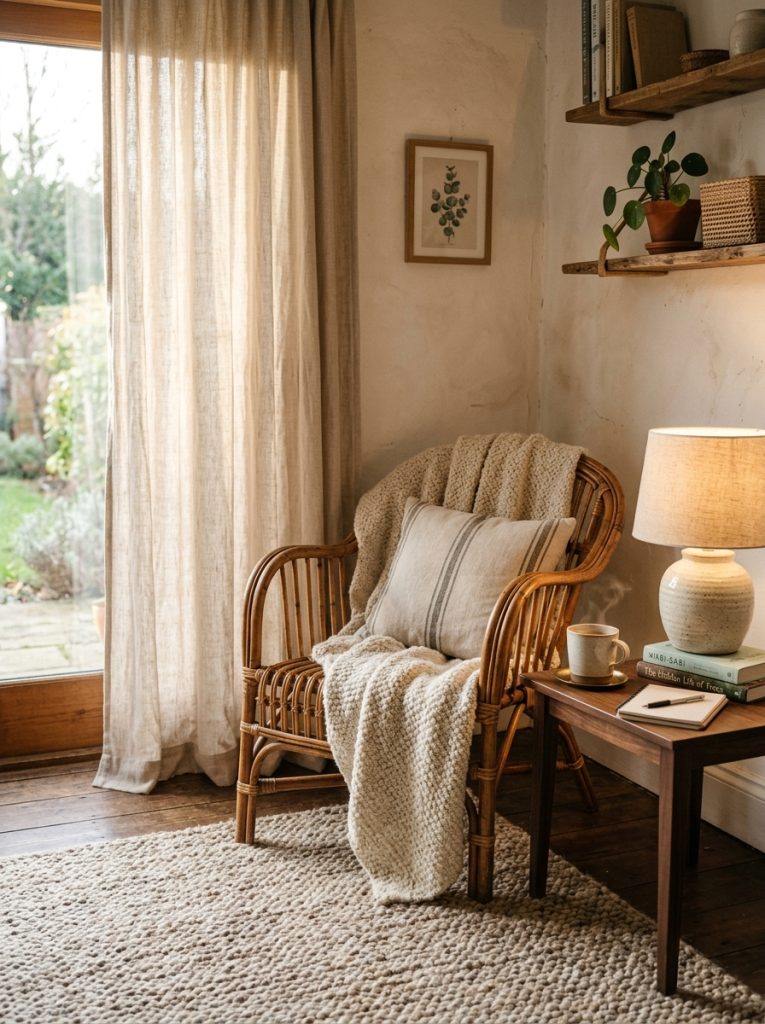
Color gets all the credit but texture does all the work. A linen curtain, a wool rug, a rattan chair, a leather desk surface — none of these are showy, but together they create a room that feels warm and genuinely comfortable to spend eight hours in.
The rooms that feel flat are usually the ones where every surface is the same material: all smooth, all matte, all painted. Vary it. A woven blind against a painted wall. A ceramic lamp on a wood shelf. Texture is how a room earns that “lived in” quality that you can’t get from buying the right things — you have to layer the right things.
11. Bring in a Mural or Statement Wall Treatment
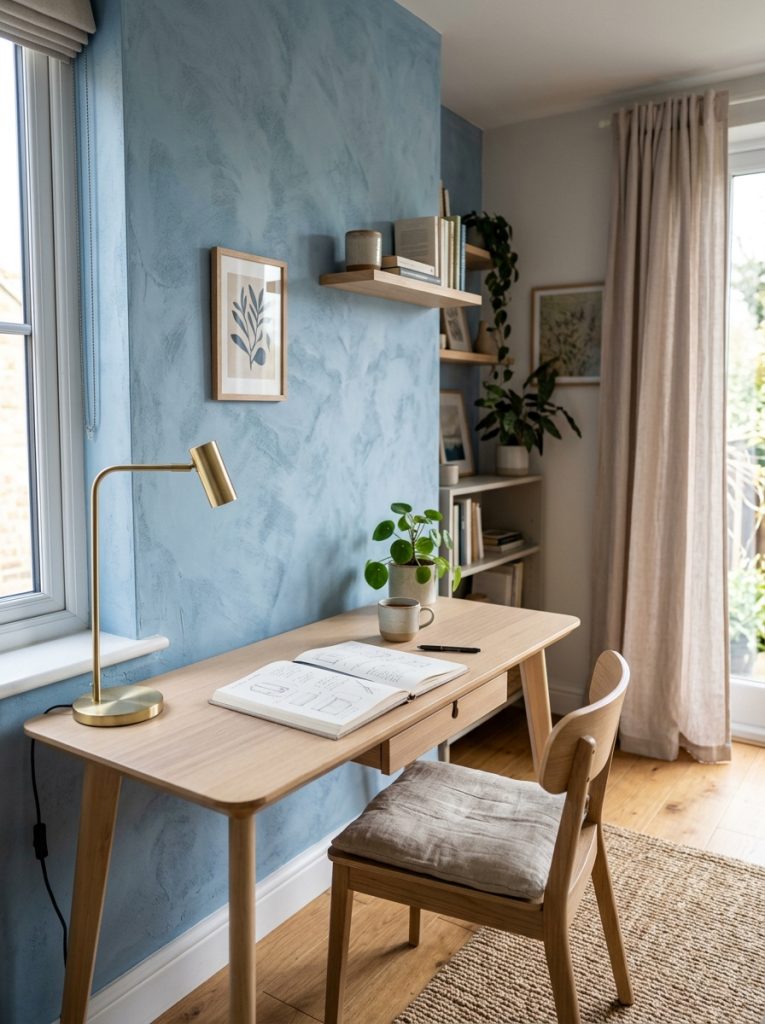
Plain white walls in a home office are a missed opportunity. If wallpaper feels like too much commitment, a painted mural or a specialist wall treatment — lime wash, limewash plaster, a hand-painted color wash — gives the same sense of texture and character without the paper-hanging drama.
A coastal mural across one wall can transport the whole room. Even a simple ombre from dark to light behind the desk can make the space feel designed rather than default. I’d keep the mural to one wall only and let the rest of the room breathe — otherwise it tips from dramatic to chaotic very quickly.
12. Use a Double-Sided Desk for a Shared Office
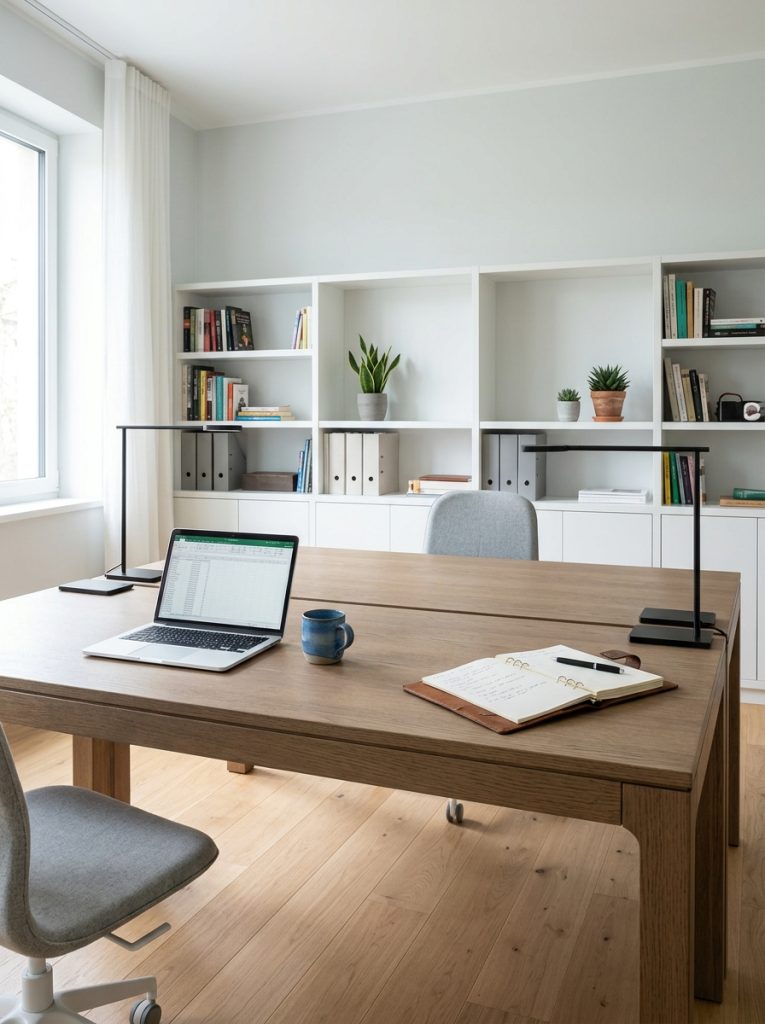
Two people, one room, zero arguments — in theory. A double-sided desk positioned in the center of the room rather than against a wall is one of those solutions that sounds so obvious once you see it. It creates a natural divide for two separate workflows while also opening the room up rather than pushing everything to the perimeter.
I’d pair it with matching task lamps on each side but let each person’s side be styled differently — that’s the personal touch that makes a shared space feel less like a compromise. Built-ins on both side walls for storage keeps the center of the room from getting overwhelmed.
13. Position the Desk to Face the Window
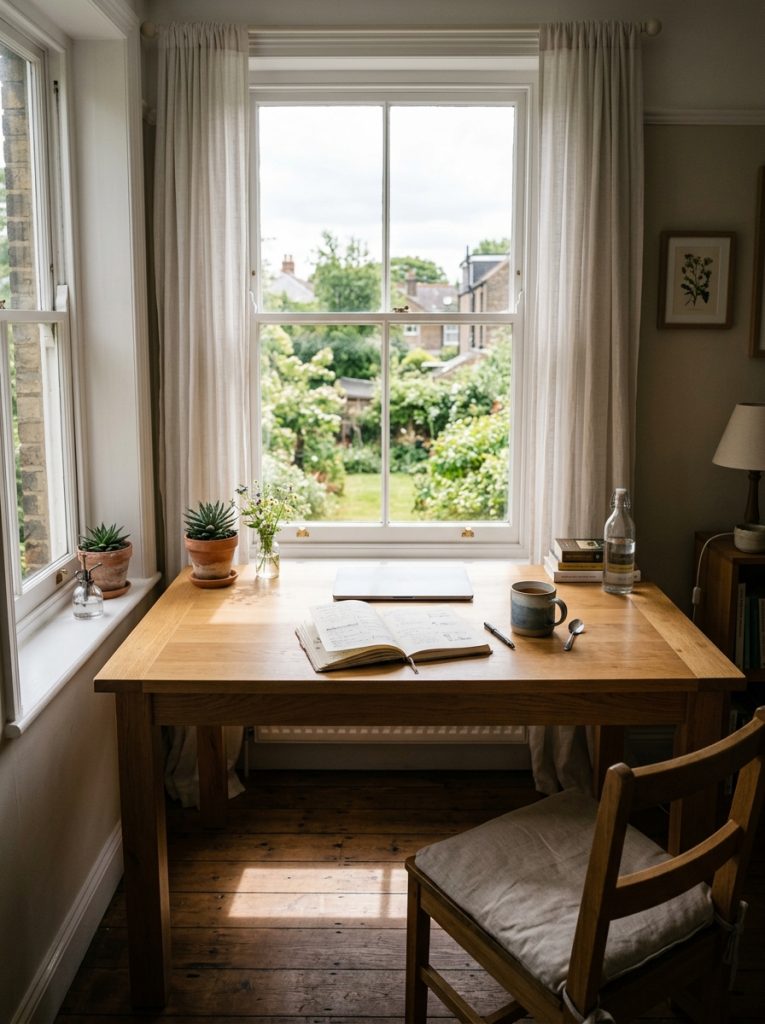
Every designer I’ve ever spoken to about home offices agrees on this: face the window. Natural light on your face rather than behind you is not only better for your Zoom presence, it’s also better for your mood and your focus across a long day. If the window faces east, you’ll get beautiful morning light — ideal if you’re an early worker. West-facing gives warm afternoon light. Either is good.
What you want to avoid is the laptop screen facing a window directly, which causes glare and eye strain. Position yourself so the light comes at your face or from the side, never behind the screen. A sheer linen curtain helps diffuse harsh midday light without blocking it entirely.
14. Add a Reading Nook with Built-In Shelving
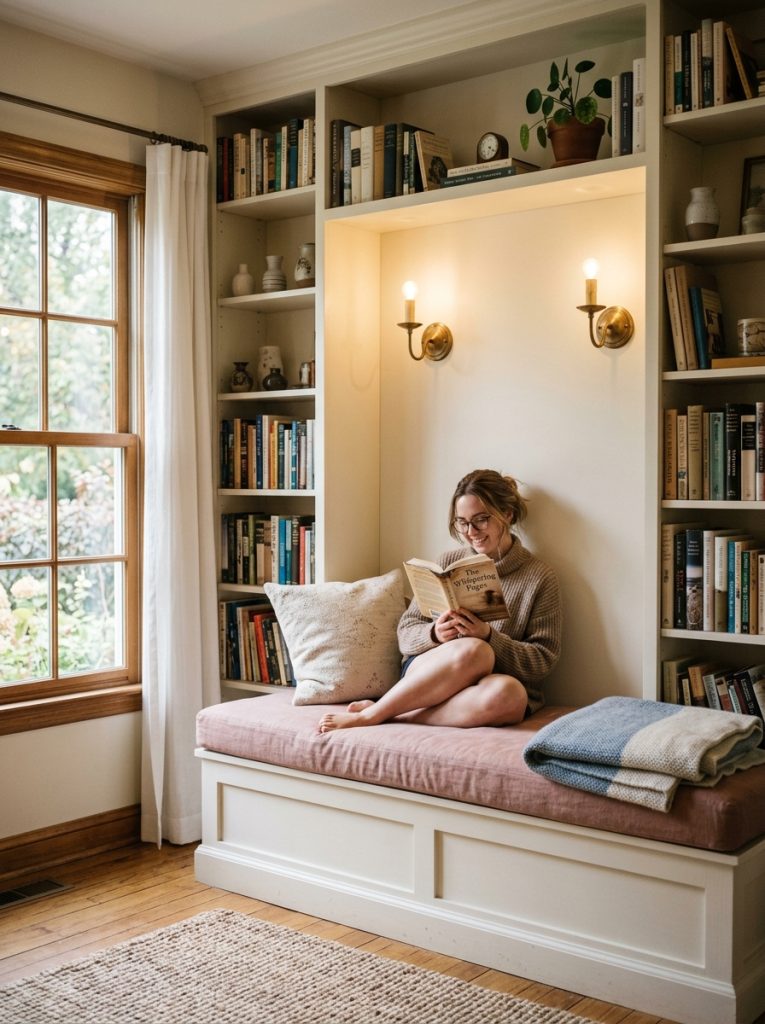
A reading nook in a home office sounds indulgent. It’s not — it’s a functional zone that gives you somewhere to think without leaving the room, which is exactly what you need during a long work session. Built-in bench seating with shelving either side, a cushion in a durable fabric (I like a tightly woven linen or a wool tweed for longevity), a pair of sconces above — that’s the whole recipe.
The shelves serve as storage, the bench serves as overflow seating when someone comes by, and the nook as a whole gives the office a sense of completeness that a single desk-and-chair setup never quite achieves.
15. Opt for Neutral Tones with Organic Materials
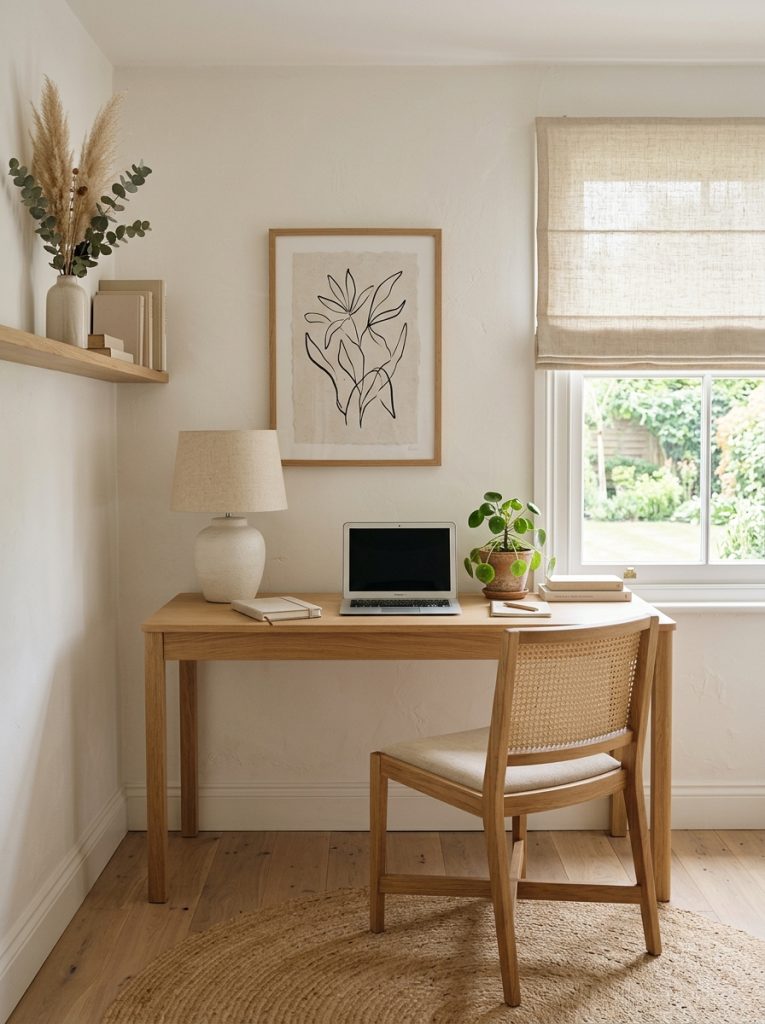
Not everyone wants a bold color story. Some people need a workspace that genuinely quiets the brain, and for that, neutrals are your answer — but the material choices matter enormously. Linen, wood, ceramic, rattan, stone. These organic materials bring warmth and texture to a neutral palette without making it feel cold or corporate.
I’d anchor the space with a warm white or a pale warm grey on the walls, bring in a wooden desk, add a jute or wool rug, and let the lamp be the one moment of material interest — a ceramic base in an unexpected shape. It’s the kind of space that photographs beautifully and works even better in person.
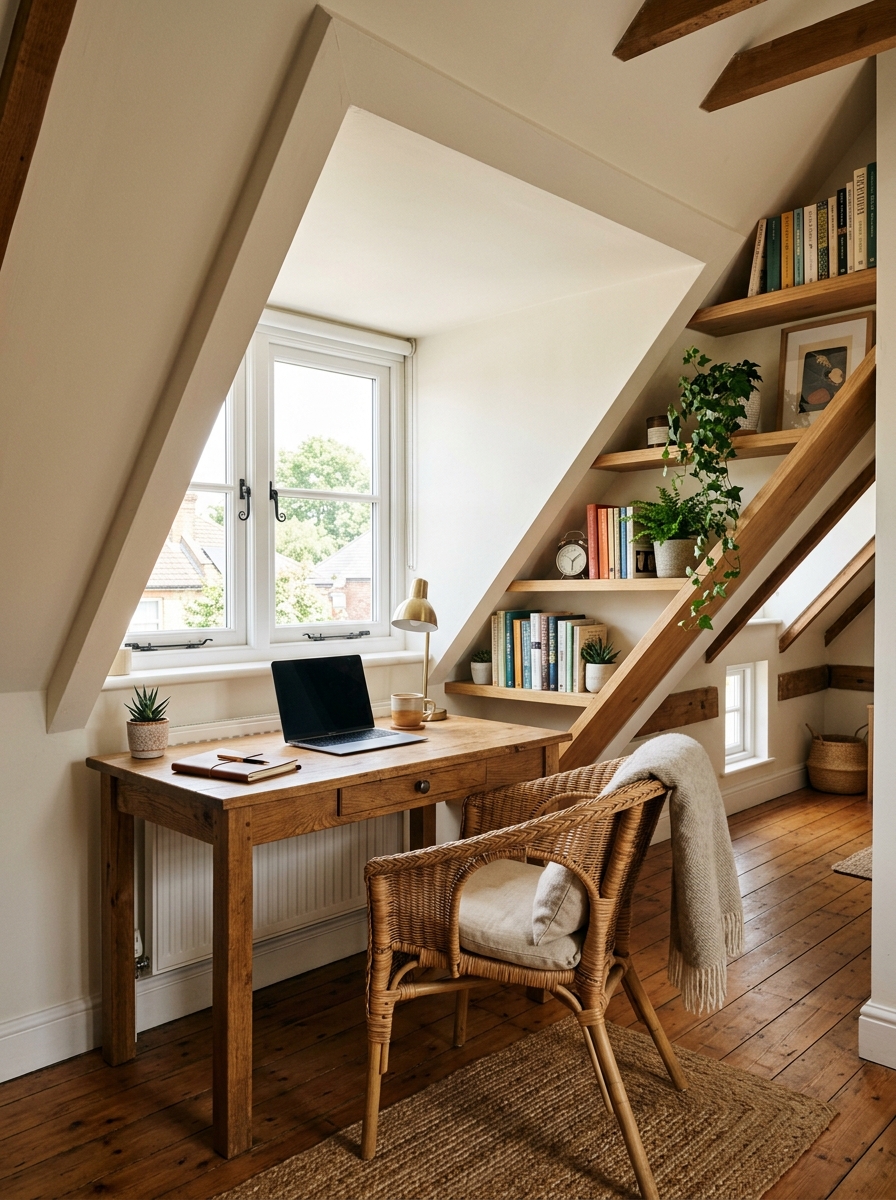
16. Make the Most of an Attic or Landing Space
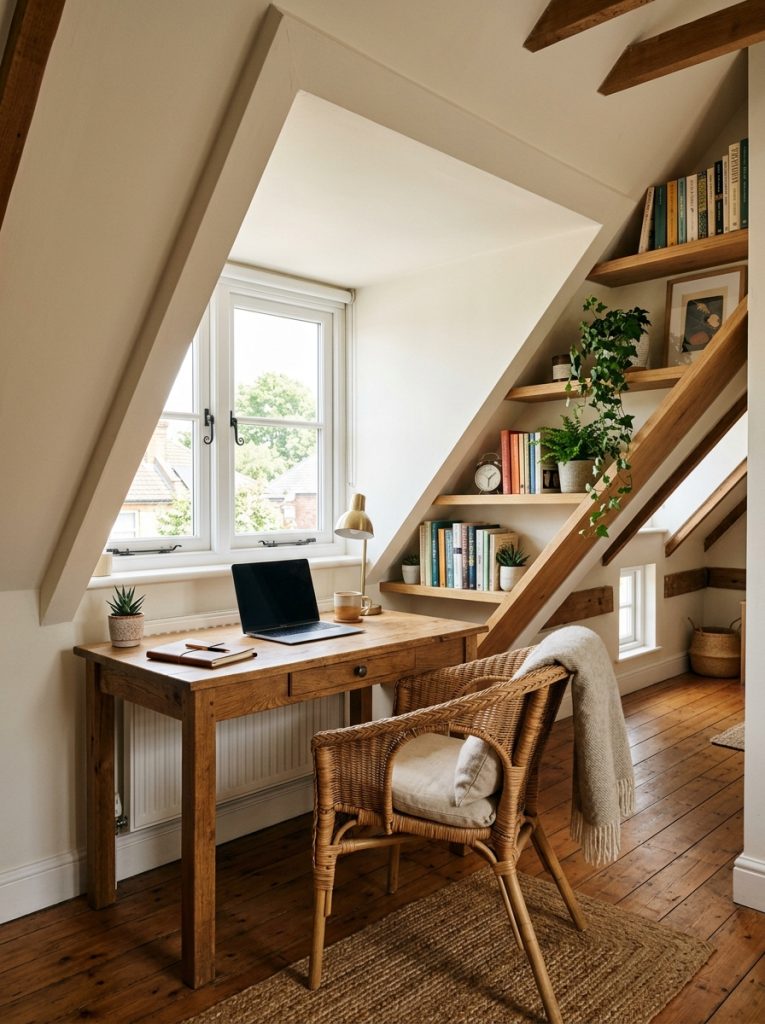
If you don’t have a spare room, stop looking for one and start looking up. An attic conversion or a well-placed landing desk can become a surprisingly good home office — often better than a converted bedroom because the unusual architecture makes the space feel intentional and specific.
Angled ceilings become a design feature rather than a problem. Skylights or dormer windows give extraordinary natural light. A landing only needs a five-foot desk, a good lamp, and a chair to become fully functional. The trick with awkward spaces is to lean into what makes them unusual rather than trying to normalize them.
17. Embrace Maximalism Thoughtfully
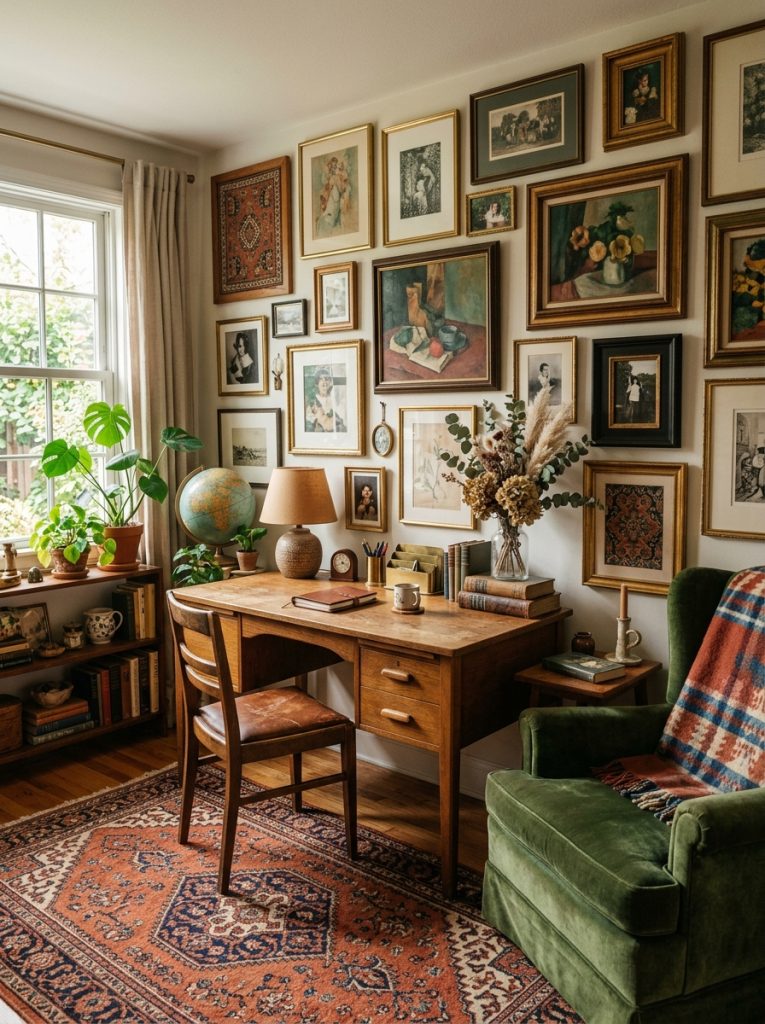
Maximalism is not the same as clutter. The difference is intention. A maximalist home office has rugs layered over rugs, art stacked on shelves, books on every surface — but each thing was chosen, and nothing is there by accident. The spaces that feel overwhelming are the ones where things have simply accumulated without editing.
If maximalism is your instinct, I’d suggest building it slowly: start with the bones (a good desk, a proper chair, your built-ins), then layer in art, then textiles, then objects. Pause between each layer and look. The right level of maximalism is the point just before you think it needs more.
18. Add Plants for Color and Calm
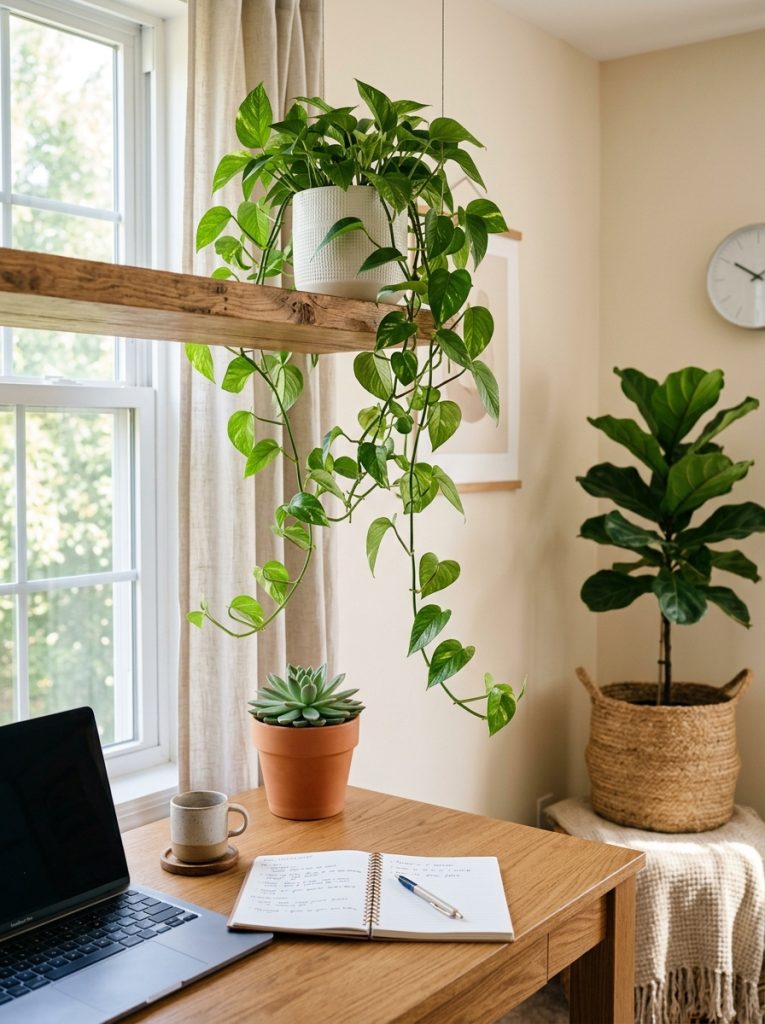
Plants in a home office are not just decorative. Research backs this up — greenery reduces stress, improves air quality, and gives your eyes somewhere restful to land between screen sessions. I keep a large fiddle-leaf fig in the corner of my office, and I’m not exaggerating when I say it makes the room feel more alive.
If you don’t have natural light for demanding plants, go for pothos, ZZ plants, or snake plants — all essentially indestructible and all genuinely good-looking. A single trailing plant on a shelf, one plant in a ceramic pot on the desk, and a larger floor plant in the corner is a combination that works in almost any size room.
19. Install a Chalkboard or Writable Surface
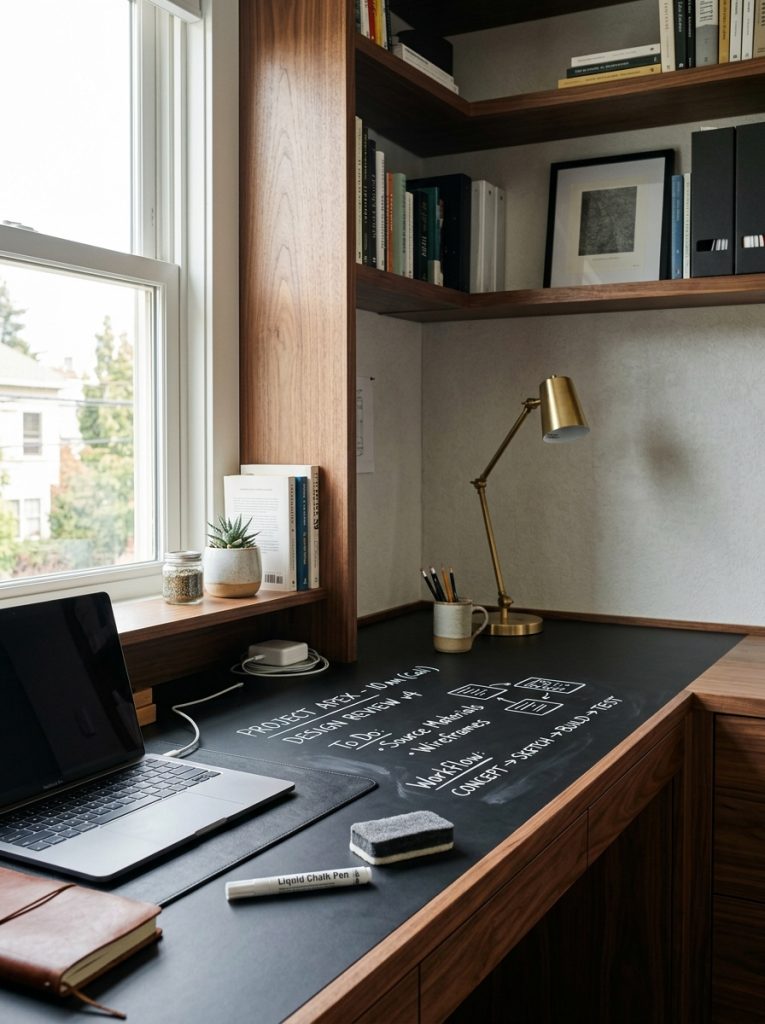
This one sounds like something for a kids’ room, and I’ll admit I was skeptical too. But a matte black writable laminate desk surface or a chalkboard panel above the desk is genuinely one of the most useful things in a functional home office. To-do lists, meeting notes, a diagram you’re working through — writing by hand on a surface you can easily wipe helps thinking in a way that digital note-taking doesn’t always replicate.
The matte black aesthetic also reads beautifully with warm wood tones. I’d use it as a full desk surface or as one panel on a built-in, not as an entire wall — that tips into classroom territory pretty fast.
20. Curate Bookshelves as a Design Feature
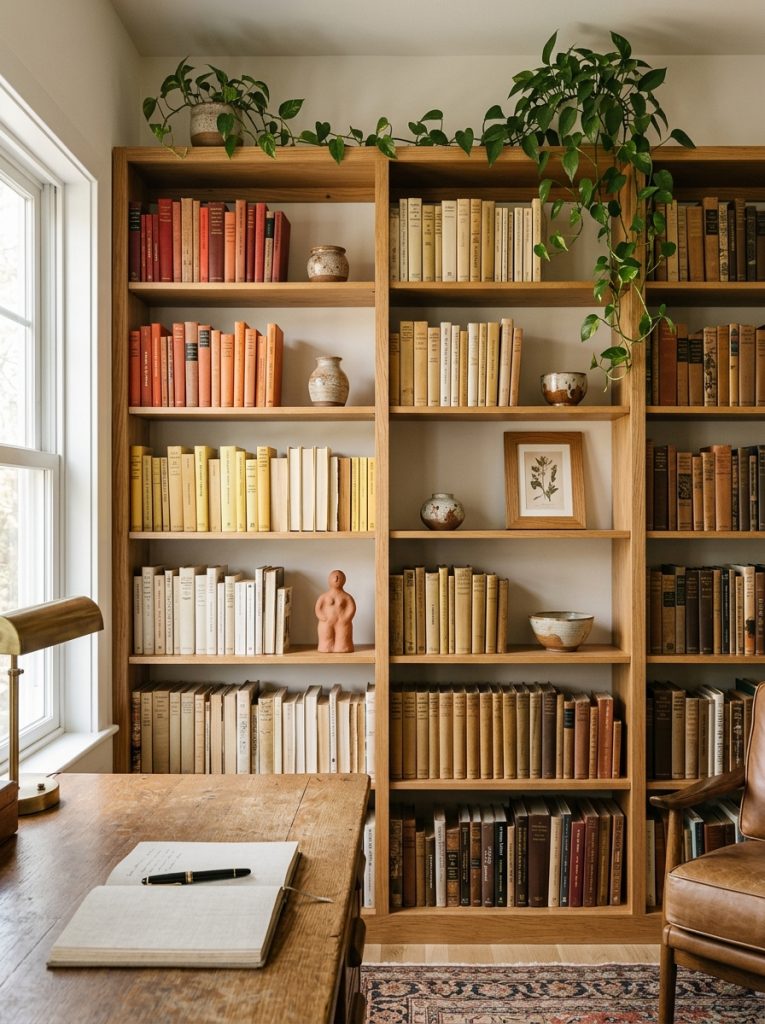
Bookshelves are the original home office decor. Done well, they’re one of the most beautiful things a room can contain. Done badly — chaotic spines, random objects, mismatched storage boxes — they actively make a space worse.
My approach: organize by color or size rather than alphabetically (controversial, I know, but it looks better), intersperse books with ceramic objects and small framed prints, and resist the urge to fill every single shelf. Some empty shelf space is not wasted space — it’s visual breathing room that makes everything around it look more intentional. A mounted painting in front of the shelves, as I’ve seen done in some wonderful rooms, adds a layer of depth that looks genuinely surprising.
21. Use Contrasting Colors Between Desk and Room
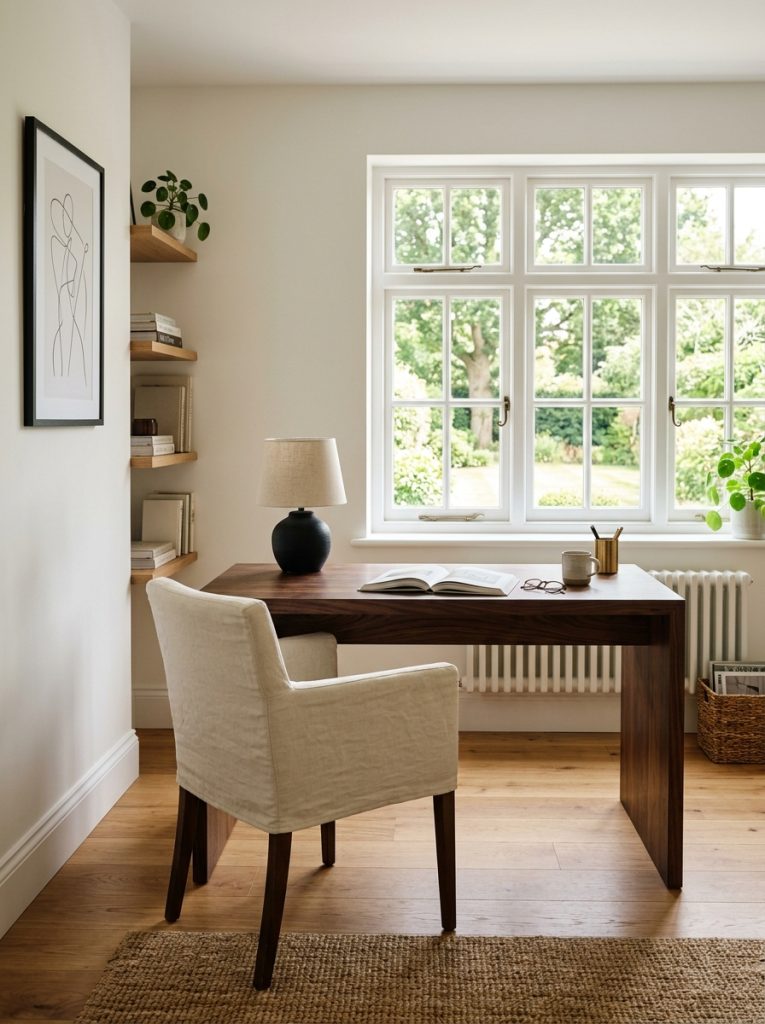
One of the more underrated home office moves: painting the room a pale, neutral tone and then choosing a dark, rich desk that stands alone as the statement. A black lacquered desk in a white room. A walnut desk in a pale sage room. A deep mahogany in a cream room. The contrast makes the desk feel deliberate — like art, almost — and keeps the rest of the room from having to work too hard.
The chair should bridge the two tones: something that picks up either the wall color or the desk finish without exactly matching either.
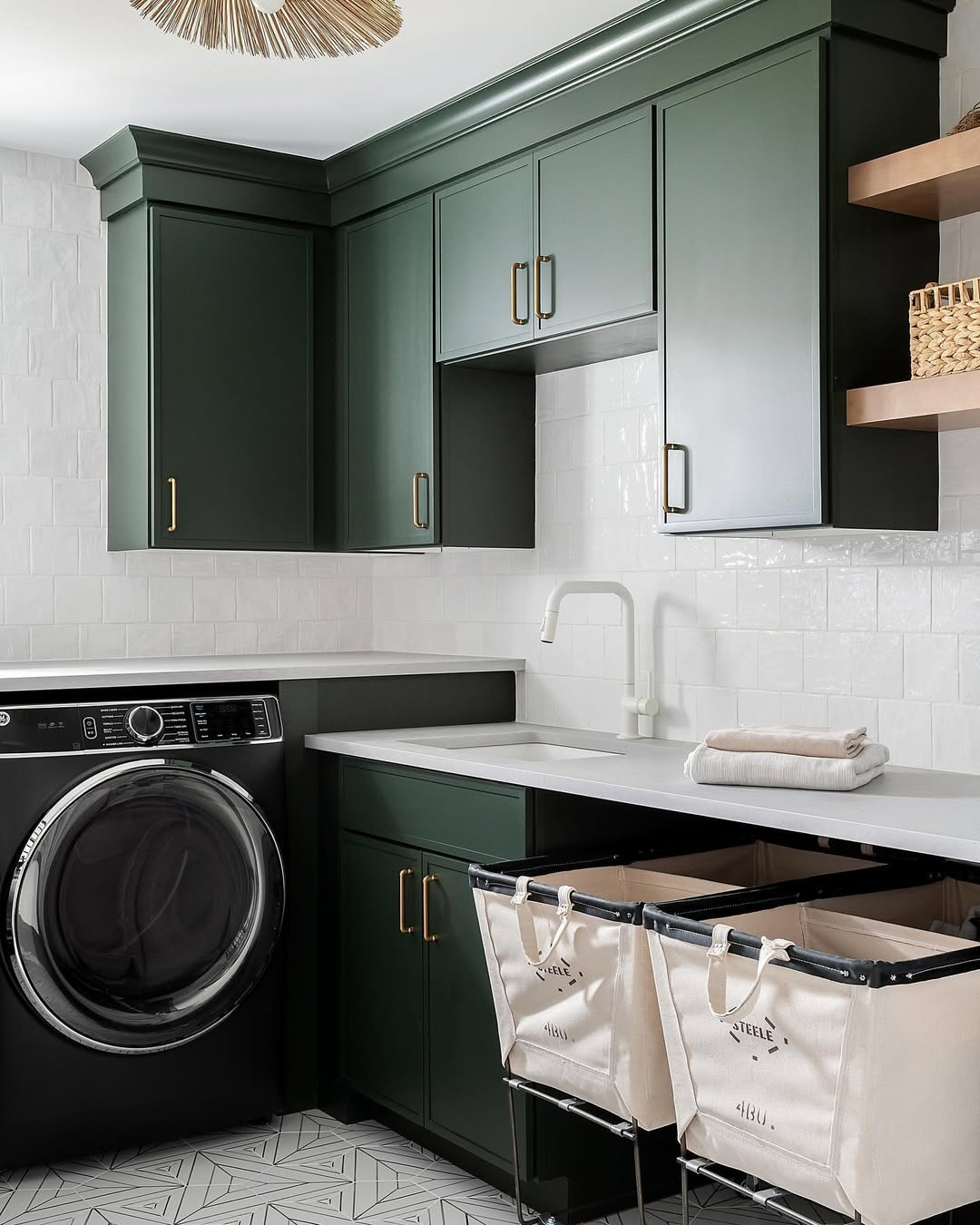
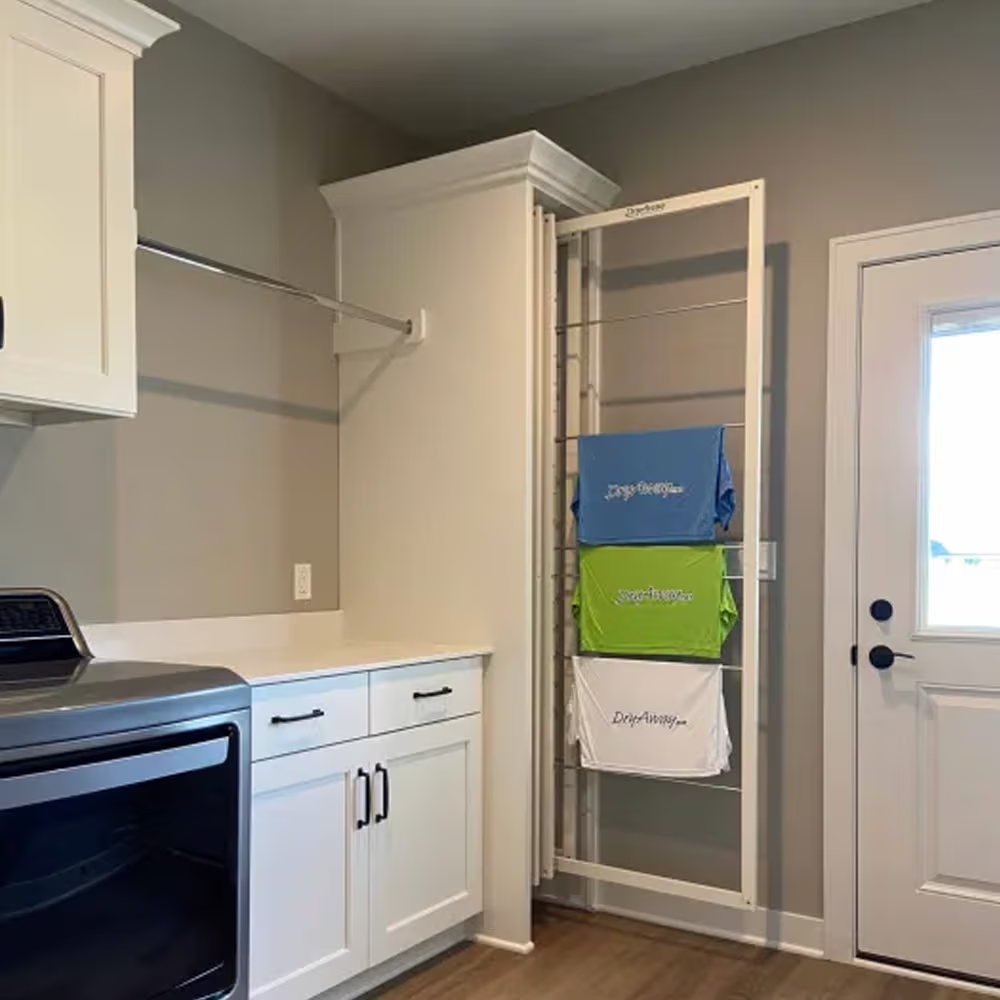
22. Turn a Laundry Room or Pantry into a Hybrid Office
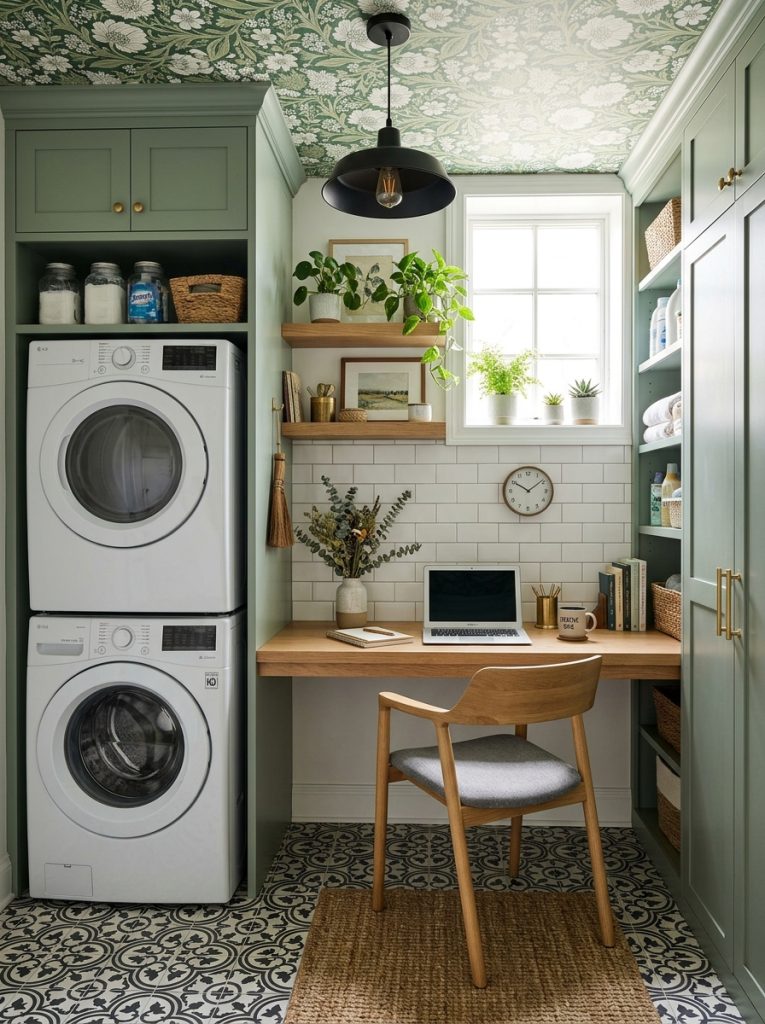
If you really don’t have the space elsewhere, a dual-purpose room is a smarter solution than it sounds. A laundry room or a pantry with a desk tucked against one wall — or even a fold-down desk mounted to the back of a cabinet door — creates a functional workspace that can be completely concealed when the workday ends.
The aesthetic key here is making both functions look intentional: matching cabinetry finishes, a cohesive paint color, and a light fixture that’s more home-office than utility room. It’s also the easiest room to justify a bold wallpaper on the ceiling — because a hybrid room gets to have a little fun.
23. Try Limewash or Textured Plaster Walls
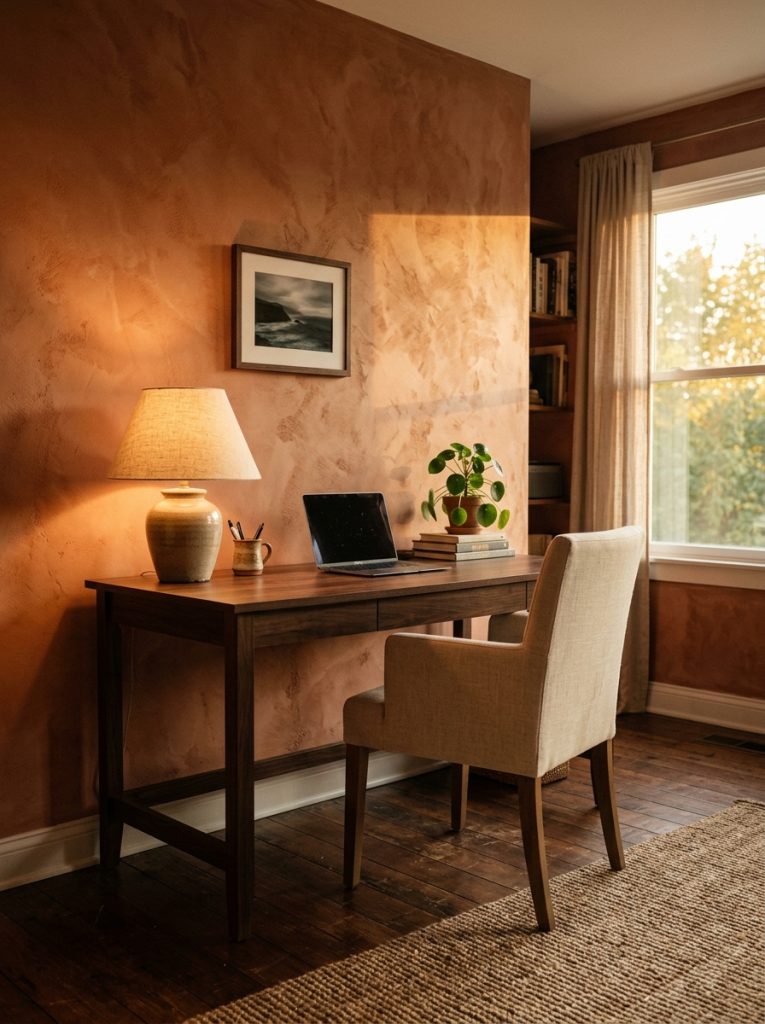
Painted walls are fine. Limewashed or textured plaster walls are better. They bring a depth and warmth to a room that flat paint simply can’t replicate, and they photograph beautifully — which matters if you’re doing video calls from this space. The texture catches light differently at different times of day, so the room feels slightly different morning versus afternoon, which makes working in it for long stretches more interesting.
Limewash in a warm terracotta, dusty sage, or aged ochre pairs especially well with dark wood furniture and vintage finds. And unlike wallpaper, you can layer it yourself with a brush if you’re patient and not in a rush.
24. Design with Your Zoom Background in Mind
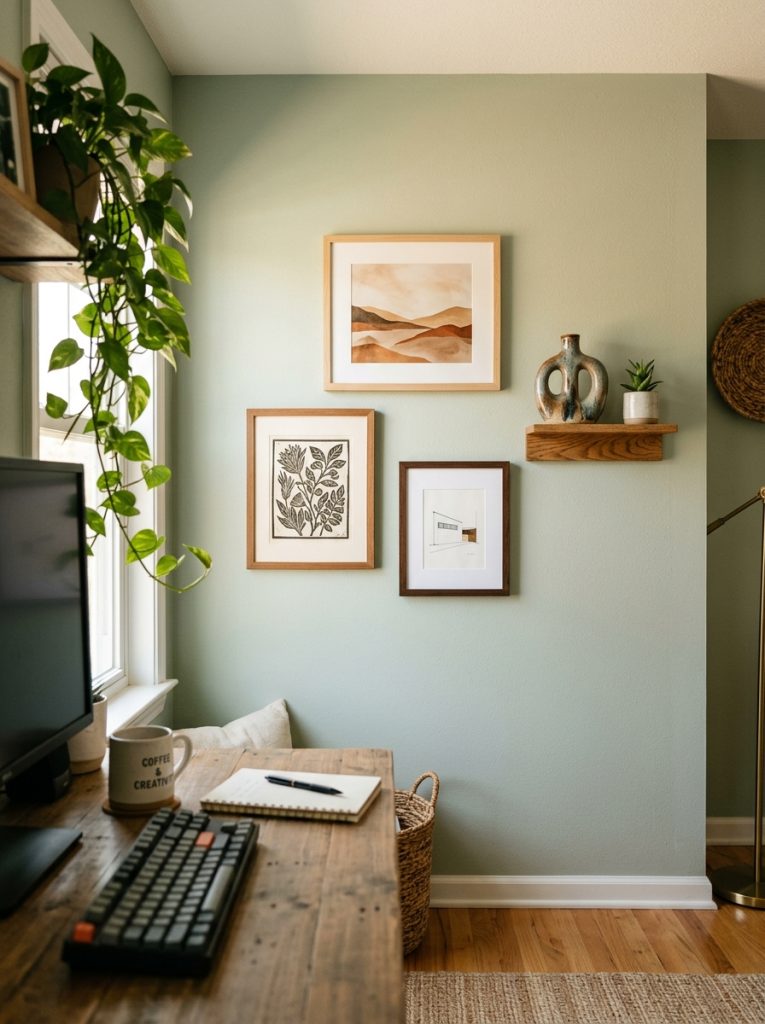
This one doesn’t get talked about enough, and I think it should. At least some portion of the time you spend in your home office is spent on a video call, which means the wall behind your chair is essentially a set. A thoughtful Zoom background — a gallery wall, a beautiful bookshelf, a single piece of art centered above the desk — is both good for you and good for how you’re perceived professionally.
I’ve noticed that the people who look most put-together on calls usually have a clearly designed space behind them, not a perfectly organized one. A slightly imperfect bookshelf with personal touches tends to read better on camera than a barren white wall or a distractingly busy pattern.
25. Invest in One Truly Great Chair
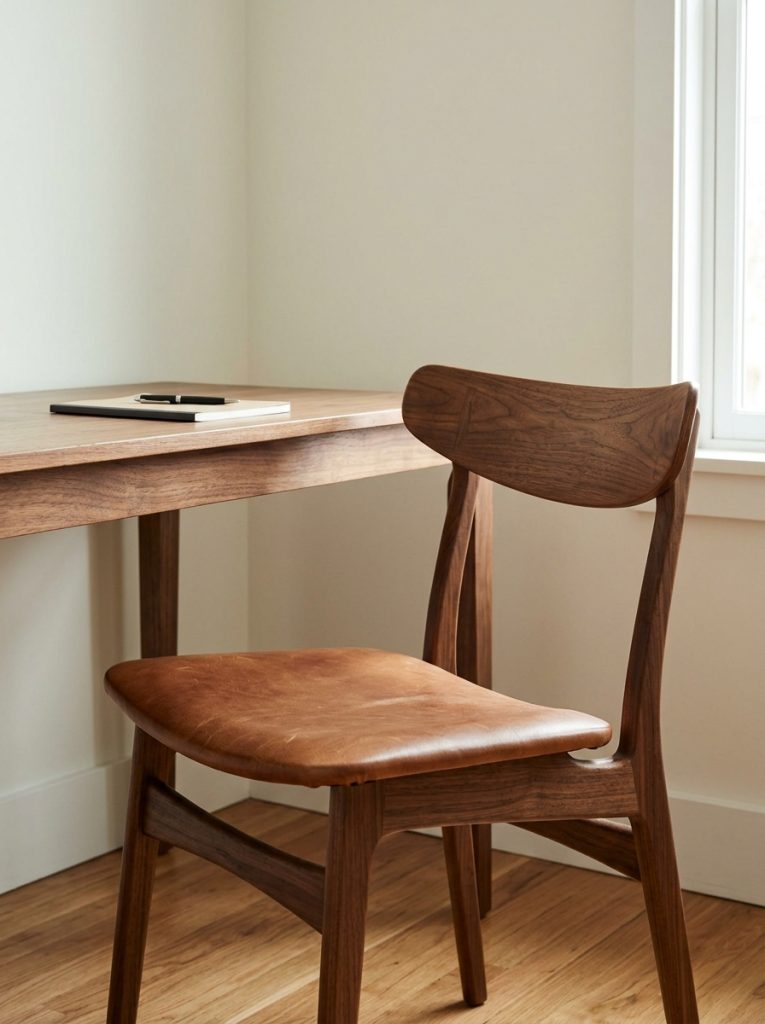
I saved this for near the end because it feels like the most practical thing I can tell you: the chair is not where you cut corners. A poorly designed chair becomes a back problem within six months, and a back problem becomes a productivity problem fast.
But here’s the thing — a great chair doesn’t have to be an ergonomic monstrosity from an office supply catalog. There are beautiful, properly designed chairs with real lumbar support that also look like they belong in a thoughtfully decorated room. Vintage Hans Wegner chairs, certain Cassina pieces, the Eames desk chair — all of these are genuinely comfortable and genuinely good-looking. Buy once, buy right.
26. Surround Yourself with What Inspires You
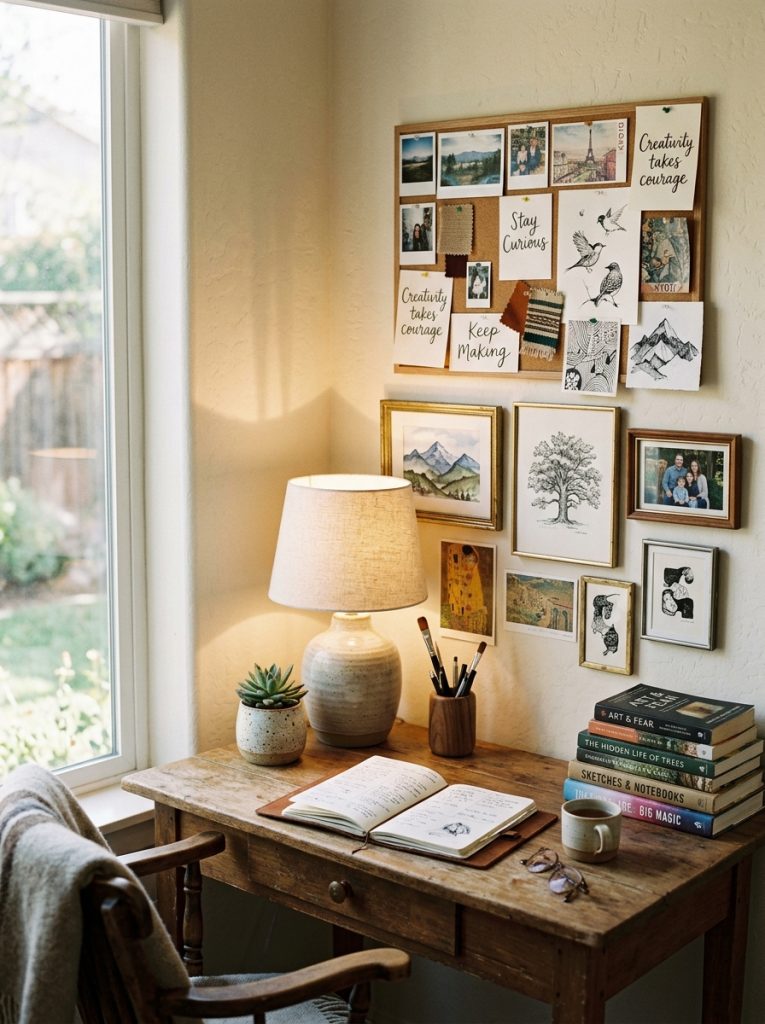
The last thing I’ll say — and maybe the most important — is this: your home office should feel like you. Not like a catalog page, not like what looks good on Instagram, not even like the rooms I’ve shown you here. Objects you’ve collected, art that means something, a fabric you love even if it doesn’t match, a moodboard pinned above the desk.
The spaces that are genuinely productive are usually also genuinely personal. They have a point of view. They feel chosen. Fill your office with what makes you want to sit down in the morning, and the work will follow.
Final Thoughts
Whatever your space looks like right now — even if it’s a corner of a bedroom or the end of a hallway — there is a version of it that feels good to work in. Start with one thing: the chair, the wall color, the shelf. Do that one thing well, and the rest tends to follow. Your home office should be a room you’re glad to walk into. That’s not too much to ask for.
— Sophie, Home Decor To Adore