18 Closet Organization Ideas for a New House (2026 Edition)

✔ Written & fact-checked by Sophie — last reviewed June 30, 2026
Why Your New Home’s Closets Need A Real Plan
You finally got the keys. The floors are perfect. The paint is fresh. Then you open the closet and find… nothing. Just bare rods and a single shelf. Builder-grade closets are basically blank canvases that expect you to figure it out. That’s where these 18 closet organization ideas for a new house come in. Forget the generic tips you’ve seen a hundred times. This is your blueprint for building a system that actually works with how you live. The closet design trends 2026 are shifting toward purposeful spaces, not just stuffed storage. Let’s make your new closets feel like they were designed for you, not an afterthought.
1. Plan Your Closet’s Purpose Before a Single Shelf
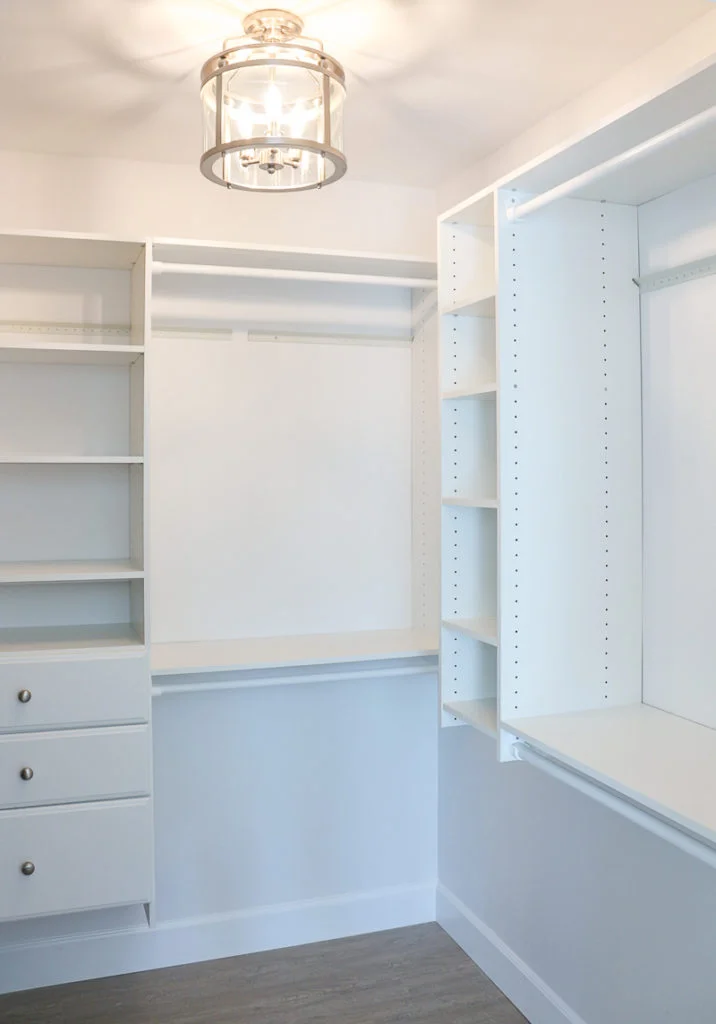
Here’s the mistake most people make. They buy bins and hangers before they even know what they’re storing. Start with a ruthless wardrobe edit first. Pull everything out. Be honest about what you actually wear. Then define your lifestyle categories. Professional organizer @the.closet.coach calls this the “Wardrobe OS” approach. Instead of grouping all shirts together, you group by context. Work clothes. Weekend clothes. Gym clothes. This changes everything about how you design the space. Measure your closet meticulously, including every inch of height. Sketch a simple zone plan on paper. Hanging zones. Folded zones. Shoe zones. Long items like dresses and coats. Accessories. This five-minute exercise saves you from buying the wrong stuff later.
2. Maximize Vertical Space with Full-Height Solutions
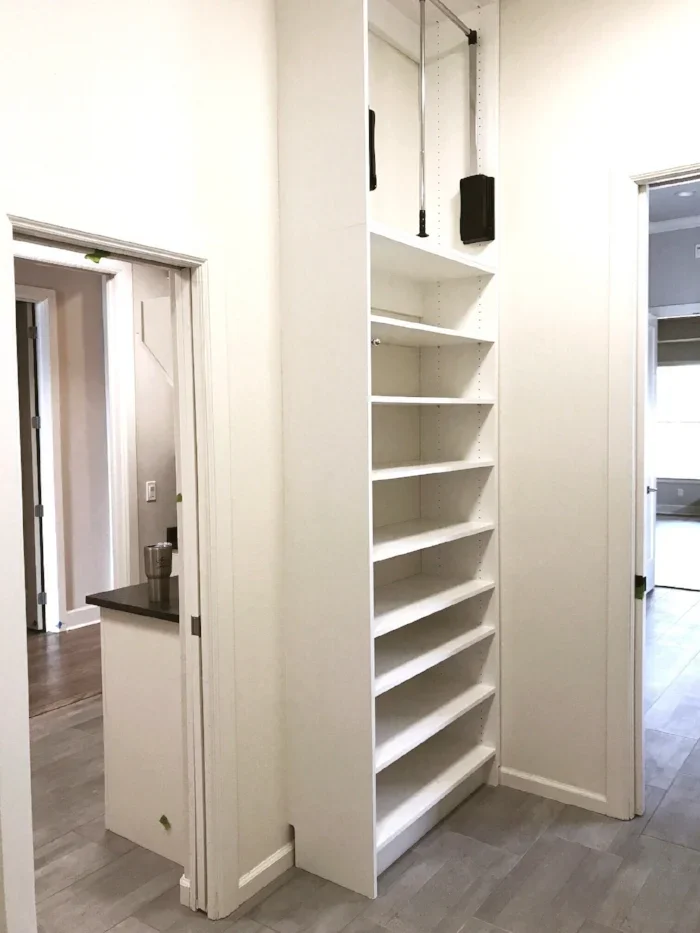
This is one of those closet organization hacks for new construction that people overlook. Standard closets waste at least a foot of space above the door. Instead, specify taller doors for your new build. Eight-foot doors make the whole room feel more custom and finished. Run your cabinetry all the way to the ceiling. That top space is perfect for lightweight seasonal storage in clear bins. For the high hanging areas, install pull-down rods. They bring your clothes down to you instead of you reaching up. This single change can double your usable hanging space without expanding the closet footprint. It’s the easiest way to make a standard-sized closet feel anything but standard.
3. Create Dedicated Activity Zones (The “Wardrobe OS” in Practice)
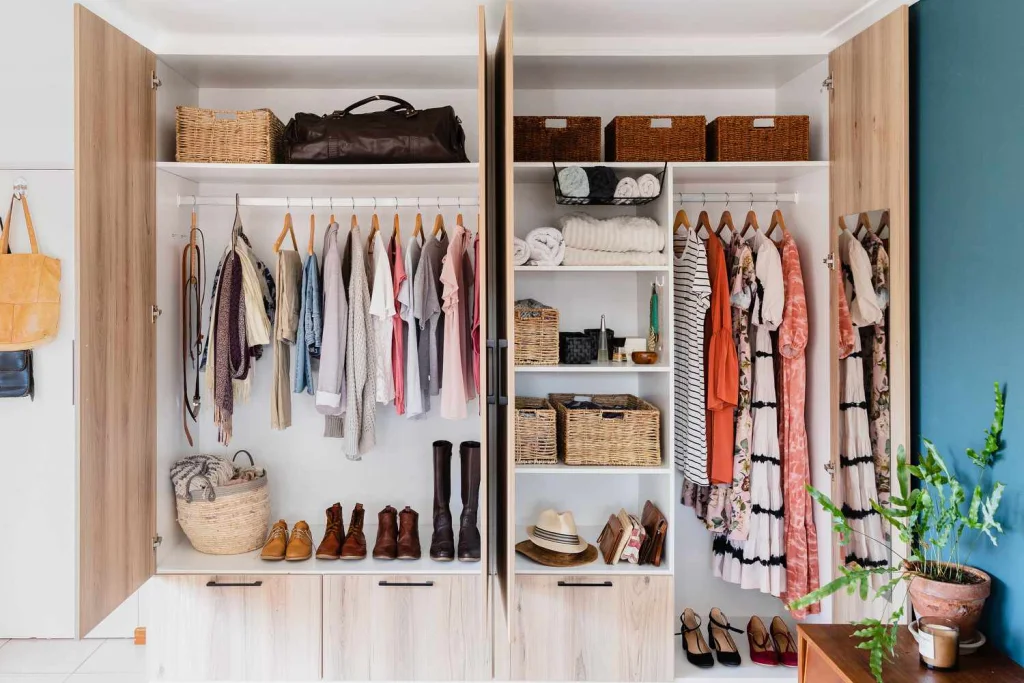
This idea deserves its own section because it changes how you think about getting dressed. The “Wardrobe OS” method organizes clothes by life context, not by type. Your work section might have blouses, pants, and blazers all together because you grab them as a unit. Your weekend section groups jeans, t-shirts, and casual shoes. Your evening out section keeps dresses, heels, and clutch bags in one zone. This eliminates the morning scramble of pulling from five different areas. Use double-hang rods for daily wear sections to maximize space. Include a dedicated “getting ready” zone with a mirror and a small surface for laying out outfits. Make sure each zone has its own lighting so you can see what you’re picking without illuminating the whole closet.
4. Mix Open and Closed Storage Strategically
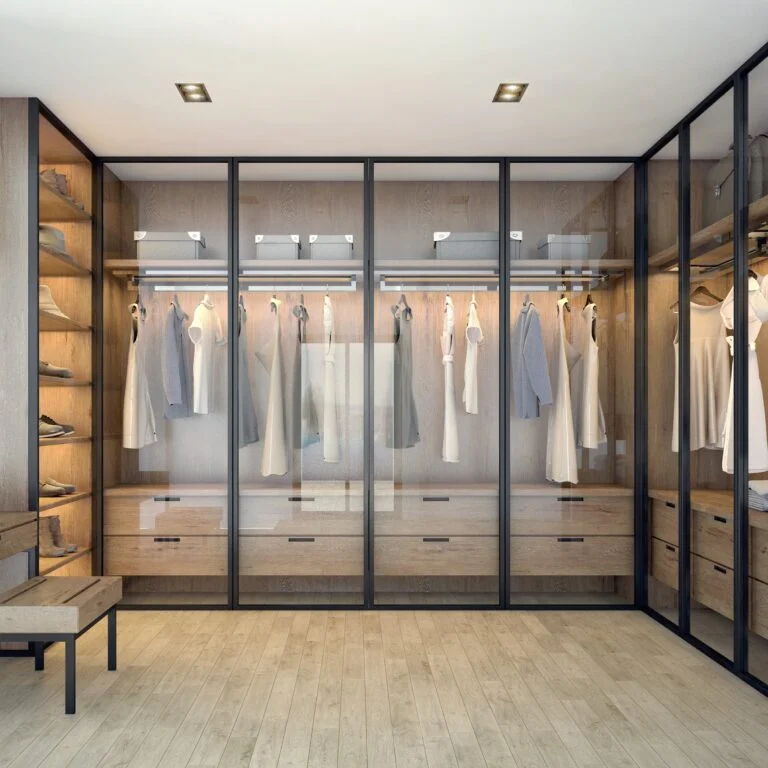
The 2026 approach to closet storage is all about balance. Forget the everything-hidden or everything-visible extremes. Designer Stefan Gheorghe notes that the most functional closets use a strategic mix. Glass-front upper cabinets work perfectly for displaying bags or shoes you want to see. Open shelving keeps high-visibility daily items accessible. Reserve closed drawers and opaque doors for the folded clothes that create visual chaos. Follow the 80/20 rule. Keep 80% of your storage hidden and 20% visible. This creates a boutique feel without the dust problem of all-open shelving. The key is displaying what you use daily and hiding the rest. Your closet looks designed, not just organized.
5. Illuminate Every Corner with Integrated Lighting
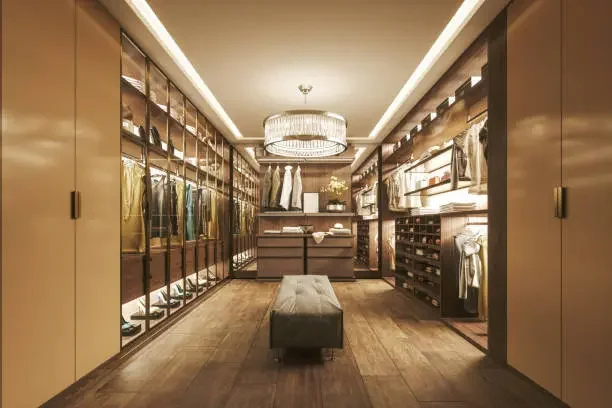
Lighting used to be a luxury add-on for closets. Now it’s a standard expectation. Dark corners make even the most organized closet feel frustrating. Start with LED strip lighting under shelves and inside cabinets. These inexpensive strips transform how you see your clothes. Add a central ceiling fixture or small chandelier for ambient light. For those deep corners that always seem dark, install motion-sensor lights that click on when you reach in. Make sure all your closet lighting runs on a separate switch from the bedroom. Nothing worse than lighting up your whole sleeping area just to grab a sweater. Good lighting makes your closet feel like a proper room, not a dark cave stuffed with clothes.
6. Choose a Sophisticated, High-Contrast Color Palette
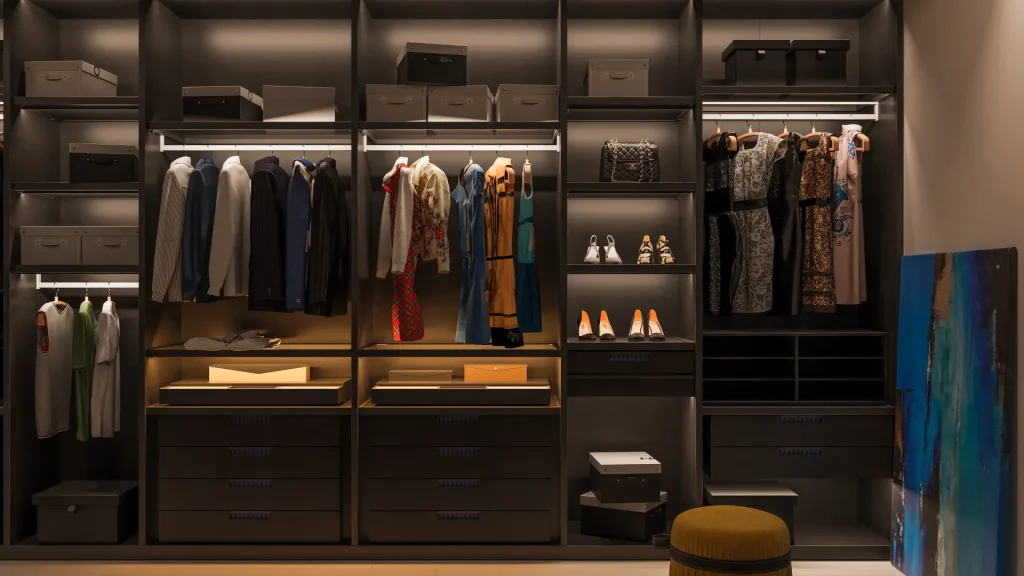
The all-white closet is officially over. The 2026 trend embraces dark wood or navy and charcoal cabinetry as a sophisticated backdrop. This high-contrast approach makes your closet feel like a designed room, not just storage. The trick is balancing those dark colors with ample light and glass fronts to keep the space from feeling heavy. Paint the back wall a light, neutral color to bounce light around. Test paint and stain samples in your actual closet before committing. The lighting in there is completely different from a hardware store. Dark closets done right feel luxurious and intentional. Dark closets done wrong feel like a windowless box. The difference comes down to light and contrast.
7. Invest in a Functional Central Island (If Space Allows)
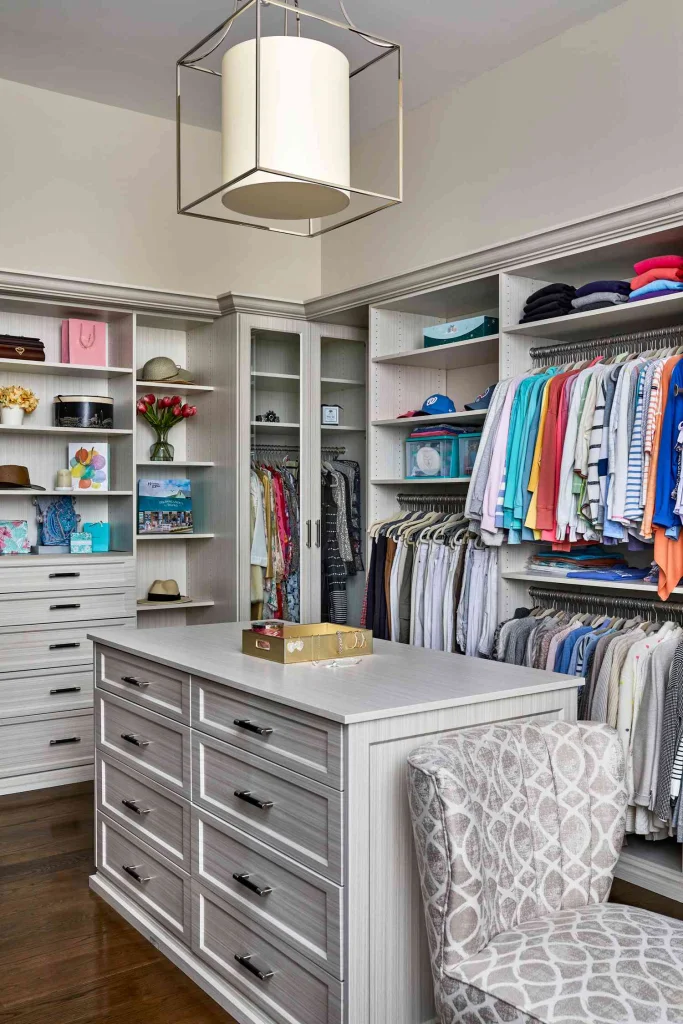
A closet island sounds like a luxury, but it serves real practical purposes. Use the surface for folding laundry, laying out outfits, or packing for trips. The storage underneath holds accessories, jewelry, or seasonal items. For maximum function, include drawers on both sides so two people can access it simultaneously. Top it with a durable but elegant surface like quartz or a sealed wood. This isn’t the place for marble that stains easily. Make sure you have at least 36 inches of clearance on all sides. Anything less and the island becomes an obstacle course. In a primary closet with enough square footage, an island transforms the space from storage area to dressing room.
8. Build a High-Volume, Displayed Shoe Wall
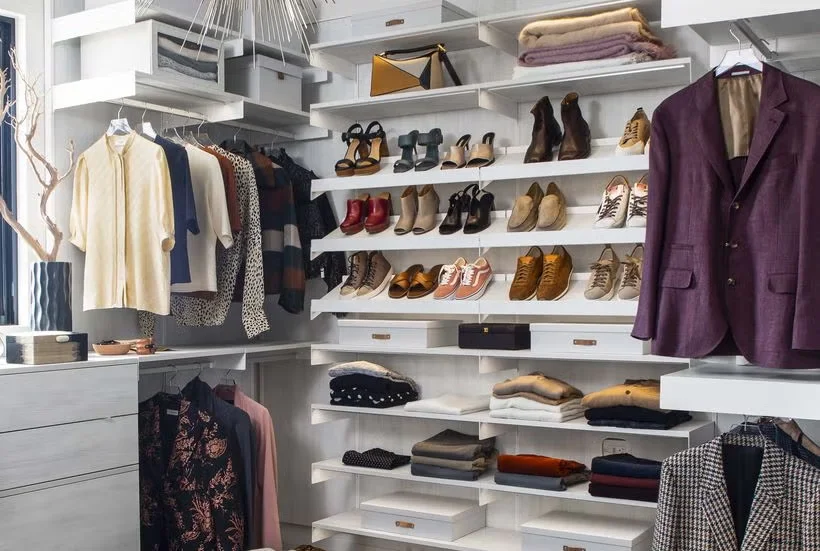
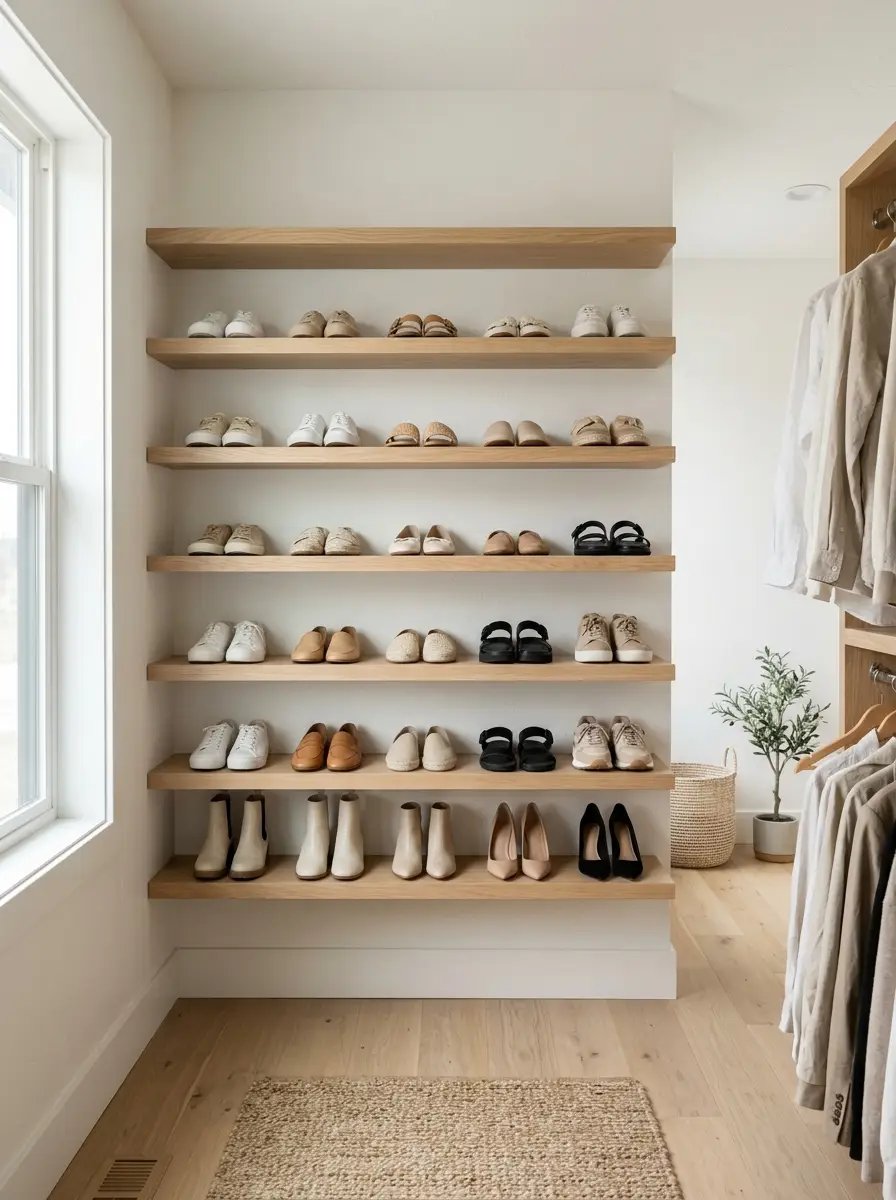
If shoes are your thing, give them proper real estate. Adjustable metal shelving systems work perfectly here because they adapt as your collection changes. For your favorite pairs, consider angled or display shelves that show them off like a boutique. Install focused lighting to highlight the collection. This turns your shoes into a design feature instead of a storage problem. For less-worn pairs, clear drop-front boxes keep them protected while still letting you see what’s inside. The key is keeping similar styles together and maintaining enough space between shelves so nothing gets crushed. A well-organized shoe wall becomes the focal point of your closet instead of a jumbled mess on the floor.
9. Prioritize Drawer-Forward Organization for Folded Items
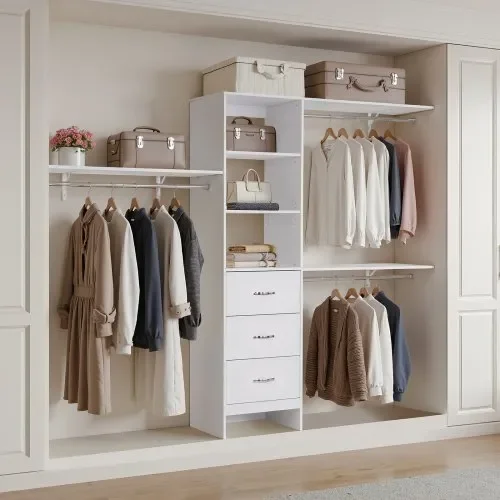
Drawers are the secret weapon of an organized closet. They hide the visual chaos of folded clothes while keeping everything accessible. Maximize your drawer space for t-shirts, sweaters, activewear, and loungewear. Inside those drawers, use dividers or modular organizers to keep categories separated. Label the drawer fronts so everyone in the house knows what goes where. This simple step prevents the “where does this go?” problem that derails organization systems. Consider adding a few shallow drawers specifically for smaller accessories like socks, underwear, and jewelry. Deep drawers waste space for these items and make it hard to see what’s at the bottom. Drawer-forward design keeps your closet looking clean even when life gets busy.
10. Turn Accessories into Design Features
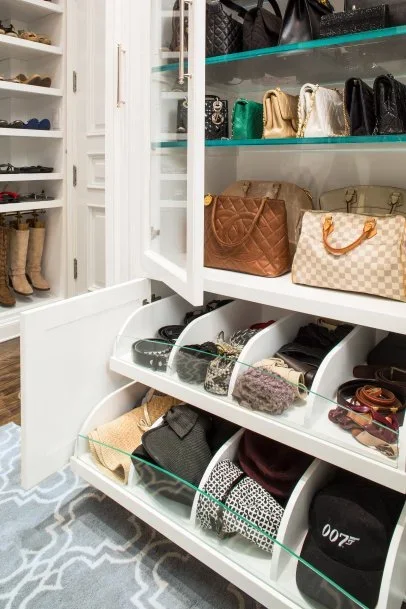
Accessories create the most visual clutter in a closet. The 2026 solution is to turn them into intentional design elements instead. Install dedicated racks or shelves for handbags with proper spacing between them to maintain their shape. Use pull-out racks for ties and belts that keep them visible but contained. Display scarves or hats on hooks or shelves where they add color and texture. Integrate jewelry drawers with felt lining to prevent tangling and damage. The handbag-forward display storage trend treats your collection like a small gallery instead of a stuffed shelf. When your accessories have designated homes, they stop looking like clutter and start looking like a curated collection you actually enjoy seeing every day.
11. Use the Back of the Door Wisely
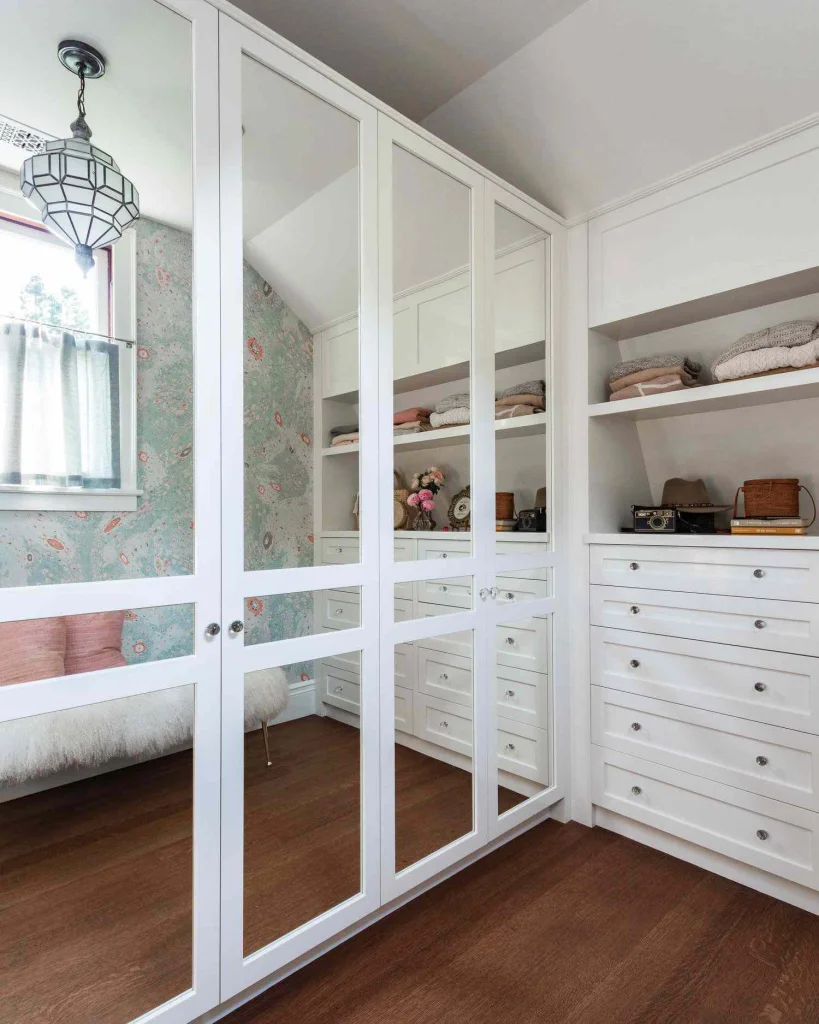
The back of your closet door is valuable real estate that most people waste or overuse. Over-the-door racks work best for specific, light-duty purposes. Shoes, belts, or jewelry are good candidates. Consider adding a full-length mirror to the door instead. This saves wall space inside the closet and serves a practical purpose. Install a few sturdy hooks for robes or next-day outfits. The mistake to avoid is loading up every inch of door space with organizers. This looks cluttered and can damage the door over time. Be selective about what goes here. The back of the door should solve one specific problem, not become a catch-all for everything that doesn’t fit elsewhere. Sometimes a simple mirror is the smartest use of this spa
12. Select Durable, Real-World Materials
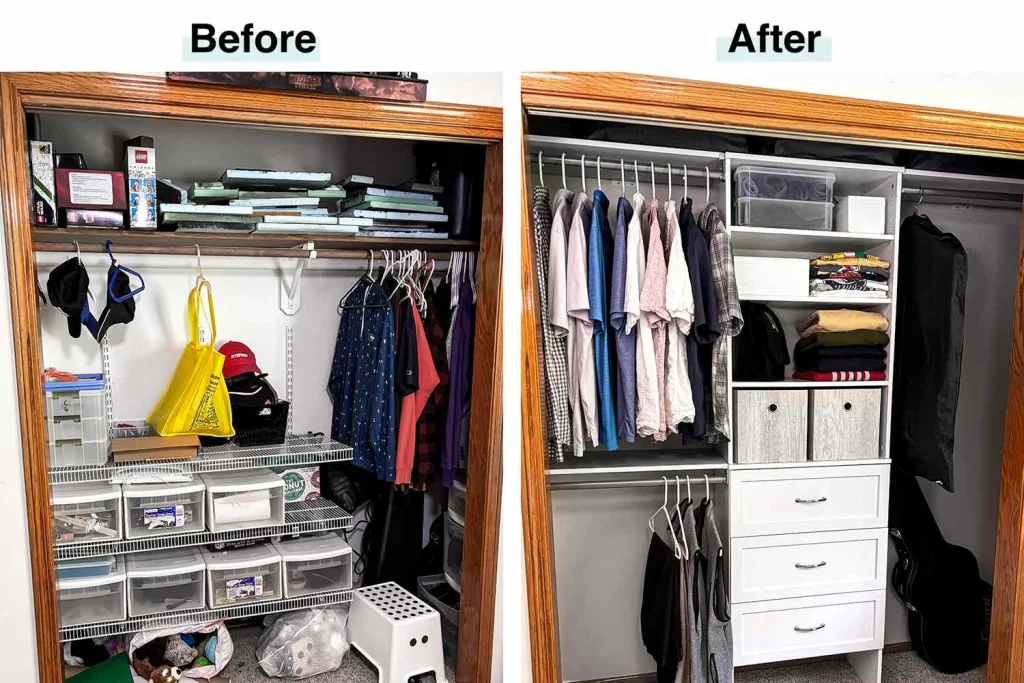
Your closet gets more daily use than almost any other space in your home. The materials need to last. Choose solid wood or high-quality plywood for your primary structures. These materials hold up better over time and can handle the weight of clothes without sagging. Be cautious with MDF in high-humidity areas like bathrooms or closets near exterior walls. The moisture can cause swelling and damage. Select durable, soft-close hardware for all drawers and doors. This small detail makes your closet feel premium and prevents the slam-shut problem that damages cabinets over time. Test finishes for scratch resistance before committing. That beautiful but delicate surface might look great on day one but show every mark within months. Real-world durability matters more than Instagram perfection.
13. Customize for Kids’ Closets with Growth in Mind
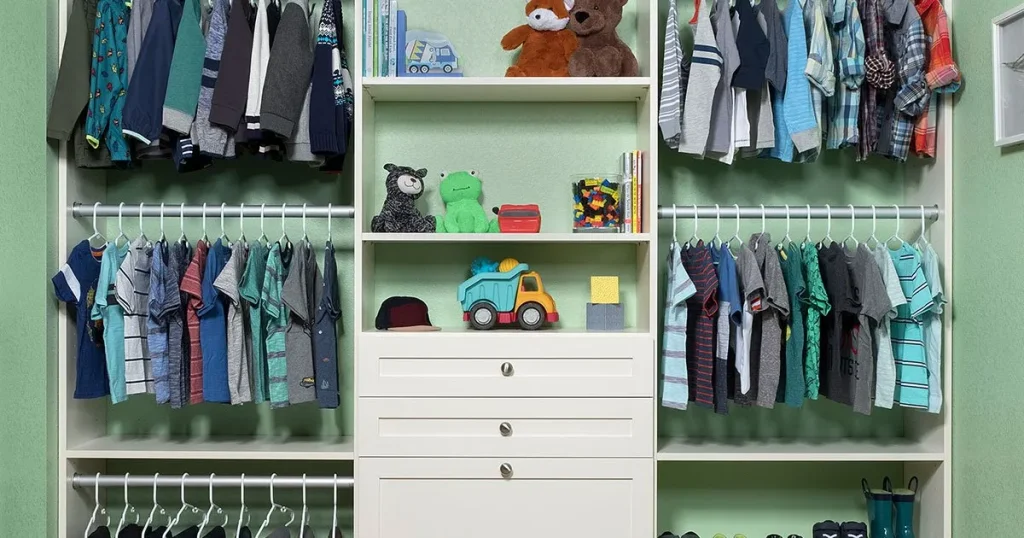
Kids’ closets need different thinking than adult spaces. Install adjustable double-hang rods that can be raised as your children grow. What hangs at toddler height today needs to move up in a few years. Use lower drawers and bins that kids can reach without help. This builds independence and keeps them from dragging chairs into the closet. Incorporate easy-to-read labels with pictures for pre-readers. A picture of socks on the sock drawer makes the system usable for the whole family. Choose durable, wipe-clean finishes because kids’ closets get messy in ways adult closets don’t. The goal is a system that works for a five-year-old but can adapt for a teenager without a complete gut renovation. Thinking ahead saves you money and hassle later.
14. Create a Boutique-Style Shoe and Coat Zone
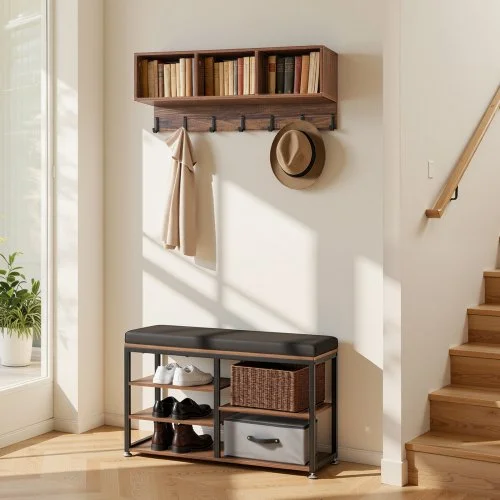
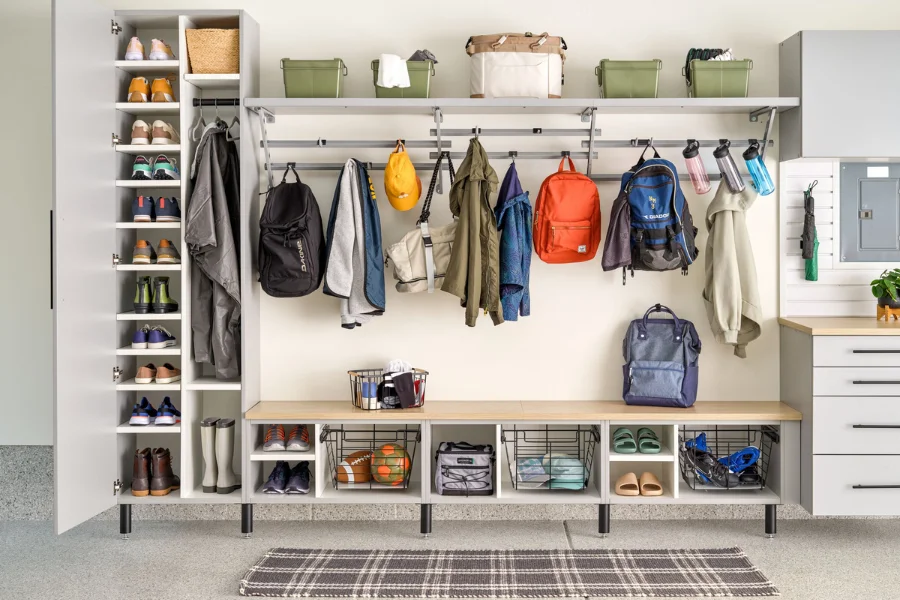
Near your entry point, designate a specific section for shoes and coats. This keeps the rest of your closet cleaner and creates a natural transition zone. Use a bench with storage underneath for shoes that you wear regularly but don’t want mixed with your main collection. Include hooks at multiple heights for different lengths of coats and jackets. Keep this zone visually distinct from your main clothing closet, perhaps with different hardware or a different cabinet style. The separation makes sense functionally and visually. When you come home, you have a clear place to shed the outer layers before entering your main closet space. This small design decision prevents your primary closet from becoming a catch-all for everything you wore that day.
15. Label Everything for Long-Term Maintenance
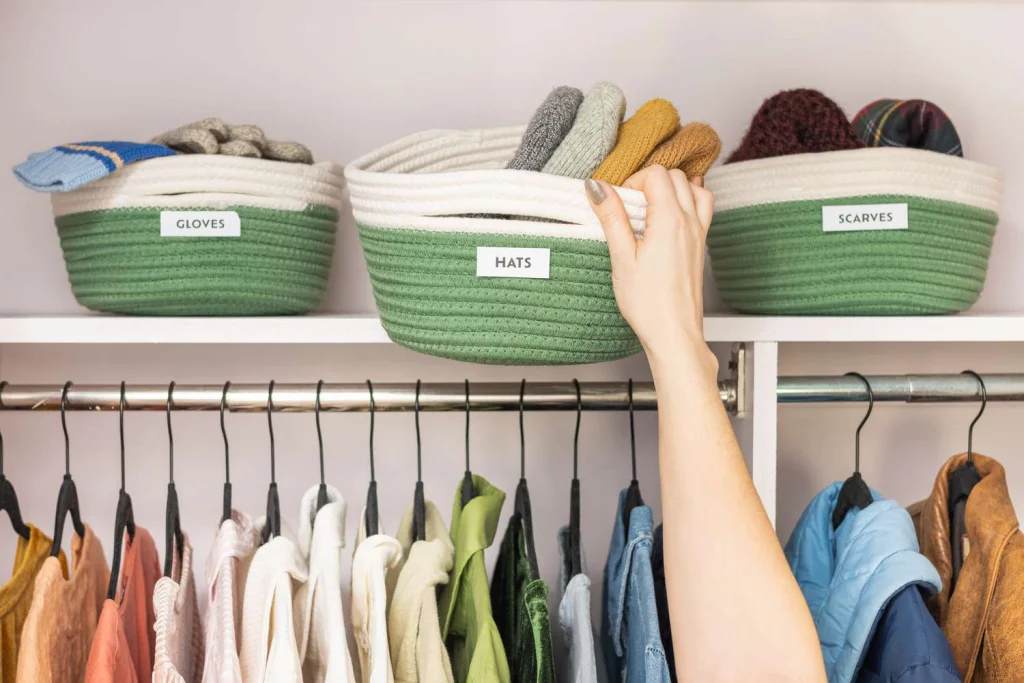
Labels are the unsung heroes of closet organization. Use a consistent style throughout, whether that’s simple tags, vinyl decals, or a label maker. Label shelves, bins, and drawers with specific categories. “Work Blouses” works better than just “Shirts.” Involve all family members in the labeling process so everyone understands the system. When someone else put away the laundry, labels prevent the “where does this go?” problem. Update your labels as seasons change or as your wardrobe evolves. What starts as “Summer Dresses” might become “Casual Summer Dresses” and “Dressy Summer Dresses” as your collection grows. This label-driven shelf organization approach is the secret professional organizers use to maintain systems long after the initial setup.
16. Incorporate a Mirror and Seating
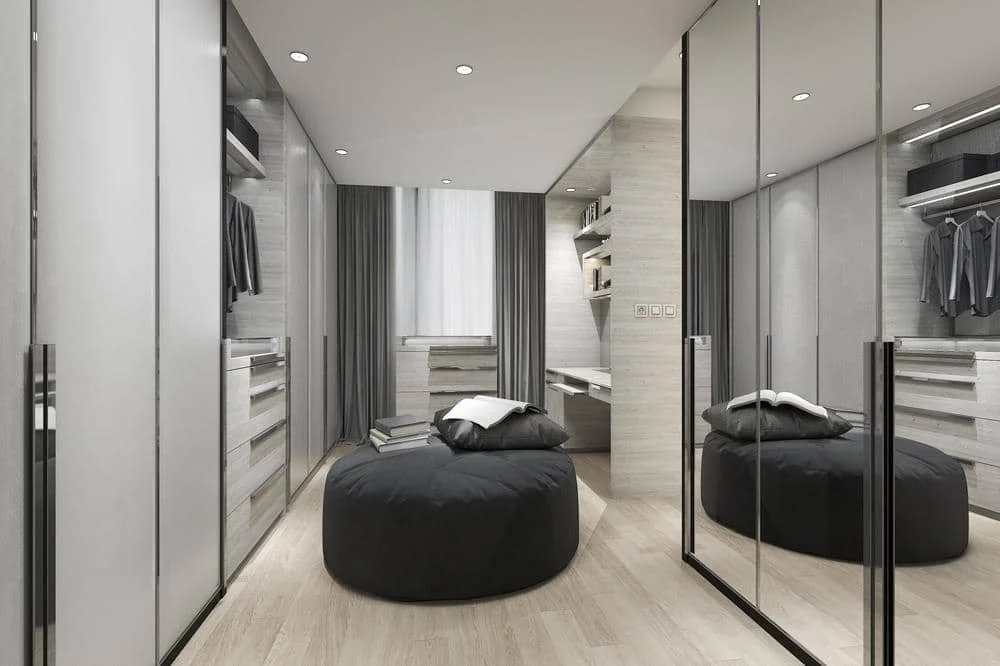
A functional closet needs both a mirror and a place to sit. Plan for a full-length mirror on a wall or door where you can see your entire outfit. Include a comfortable bench, ottoman, or built-in seat. Position the seating so you have a clear view of the mirror and your main storage areas. This setup transforms getting dressed from a balancing act to an actual experience. The seating serves practical purposes too. It’s where you put on shoes, fold laundry, or sort through donation piles. Multi-purpose spaces like this are a key 2026 theme because they make every square foot work harder. A closet with just storage feels utilitarian. A closet with a mirror and seating feels like a proper dressing room.
17. Choose Modular Systems for Future Flexibility
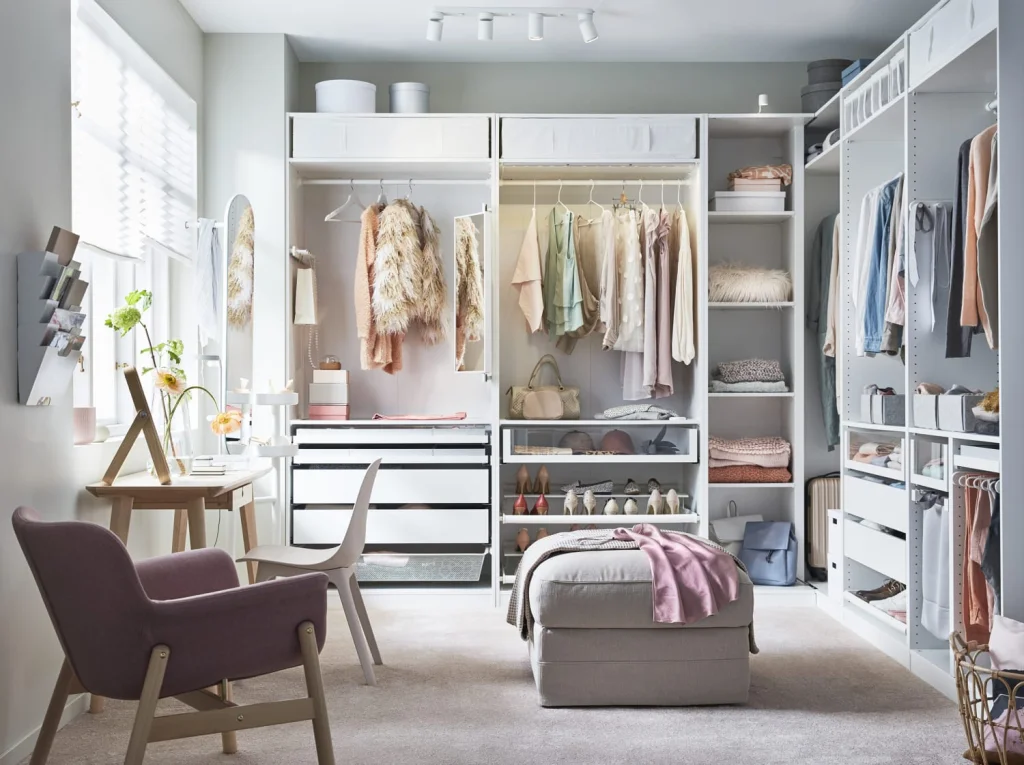
Not everyone has the budget for fully custom closets. Modular systems like the IKEA PAX offer a middle ground with real customization at a lower price point. These closet organization ideas for a new home can adapt as your needs change. The PAX system runs between $200 and $1,500 depending on your configuration. The strength here is adaptability and the extensive range of interior organizers available. But be aware of the trade-offs. User reviews consistently mention quality concerns with newer models. The 100cm shelves can bend under heavy weight, and the construction feels less sturdy than older versions. If you go this route, avoid overloading shelves and consider reinforcing them for heavy items. Modular systems work best when you treat them as a starting point that you can upgrade over time rather than a forever solution.
18. Perform a Seasonal Reset to Maintain Order
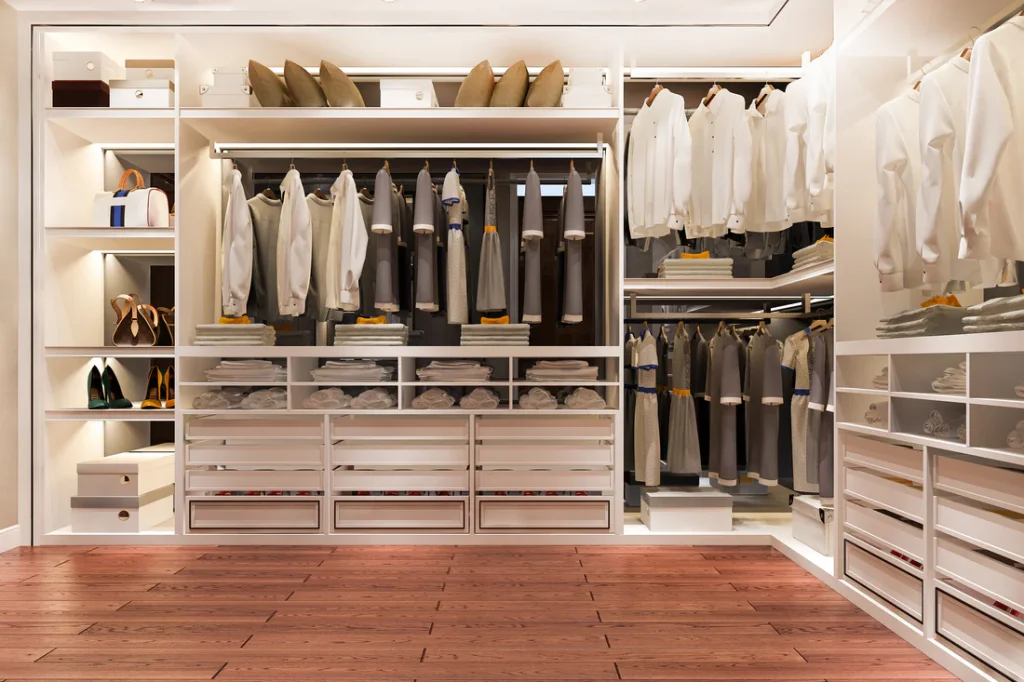
Even the best closet system needs maintenance. Schedule a purge and reorganization every six months. Use these seasonal resets to rotate items. Move out-of-season clothes to less accessible zones and bring current-season pieces front and center. This is also the perfect time to reassess your “Wardrobe OS” zones. Maybe your work situation has changed. Maybe you’re exercising more or less. Let your closet evolve with your life. The “great closet clean out” has become a social media trend for good reason. It prevents the slow creep of clutter that derails even the best systems. Make this reset a regular habit on your calendar, not a chore you do when things get unbearable. Prevention is easier than rescue when it comes to closet organization.
Make Your Closet Work For Your Actual Life
A well-organized closet in your new home isn’t a luxury. It’s the foundation for less stressful mornings and smoother days. The best system is one designed around your unique life, not a generic template you found online. These 18 closet organization ideas for a new house give you a starting point, but the magic happens when you adapt them to how you actually live. Start with just one section this weekend. Maybe it’s finally creating those activity zones or adding the lighting that makes everything visible. Small changes compound into big transformations. Your closet should make getting dressed easier, not harder. That’s the real measure of success.