14 New House Decorating Ideas You Won’t Regret

✔ Written & fact-checked by Sophie — last reviewed June 23, 2026
You Just Got the Keys. Now What?
You’re standing in an empty house with a stack of moving boxes and a Pinterest board you’ve been adding to for months. There are 400 saved pins. You’ve made exactly zero decisions.
If you’re wondering how to decorate a new house without losing your mind, I put together these 14 new house decorating ideas specifically so they don’t overwhelm you. They’re ordered from easiest to most involved, and each one can be done on its own, in any order, without needing to coordinate with the rest of the house yet. Think of this as a room-by-room roadmap, not a to-do list to crush in a single weekend.
One rule before we start: finish before you perfect. A room that’s 80% done and actually lived in beats a room that’s been “almost finished” for six months because you can’t find the exact right throw pillow. (citation:1)
1. Live in It for Two Weeks Before Buying Anything
Your first decorating move is to make no decorating moves. Seriously. Live in the house for at least two weeks before you buy a single piece of furniture or paint a single wall.
Watch where the light falls in the morning and where the room goes dark by 3 p.m. Notice which door you actually use, where you drop your keys, and which room you drift toward when you want to sit down. Pay attention to which walls feel warm and which ones stay dim all day.
Designer Emily Henderson has built her whole approach around this idea. She puts it simply: “The rooms I’m most proud of are the ones that took the longest. Living in a space before you decorate it isn’t procrastination. It’s research.” Rushing is how people end up with a paint color they hate by month two or a sofa that blocks the best window in the room. Two weeks of observation saves you hundreds of dollars and a lot of second-guessing.
2. Pick One Room and Finish It Completely
Here’s a tip that sounds backwards but works: don’t start with the living room or kitchen. Start with a smaller, lower-stakes room. A guest bedroom. A home office. A bathroom.
These rooms are cheaper to finish, faster to complete, and less stressful to get wrong. A finished guest room gives you a win. It builds your confidence in your own taste. It also gives you a quiet spot to retreat to while the rest of the house is still full of boxes and chaos. Designers like Emily Henderson and Chris Loves Julia have been recommending this approach since 2024, and it’s one of the best new home decorating tips for reducing decision fatigue.
One room done start to finish, from paint to rug to light fixture, teaches you how you like to make decisions. By the time you get to the living room, you’ll know your style well enough to move faster and stress less.
3. Choose a Warm Neutral Paint and Test It First
When you’re ready to paint, skip the cool greys and the stark whites. They read as cold and flat, especially in rooms without a lot of natural light. The direction designers have been moving is warm minimalism. Think cream, soft white, camel, and warm beige. Shea McGee of Studio McGee built the entire philosophy of her book The Art of Home around this: start with a neutral foundation and layer in personality slowly.
Good starter shades: Benjamin Moore White Dove, Sherwin-Williams Alabaster, or Farrow & Ball Pointing.
But don’t pick one off a swatch and call it done. Buy sample pots. Paint 12-by-12 patches on two different walls. Then live with them for a full week. Morning light, afternoon light, lamp light. The same shade can look yellow at noon and green at dusk. North-facing rooms almost always need a warmer tone than you think. South-facing rooms can handle something slightly cooler. A simple can of paint can change the whole feel of a room, but only if you test it in the actual light first. (citation:1)
4. Start with Window Treatments, Not Furniture
This might surprise you, but one of the highest-impact things you can do in an empty room isn’t buying furniture. It’s hanging curtains.
Bare windows make even a nicely painted room feel unfinished. Floor-length curtain panels in a warm neutral, like linen or cotton, soften a room immediately. Affordable options are everywhere. IKEA, HomeGoods, and Overstock all carry curtain panels that look far more expensive than they are.
Here’s the trick that makes cheap curtains look custom: hang the rod halfway between the top of the window frame and the ceiling. Extend it 6 to 8 inches past the frame on each side. This makes your windows look wider and taller, and the panels fall in a way that reads as polished, not hasty. Linen panels in oatmeal or flax work with practically any style you end up choosing later. They filter light softly and give the room a finished feeling even when there’s nothing else in it yet.
5. Ground Every Room with One Great Rug
A rug does something almost nothing else can: it tells your furniture where to go. Without one, a sofa and two chairs look like they’re floating in space. With one, they’re a conversation group.
Size matters more than pattern or color here. In a living room, make sure at least the front legs of every piece of furniture sit on the rug. In a bedroom, the rug should extend at least 2 feet past the sides and foot of the bed. A too-small rug is the number one mistake people make with floor coverings, and it makes even expensive furniture look awkward.
Go for texture over pattern when you’re starting out. A jute rug, a wool flatweave, or a low-pile neutral gives you a foundation you can build on. Shea McGee’s whole approach starts with this kind of neutral base. You can always layer a smaller patterned rug on top later once your style settles in.
6. Hang One Statement Light Fixture per Room
Nothing says “I just moved in and gave up” like a row of flush-mount dome lights. You know the ones. They look like upside-down bowls. Every builder-grade house has them, and they make every room feel temporary.
Swapping one out is easier than you think and changes the feel of an entire space. You don’t need to spend a lot. A linen drum pendant, a ceramic fixture, or a sculptural table lamp reads as deliberate and adds personality in one move. Retailers like West Elm, CB2, and Lulu and Georgia all carry statement lighting in the $120 to $300 range that punches well above its price.
Start with the room you use most. Replace the ceiling fixture first. Then add one table or floor lamp. Two light sources is all most rooms need to go from flat to layered. This is one of those simple home decorating ideas that gets overlooked because people think lighting is complicated. It’s not. Unscrew the old one, connect three wires, screw in the new one. Done.
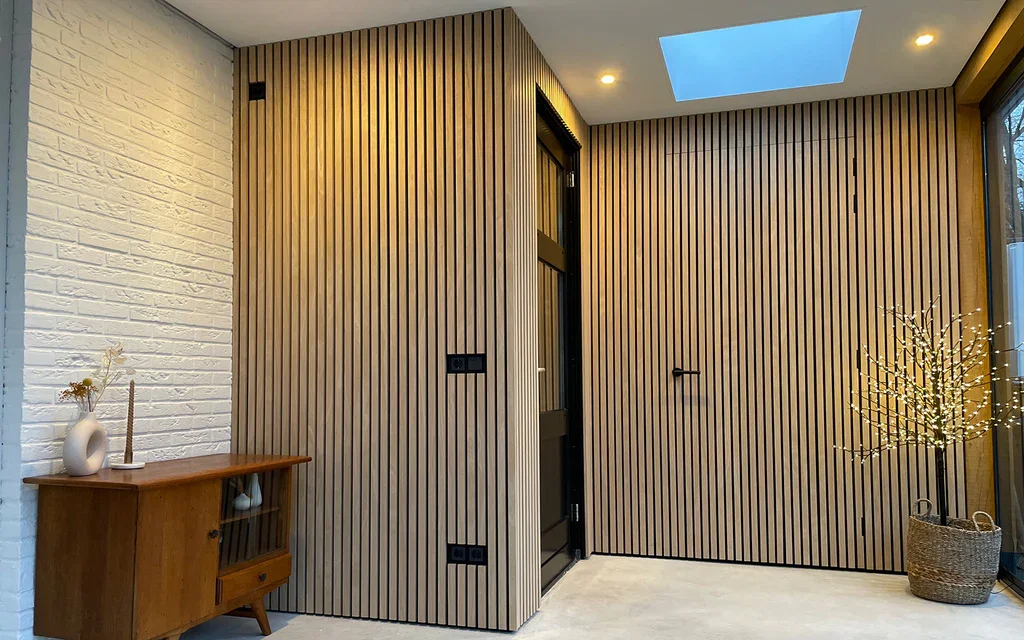
7. Use Limewash Paint for Instant Character
If plain white walls feel a little too sterile but you’re not ready to commit to a bold color, limewash paint is the answer. It creates a soft, chalky, slightly dimensional finish that looks like it’s been on the walls for a hundred years. The effect is rich without trying hard.
Romabio Classico Limewash runs about $55 to $80 a gallon and goes on with a brush or roller. No special technique needed. You don’t even need to prime most surfaces first. It works beautifully in bedrooms, dining rooms, and entryways. One accent wall in limewash gives the whole room a focal point that feels organic and lived-in, not like you picked it off a trend board.
This pairs perfectly with the warm minimalism direction that’s been dominating design. The finish adds depth and movement to walls that flat paint simply can’t. A simple can of paint can drastically change how a room feels, and limewash is one of the easiest ways to prove that.
8. Mix Furniture from at Least Three Sources
The fastest way to make a new house look like a catalog page? Buy the matching sofa, coffee table, side table, and media console from the same store. Everything matches perfectly, and everything looks like no one actually lives there.
Instead, buy your sofa from one place, your coffee table from another, and your sideboard from a vintage shop or a flea market. Shopping second-hand is the best way to get a one-of-a-kind look without paying designer prices. Auctions, estate sales, thrift stores, and even Facebook Marketplace are goldmines for pieces that give a room real personality.
Jeremiah Brent, one of the AD100 designers, says it well: “Every object in your home should earn its place. If it doesn’t make you feel something, it’s just taking up space.” A vintage dresser with real wear and history does more for a room than three matching pieces from the same big-box retailer.
The common thread between your pieces should be tone, not matching finishes. Stick within the same color family and the mix will look pulled-together instead of random.
9. Style Surfaces in Groups of Three
Every shelf, nightstand, coffee table, and console table in your house is a styling opportunity. But if you don’t have a system, you’ll either leave them bare or pile random stuff on them until they look cluttered.
Here’s the simplest formula that works: group three objects of different heights. A stack of books. A small vase. A candle. One tall, one medium, one small. That’s it. Odd numbers look natural and easy. Even numbers look stiff and staged.
This applies everywhere. On your nightstand: a lamp, a small dish, and a book. On your coffee table: a tray with a candle, a small plant, and one object you love. On an entryway console: a lamp, a bowl for keys, and a framed photo. Shea McGee’s advice to layer in personality slowly starts right here. Walk through your house, find three things you already own, and group them together. You’ll be surprised how much more pulled-together a surface looks.
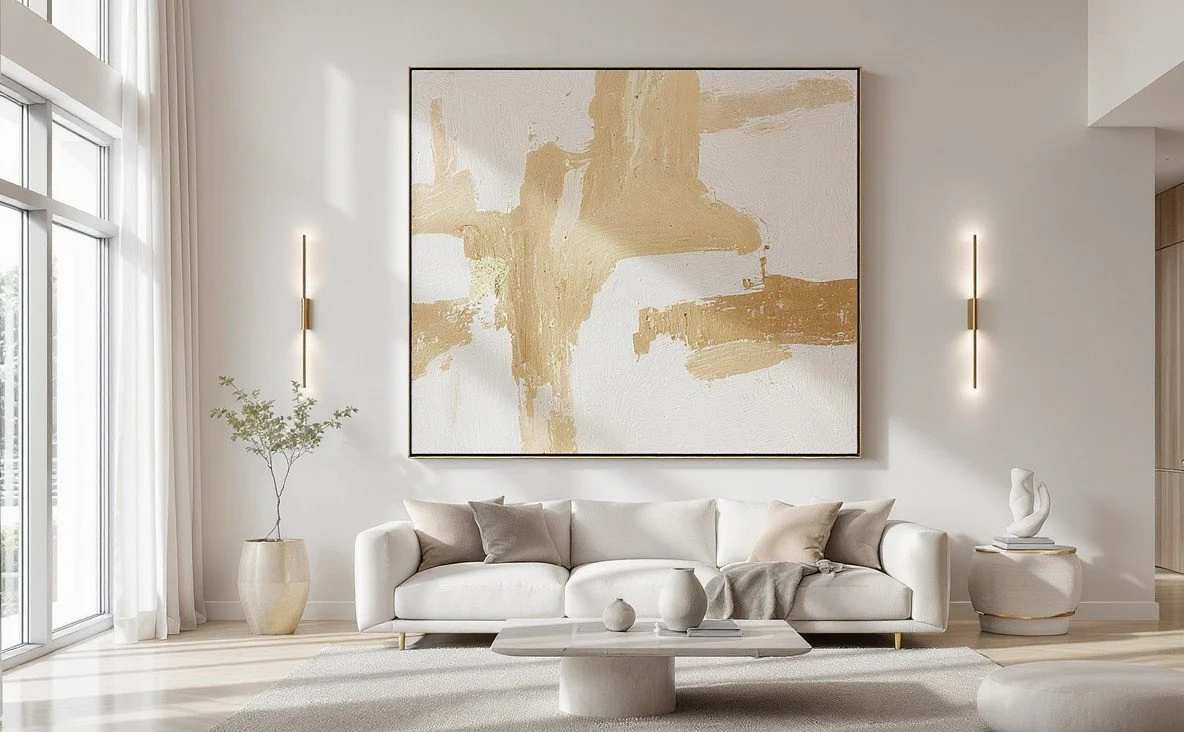
10. Add One Piece of Real Art
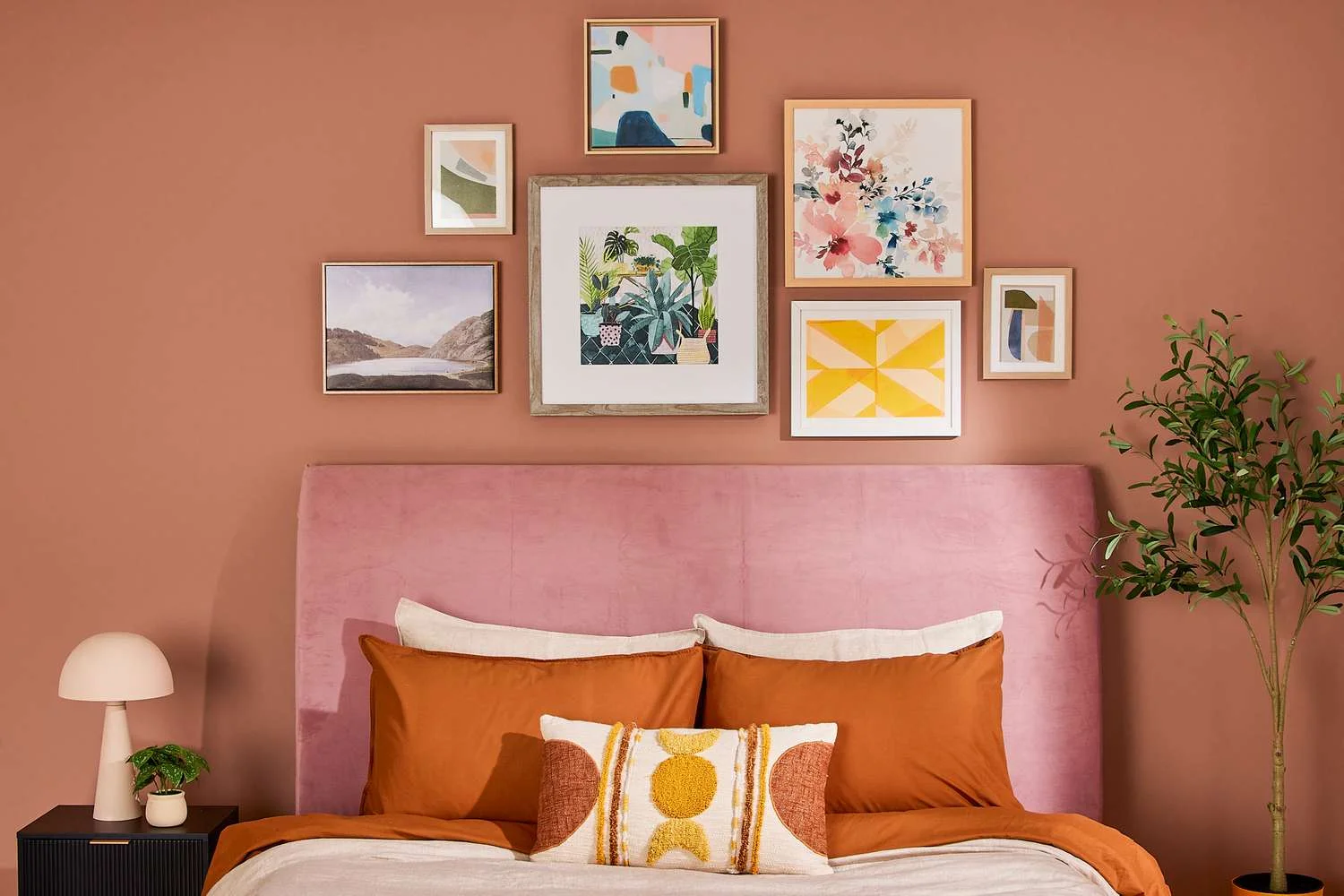
Forget the gallery wall. For now, at least. Six matching prints from the same online store might look coordinated, but they rarely look special. And hanging a full gallery wall in a house you just moved in to? That’s a recipe for 47 nail holes and a lot of frustration.
Start with one piece. One painting, one photograph, one print that actually means something to you. Check local art shows, Etsy shops with original work, vintage stores, or even your own photography printed large at a print shop. Frame it with a mat board and a simple frame. Hang it in the room where you spend the most time.
One well-chosen piece on a bare wall does more than a dozen prints hung in a grid. Jeremiah Brent’s rule applies here too. If it doesn’t make you feel something, keep looking. And if you don’t find it right away, an empty wall with good paint is perfectly fine in the meantime.
11. Bring in Plants, but Only Two or Three
Plants make a room feel alive. But if you’re already overwhelmed by decorating decisions, the last thing you need is to also become a plant parent to 15 different species with different watering schedules. Adding plants is one of the easiest ways to bring life to a new space, but keeping it simple is the key.
Start with two or three. Pick ones that are hard to kill: a snake plant in a corner, a pothos on a shelf, or a fiddle-leaf fig if you’ve got the light for it. One large plant in a floor pot does more for a room than five little ones scattered on every surface.
Place them where they fill a gap. An empty corner next to the sofa. A bare kitchen counter. A hallway that needs something alive. Don’t overthink the pots either. Simple terracotta or a basic ceramic in a neutral color works perfectly while you figure out your style. Plants are one of the things that make a new house feel like a home faster than almost anything else.
12. Layer Texture, Not Pattern
This is where a lot of new homeowners go sideways. They see a room on Instagram with four different patterned pillows, a patterned throw, and patterned curtains, and they think that’s the move. It’s not. At least not when you’re starting out.
Texture does the same job as pattern. It adds interest and depth. But it’s almost impossible to get wrong. A linen pillow next to a knit throw on a jute rug looks rich and layered. The same setup in four competing patterns can look chaotic.
Jeremiah Brent calls this “richness without noise.” Stay in one color family. Cream, oatmeal, ivory, warm beige. Then vary the surfaces: matte ceramic, nubby wool, smooth cotton, rough jute, woven rattan. Every room can follow this formula and look pulled-together without you agonizing over whether stripes and florals go together.
Layer textures on your sofa first: one linen pillow, one knit throw. Then on the floor: a textured rug. Then on surfaces: wooden bowls, woven baskets, ceramic vases. Each layer adds warmth without adding visual clutter.
13. Use Closed Storage to Hide the Chaos
New houses are messy. There’s no way around it. Boxes in the hallway. Random cords. Stuff you haven’t found a place for yet. And the longer you stare at the clutter, the more overwhelmed you feel.
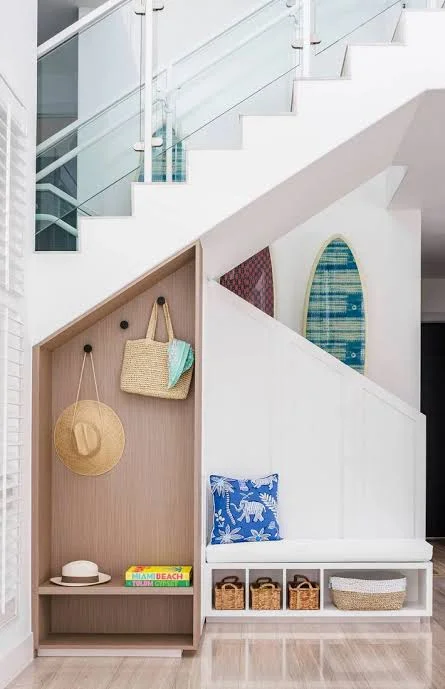
The fix isn’t to organize everything perfectly before you’ve even unpacked. The fix is closed storage. A console table with doors. Baskets with lids. An armoire. A bench with a lift-top in the entryway. Anything that lets you open it, toss the chaos inside, and close it.
This is a completely legitimate decorating strategy, especially in the early months. Your styled surfaces, the ones with the three-object grouping and the single piece of art, can look clean and calm while everything behind closed doors is still a work in progress.
Don’t buy a matching storage set from one retailer. A vintage cabinet from a flea market, a modern console from IKEA, and a couple of lidded baskets from Target can all work together in the same room. You’ll swap things out as you settle in, but for now they buy you breathing room.
14. Let the House Evolve on a One-Year Timeline
Here’s the last and most important of these 14 new house decorating ideas, and it’s a mindset, not a project: give yourself a full year.
Not a month. Not a weekend. A year.
Break it into seasons. Spring: tackle the porch, patio, or outdoor space. Summer: paint the rooms you’ve been testing colors in all winter. Fall: focus on the bedroom with new bedding and a rug. Winter: swap in warm lighting and new textiles.
Your taste will change as you live in the house. The things you loved on Pinterest six months ago might feel wrong by the time you’re standing in the actual room. That’s normal. The house you finish in year one will be better than anything you could have planned before you even moved in.
Emily Henderson has been saying this for years, and she’s right: “The rooms I’m most proud of are the ones that took the longest.” Give yourself the gift of time. These new house decorating ideas won’t overwhelm you because you’re not doing them all at once. You’re doing them one at a time, in a house that’s slowly becoming yours.
Pick One Idea and Start This Weekend
You don’t need to do all 14 of these this month. You don’t even need to do all 14 this year. The whole point of these 14 new house decorating ideas is to take the pressure off.
None of them require you to have the whole house figured out first. Each one works on its own, in any room, at any stage.
If you’re staring at this list and don’t know where to begin, start with Idea 2. Pick the smallest, least important room in the house and make it yours. Hang the curtains. Lay down a rug. Put a lamp on the nightstand. When that room feels done, you’ll have the momentum and the confidence to tackle the next one.
The best-decorated homes aren’t the ones that look like a magazine spread. They’re the ones that feel like the people who live there. And that takes time. Let yourself have it.