18+ Mid Century Ideas for Your First Living Room

✔ Written & fact-checked by Sophie — last reviewed June 26, 2026
Your First Apartment Deserves Better Than a Bland Box
Your first apartment has bare walls, a couch someone’s mom didn’t want, and zero personality. You keep saving mid century modern living room ideas to your phone, but the second you try to actually do it, you freeze. Where do you even start? Especially when your budget is more “thrift store” than “design showroom.”
Here’s the thing most people don’t know. Mid-century modern was born as an affordable, mass-produced style after WWII. It was built for regular people in regular homes. So decorating your first apartment or home this way isn’t a budget compromise. It’s historically accurate.
These 20 mid century modern living room ideas range from free styling tricks you can do tonight to one smart investment piece you’ll keep for years. No design degree needed. No matching furniture sets. No cold, sterile rooms that look like a catalog.
Pick three. Start this weekend. Let the rest build over time.
1. Learn the MCM Cheat Sheet Before You Shop
Before you buy a single thing, know what you’re looking for. MCM has a specific look, and once you see it, you can’t unsee it. Clean straight lines. No ornamental carvings or scrollwork. Legs that taper outward on sofas, chairs, and tables. Earthy base tones like walnut, olive, and warm white, punctuated by one or two brighter colors like blush pink or deep teal.
Designers at Decorilla describe it as “clean lines and muted colors” as the two rules that hold the whole style together.
This cheat sheet matters because you’ll be shopping secondhand a lot. Thrift stores don’t label things “mid-century.” But now you can spot the real thing from across the room.
2. Pick One Statement Sofa
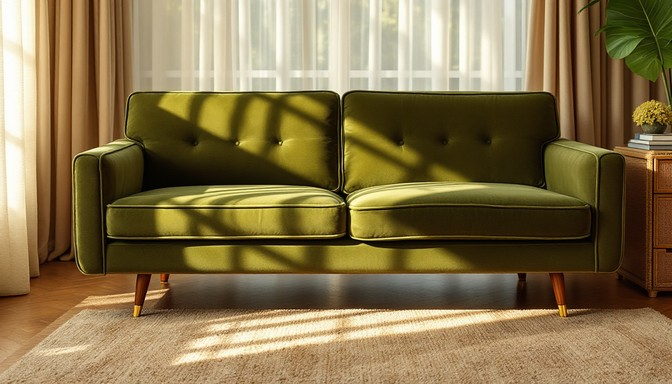
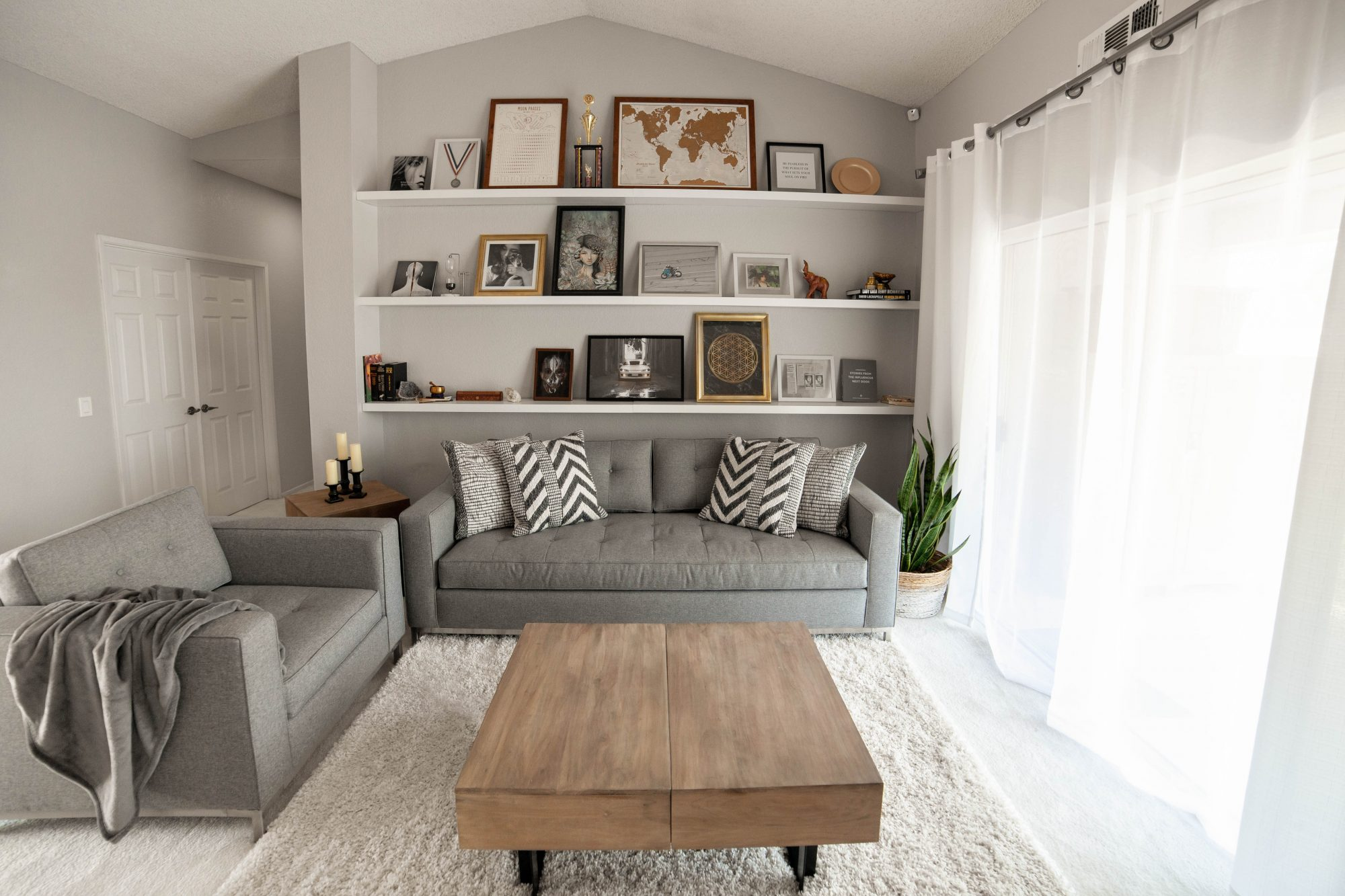
The sofa is the anchor. Everything else in your MCM living room orbits around it, so choose carefully. Look for a low profile, clean straight arms, and tapered wooden legs. Avoid anything overstuffed, skirted, or sitting flat on the floor. That’s not mid-century. That’s your aunt’s basement.
Go with a rich, earthy fabric color instead of default gray. Think olive, rust, camel, or even a deep mustard. These tones do the heavy lifting for the whole room.
Retailers like Scandinavian Designs now sell MCM-profile sofas at mid-range price points, so you don’t have to hunt vintage for this one. A new sofa in the right silhouette beats an old one that sags.
3. Hunt for a Vintage Coffee Table
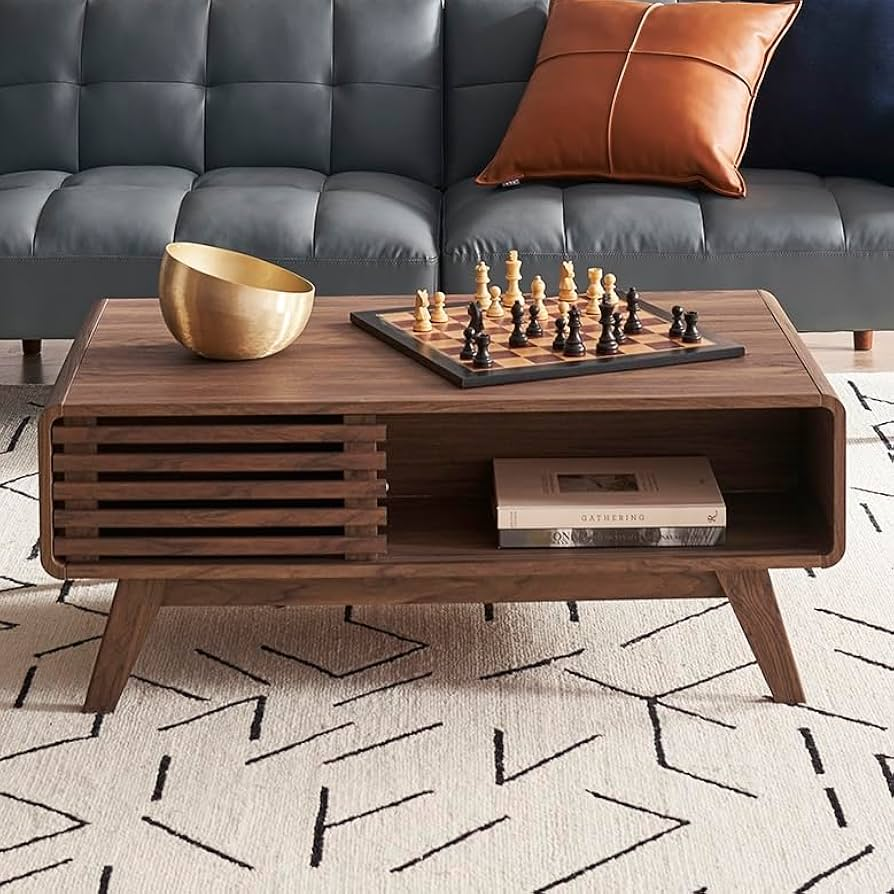
This is the single easiest and most rewarding piece to find secondhand. A rectangular or kidney-shaped top on tapered or hairpin legs in walnut or teak. That’s it. That’s the whole search.
Vintage beats new here almost every time. You get real wood, authentic patina that tells a story, and you’ll often pay less than you would for a reproduction. Flea markets and local antique shops are your best hunting grounds. Apartment Therapy keeps a running list of the best vintage shops in every state if you need a starting point.
The thrift culture conversation is louder than ever right now. One commenter on a Hunting for George post this year put it perfectly: teenagers and their friends are “fully into flea markets and second hand today.” It’s not a budget thing. It’s a taste thing.
4. Mix Wood Tones, Don’t Match Them
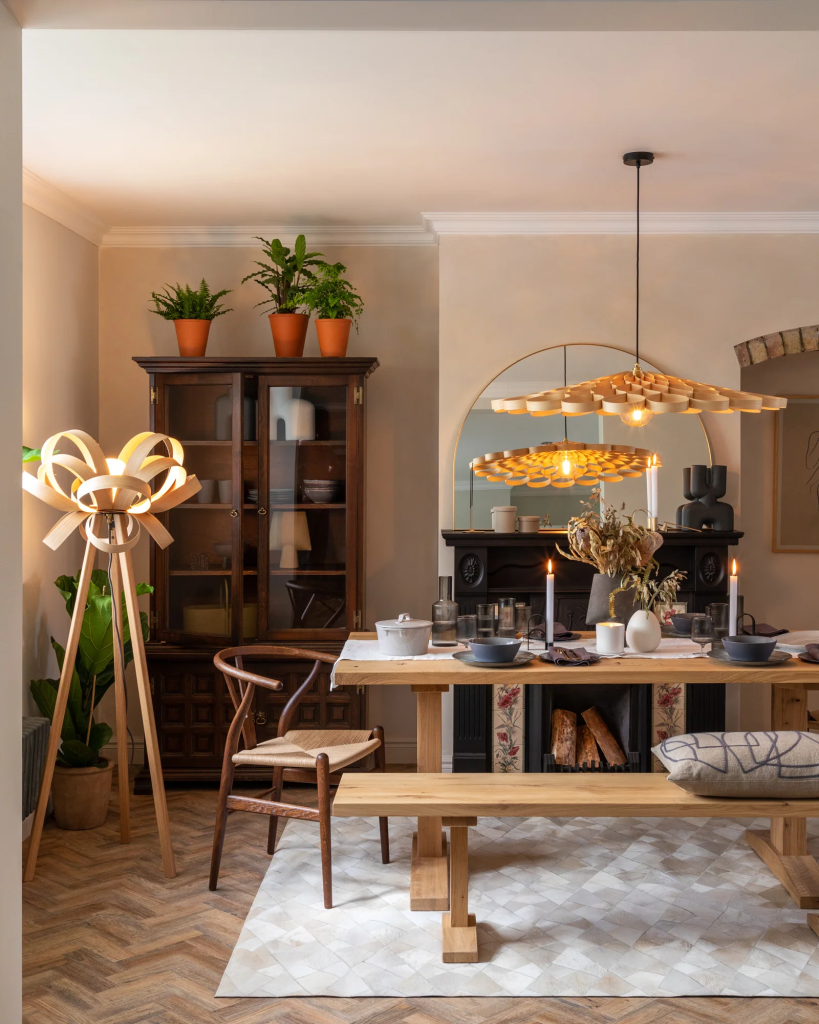
Stop trying to make every piece of wood in the room the same shade. It looks forced, and it makes secondhand shopping nearly impossible. The best MCM rooms let walnut, teak, oak, and even a little maple coexist.
Contrasting materials are a feature, not a flaw. Designers at Decorilla recommend mixing textures and finishes freely rather than locking into one matchy palette. The same goes for wood.
So if your coffee table is dark walnut and your shelf unit is lighter oak, that’s perfect. The variety creates depth. A room where every wood tone is identical looks like a furniture store display, not a living room.
5. Use an Accent Chair as Sculpture
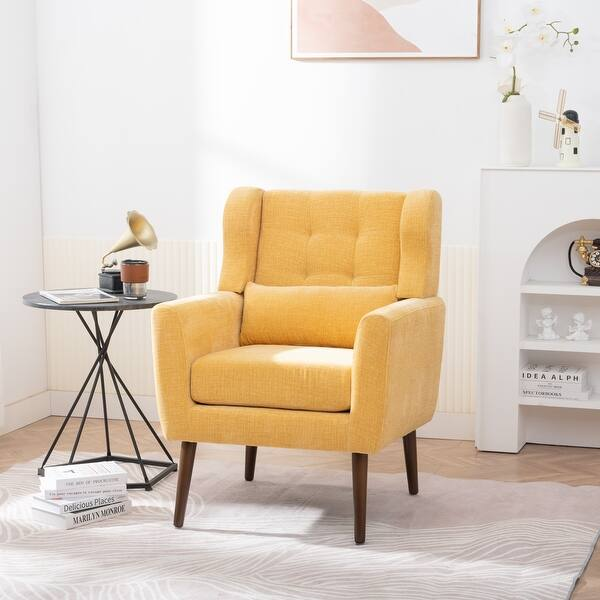
One great accent chair does more work than three throw pillows. Look for an angular frame, slim arms, and legs that lift the seat off the ground. This is your chance to bring in a bold color or a pattern that the rest of the room wouldn’t support.
Don’t line it up parallel with the sofa. Angle it slightly inward toward the seating area. This creates a conversation zone and makes the room feel pulled together without a designer.
Scandinavian Designs lists accent chairs as one of their core MCM categories. You can find good options at retail or dig for a vintage piece at an estate sale. Either way, this one chair becomes the piece people notice when they walk in.
6. Layer Contrasting Textures
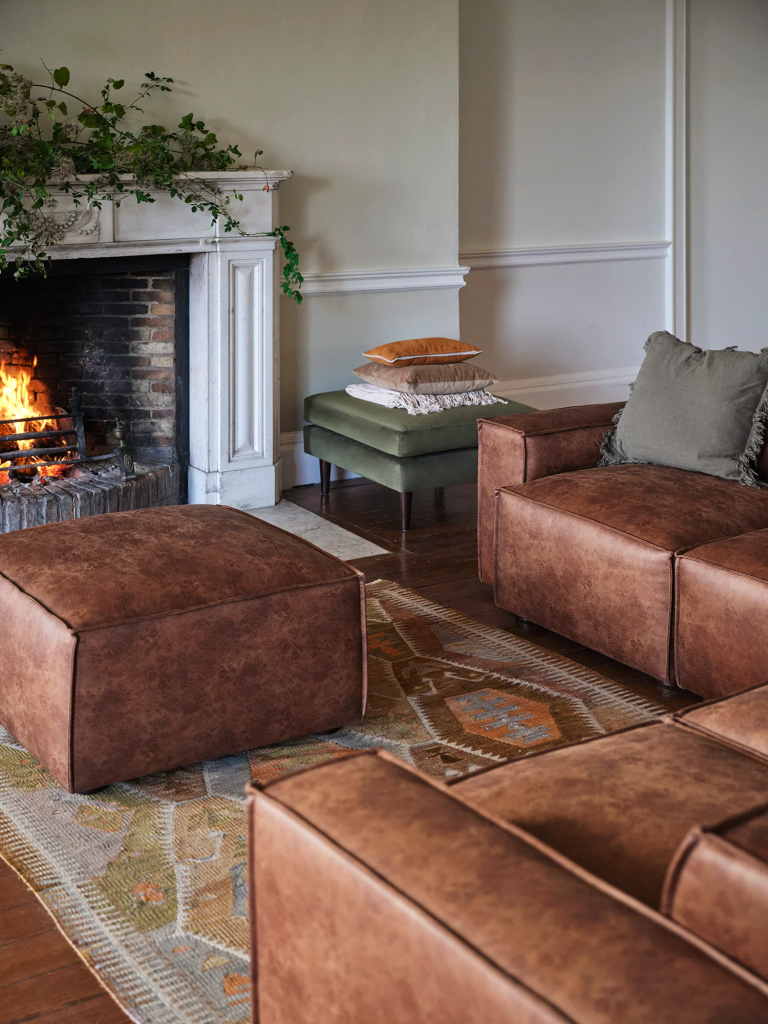
MCM furniture is mostly smooth surfaces and clean lines. Without texture, the room can feel flat. The fix is easy and mostly free.
Drape a mohair or wool throw over a leather sofa. Pair a jute rug with velvet cushions. Put a nubby cotton pillow on a sleek wooden chair. Decorilla’s design team says to mix contrasting textures “without reservation.”
You probably already own half of what you need. Go through your closet and your linen shelf. That chunky knit blanket from three Christmases ago? It belongs on your sofa now. Texture is what makes a room feel like someone actually lives there.
7. Choose Earthy Wall Colors
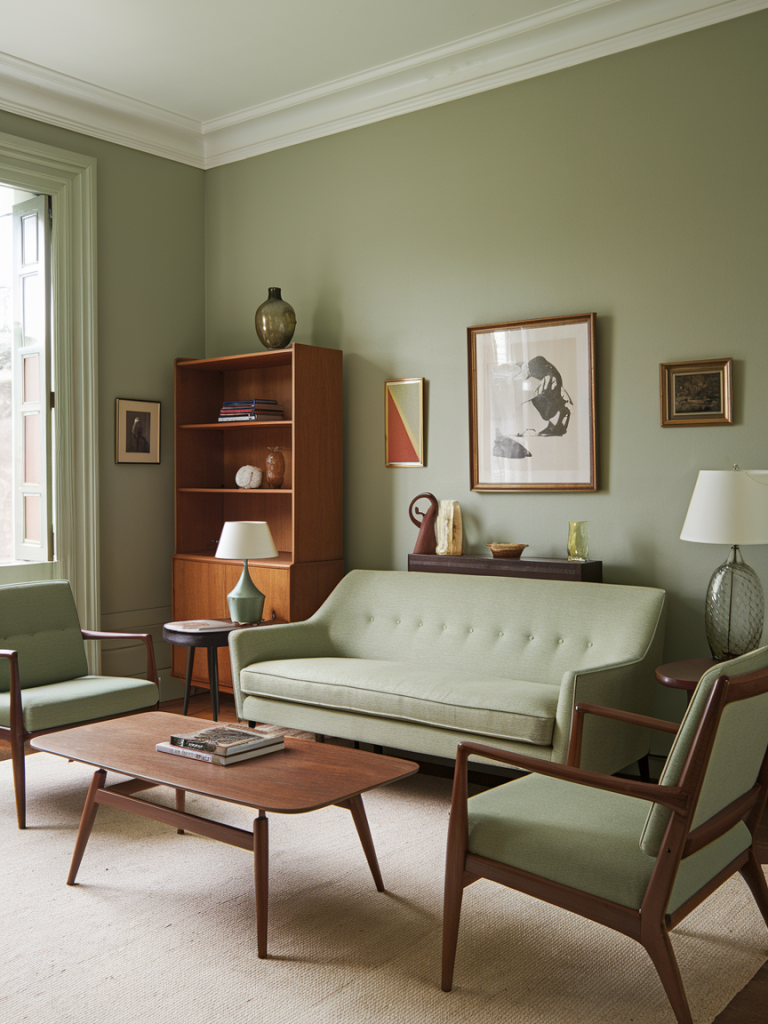
Paint is the cheapest transformation you can make in a first apartment. One gallon, a Saturday afternoon, and the whole room changes.
Go with warm, muted tones: olive, warm white (not bright white), camel, dusty terracotta, or a soft sage. These create the natural backdrop that MCM furniture needs. They make walnut and teak glow instead of looking orange.
Stark cool white is the wrong move here. It fights with vintage wood tones and makes everything look off. If your landlord only allows white, ask if warm white or cream counts. Most won’t care.
Muted colors are the backbone of MCM. They always have been.
8. Add One Bright Accent Color
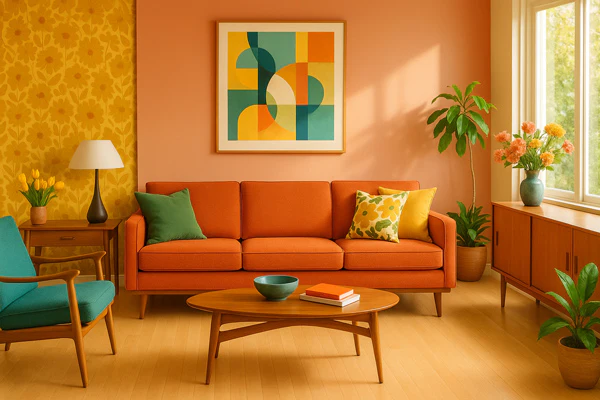
MCM has a formula, and this is it: earthy base, one bright punch. That’s the whole trick.
Pick a single accent color and repeat it in two or three spots. Mustard yellow in a pillow and a vase. Burnt orange in a throw and a piece of art. Blush pink in a cushion and a lamp base. Deep teal in a chair and a frame. You get the idea.
Bright greens, oranges, yellows, and navy velvet all show up in classic mid-century palettes. The key is restraint. One color, a few touches, done. If every surface screams a different bright color, it looks chaotic. Two or three echoes of the same tone looks pulled together.
9. Invest in One Great Lamp
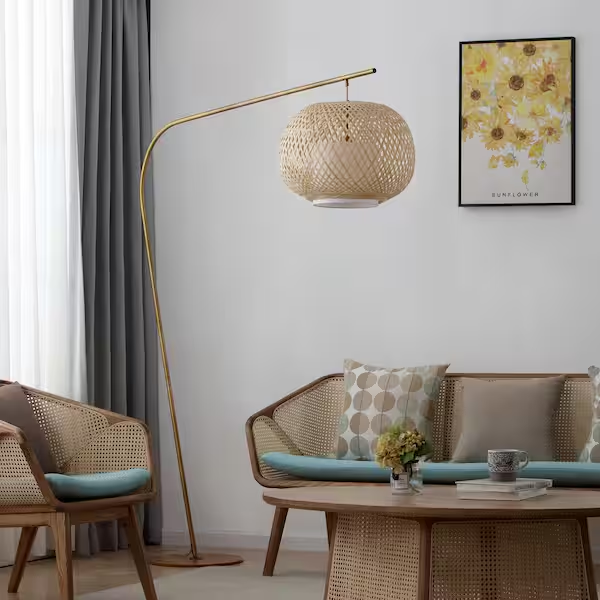
Decorilla’s designers say to “splurge on a unique lighting design,” and they’re right. One statement lamp changes the entire feel of a room more than almost anything else at its price point.
An arc floor lamp. A sputnik-style chandelier. A sculptural table lamp in brass. These read as MCM instantly and make a small apartment feel layered instead of builder-grade. Lighting is the difference between “I just moved in” and “I live here.”
This is worth spending a little more on. A $150 lamp that you love will outperform five $30 lamps you feel neutral about.
10. Float Your Furniture in a Small Apartment
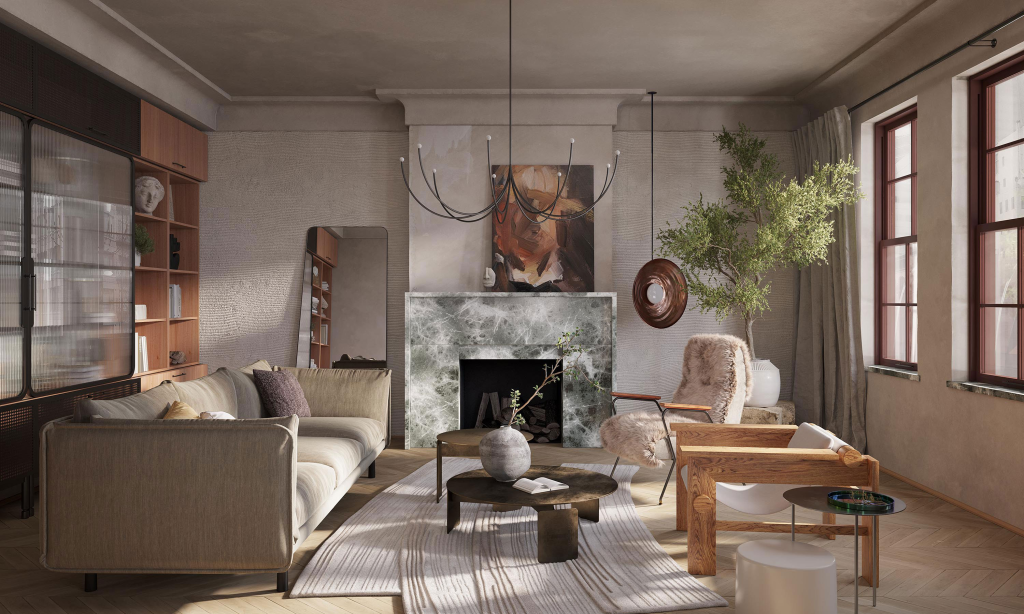
Here’s what most people get wrong in a first apartment: they shove every piece of furniture flat against the walls. It makes the room feel like a waiting room.
Pull the sofa away from the wall, even just six inches. MCM furniture was designed with tapered legs and open bases so it looks good from every angle. That only works if you can actually see the legs. When everything hugs the wall, those beautiful details disappear.
In a mid century modern small apartment, floating the main seating group in the center of the room actually makes the space feel bigger. It creates a clear path around the furniture and defines the living zone without needing a room divider.
11. Try the Japandi-MCM Blend
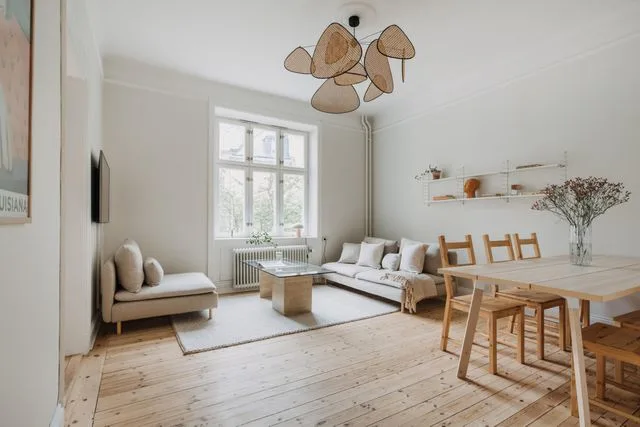
This one’s showing up all over real apartment styling right now. People are taking MCM furniture shapes, the clean-lined sofas, the tapered tables, and pairing them with Japandi’s softer side. Think natural linen, dried botanicals, simple ceramic objects, and a very restrained color palette.
An Instagram account called @tung, which focuses on small apartment styling, posted a living room in late 2025 tagged with both “Japandi” and “Midcentury.” The same space. Both styles at once.
This blend works especially well in a mid century modern small apartment because it keeps visual clutter low. You get the structure of MCM with the softness of Japandi. Fewer things on display. More breathing room. If the full retro look feels like too much, this is your shortcut.
12. Source Art from Flea Markets and Etsy
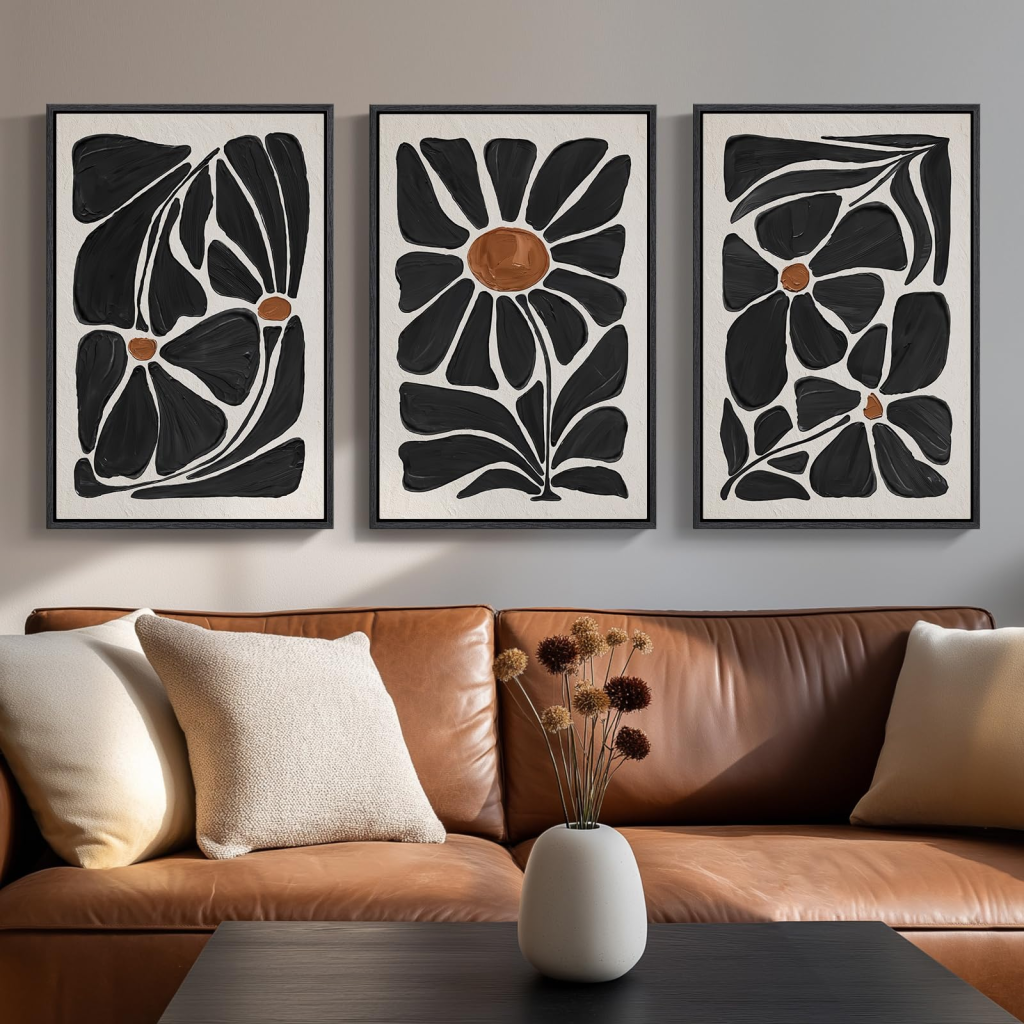
Your walls need something, but mass-produced prints from big-box stores look generic the second you hang them. They’re fine in a pinch, but they don’t do anything for the room.
Flea markets, local art fairs, and Etsy vintage sellers are where the good stuff lives. Look for abstract prints, botanical illustrations, or mid-century advertising art. Pair them with simple slim frames in black, walnut, or brass. Three frames grouped loosely on one wall beats a gallery of ten.
This is one of the easiest affordable mid century modern decor upgrades. A single framed print from a flea market can cost $15 and look like it belongs in a design magazine. The frame does most of the work, so spend a little more there.
13. Use a Media Console as a Room Divider
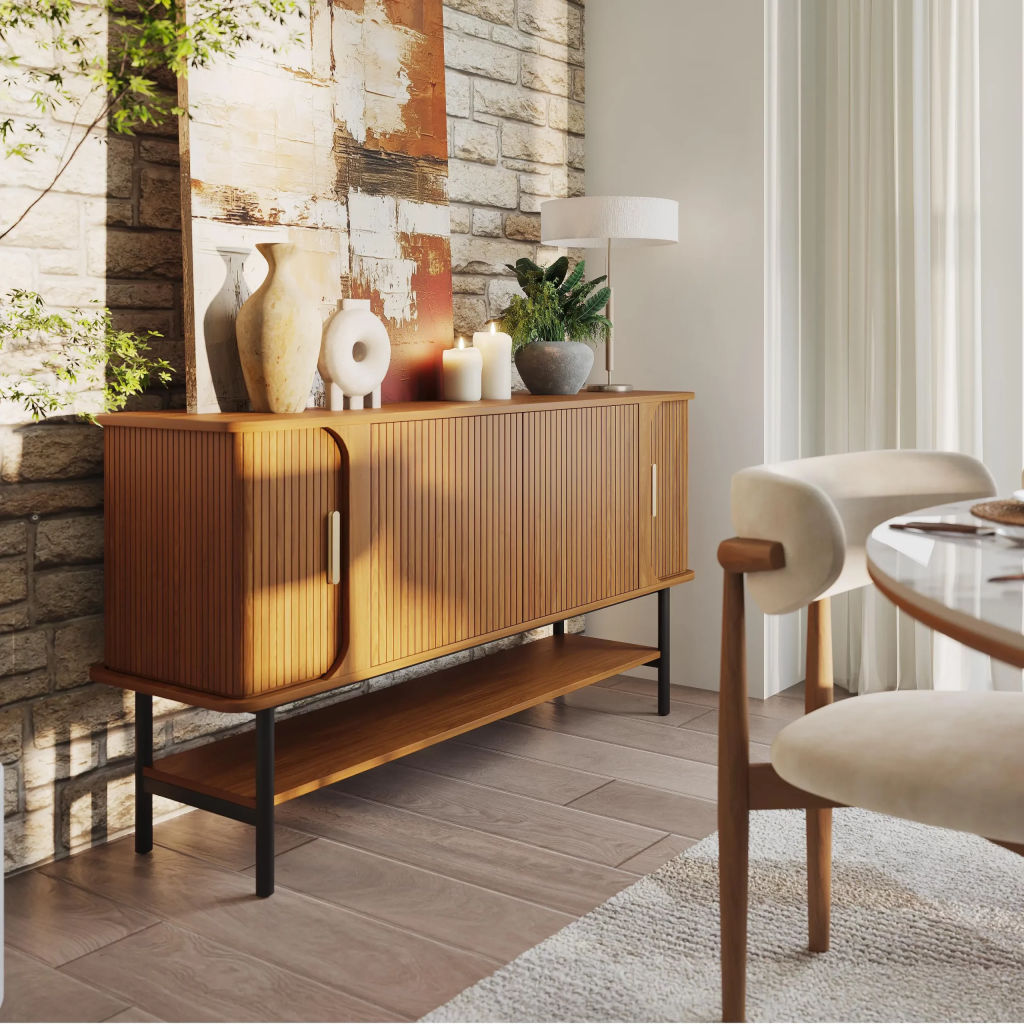
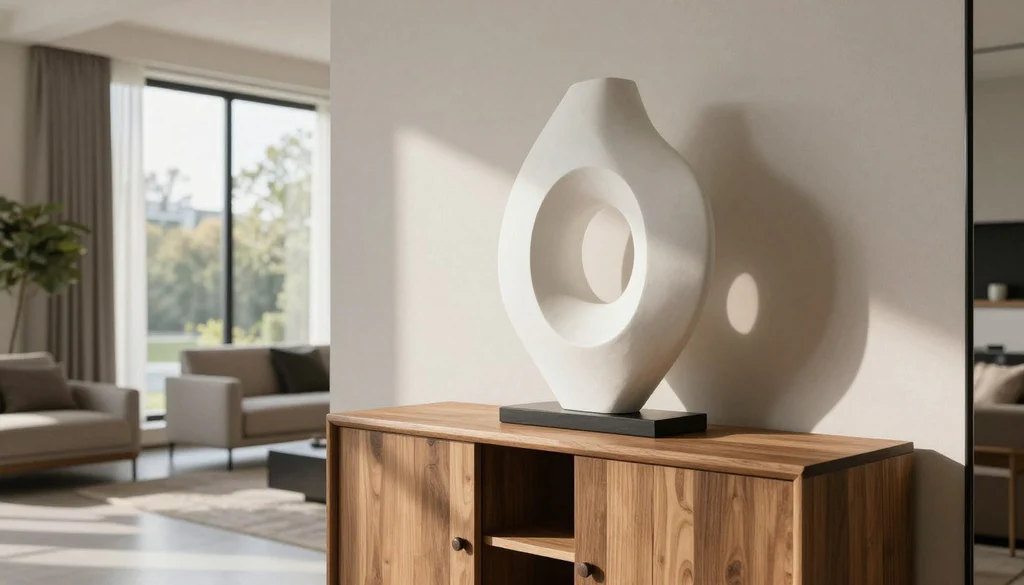
If you’re in a studio or an open-plan first apartment, you need zones. A low MCM credenza or media console does this job perfectly. It separates the living area from the dining or entry space without blocking light or making the room feel chopped up.
Look for one with sliding doors and tapered legs, about 30 inches high. Vintage options are common at estate sales and usually priced between $200 and $600, depending on condition and maker. Place it perpendicular to the wall behind the sofa so it creates a visual boundary from the other side.
This is one of the smartest mid century modern home design moves for renters. It’s functional storage, a TV stand, and a room divider in one piece.
14. Keep Window Treatments Minimal
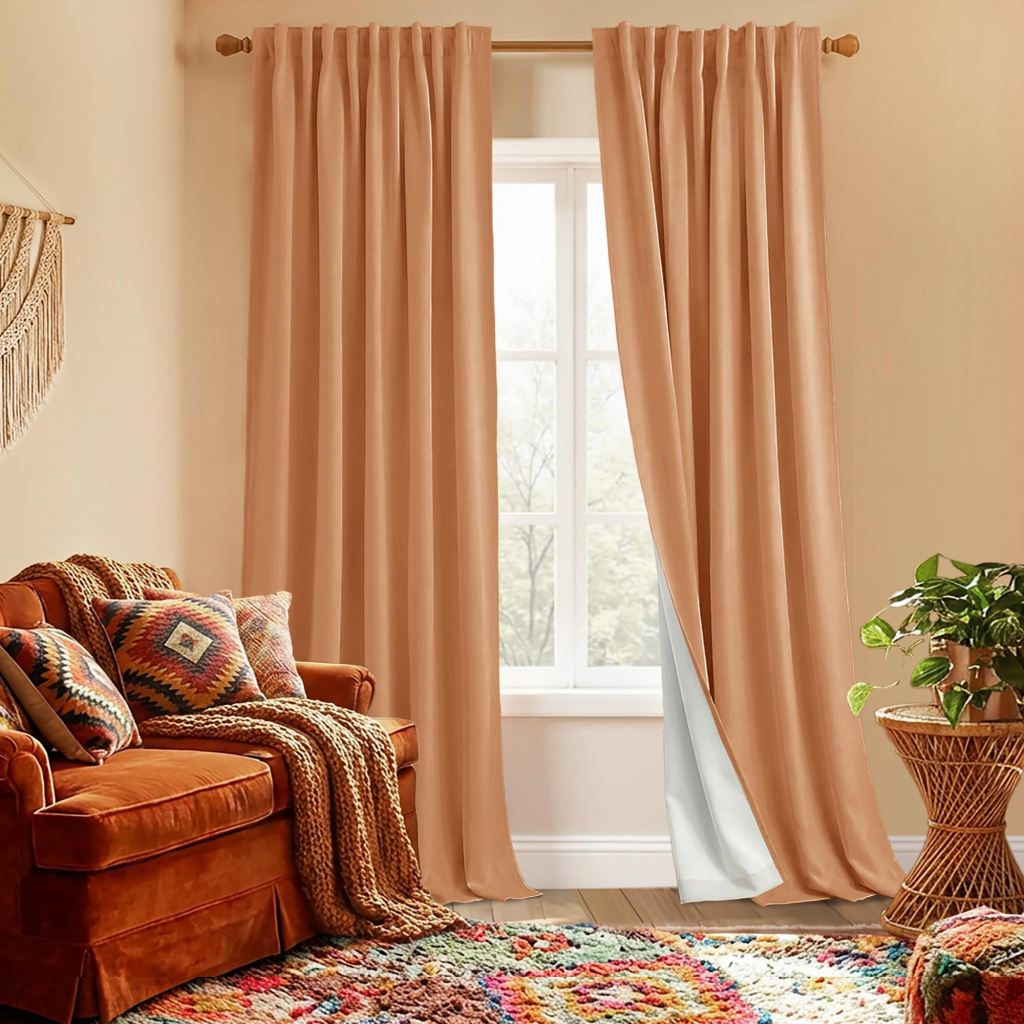
Heavy drapes kill an MCM room. The whole style is built around clean lines and natural light, so don’t cover your windows with fabric puddles and tie-backs.
Simple linen curtain panels work. A basic roller shade works. Bare windows work if your privacy situation allows it. In a rental, use command-strip curtain rods so you don’t lose your security deposit. Hang the rod a few inches above the window frame to make the ceiling feel taller.
The goal is maximum light. Designers describe MCM’s purpose as steering the focus toward what’s natural. Your windows are the most natural thing in the room. Let them do their job.
15. Swap Out Hardware for Brass or Walnut
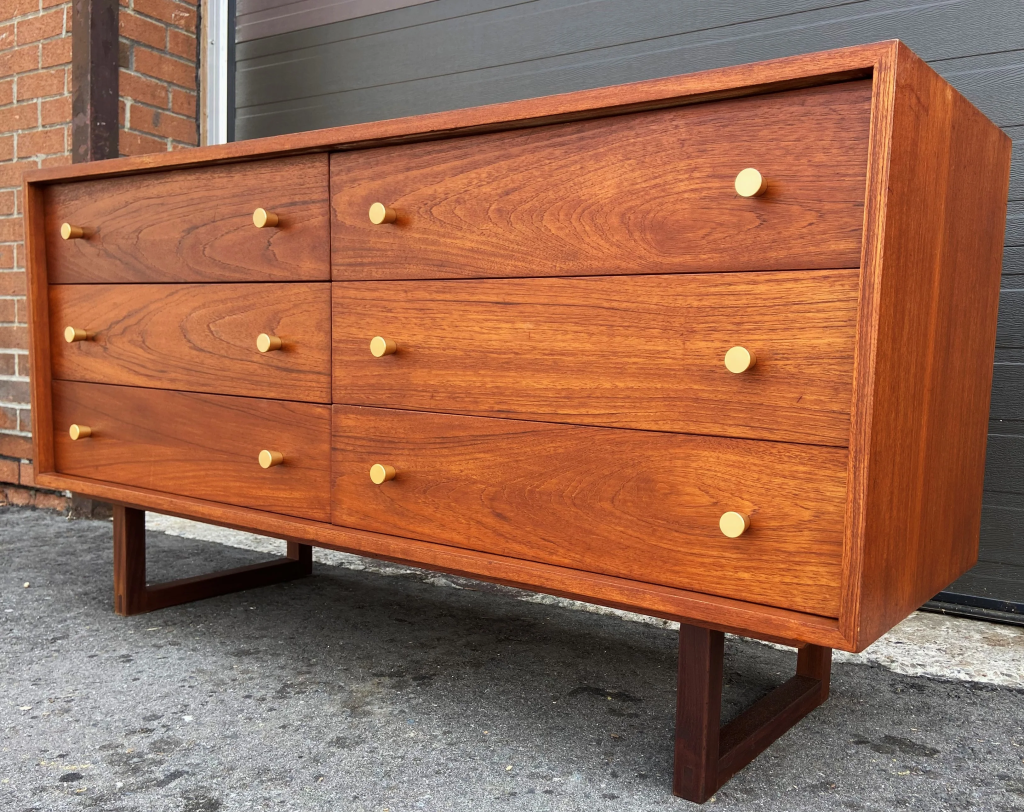
This is the cheapest upgrade on the whole list, and it might be the most satisfying. Take that $40 thrift-store dresser or media console, remove the generic silver pulls, and replace them with brass knobs or walnut handles. A full set costs under $30 at any hardware store.
The transformation is instant. A boring piece suddenly looks like it was designed that way. Brass and wood are the two foundational MCM materials, and this small swap puts them front and center.
While you’re at it, check your kitchen and bathroom too. The same trick works on builder-grade cabinets. But that’s a different article.
16. Display Books and Objects in Odd Numbers
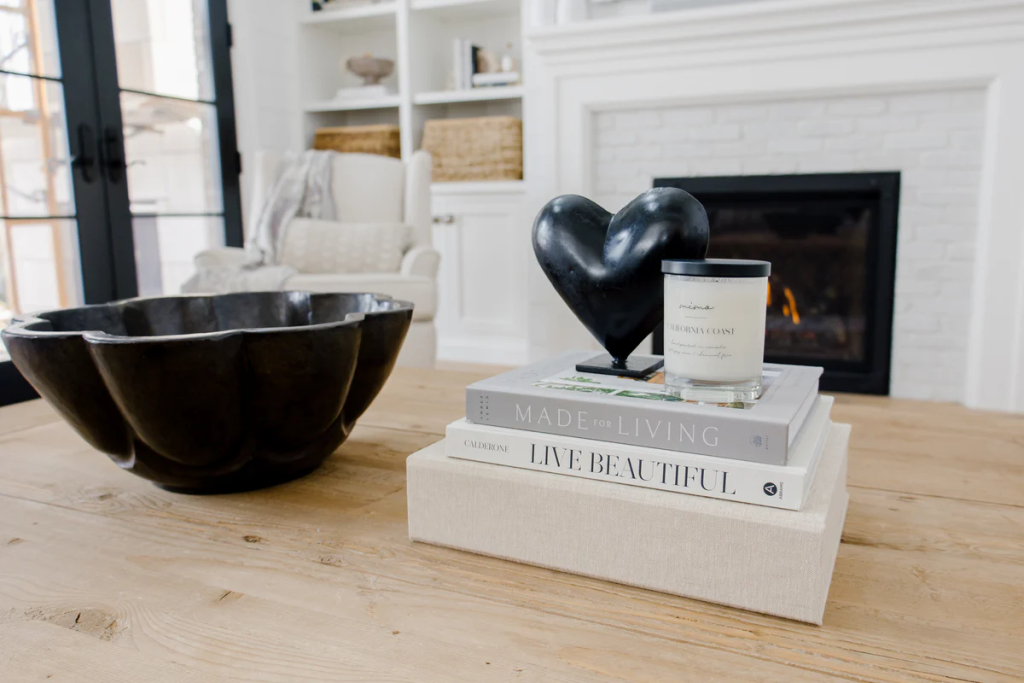
Here’s a styling rule that works every time. Group things in threes or fives, never twos or fours. Odd numbers feel natural. Even numbers feel like a store display.
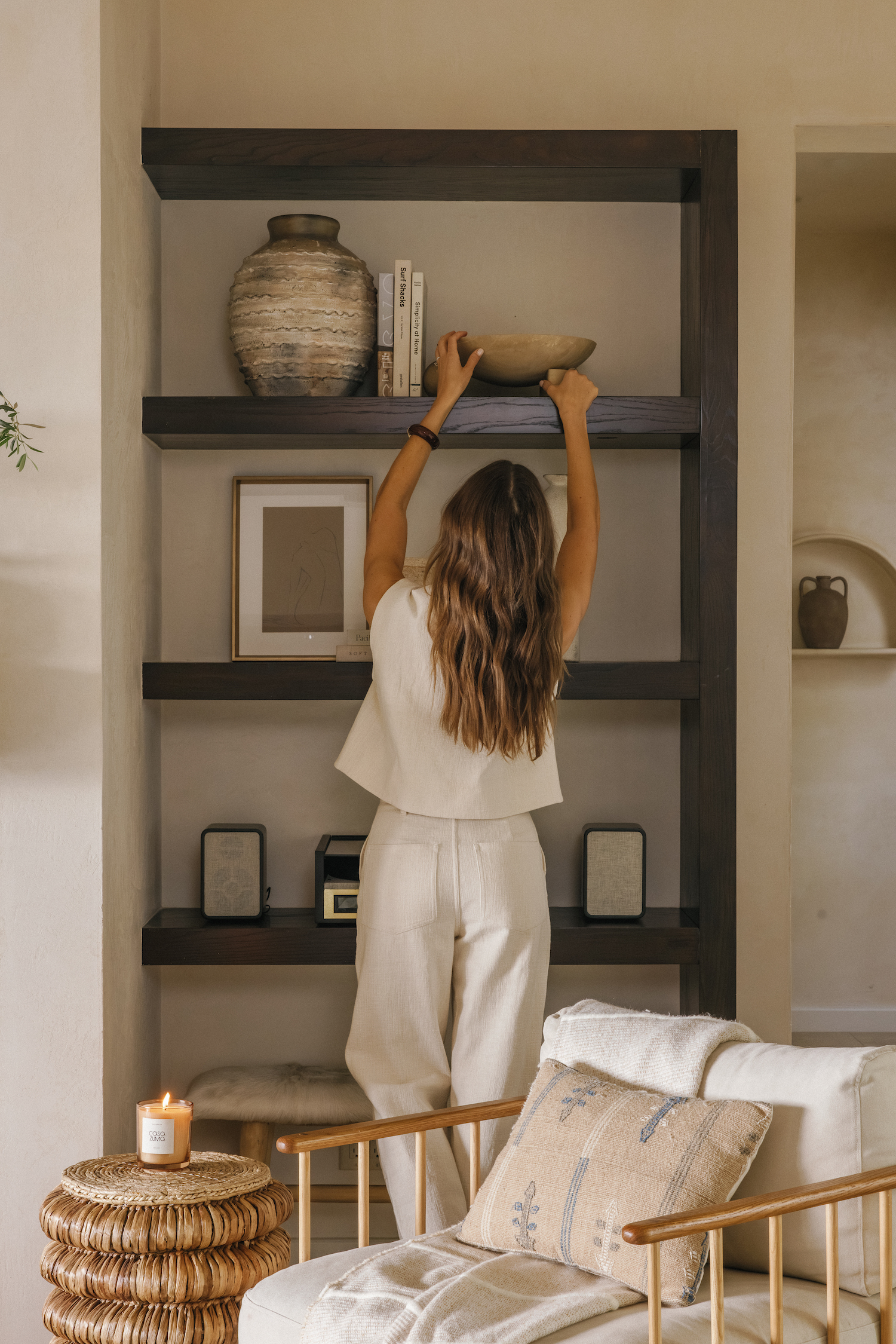
Stack two or three coffee table books horizontally on your table. Top the stack with one ceramic object, a small plant, or a candle. On a shelf, place three items at different heights. Leave space between them. The empty space is part of the composition.
This is how mid-century showrooms were styled, and it still works because it looks intentional without looking fussy. Don’t overthink it. Grab three things you like, put them on a surface, and step back. It’ll look right.
17. Add a Low-Pile or Flat-Weave Rug
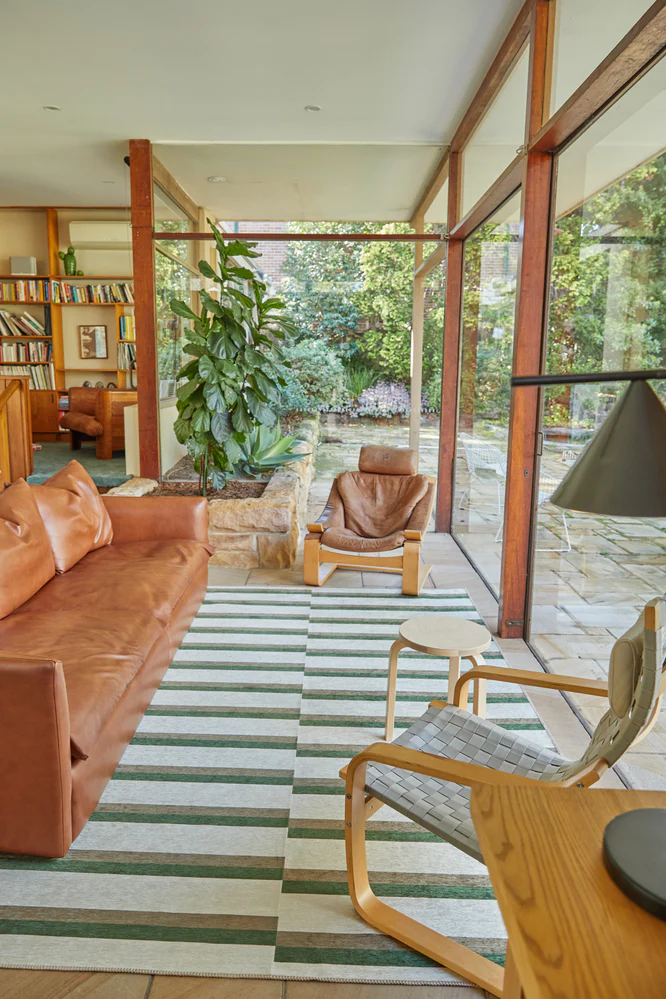
Put the shag away. MCM rooms use flat-weave, kilim, or low-pile rugs. They sit close to the ground and let the furniture legs be the star. A geometric or abstract-patterned rug in muted tones ties the seating area together and defines the zone in an open-plan apartment.
Decorilla recommends using a mohair or textured rug as a contrasting element in the room. Even a simple jute rug works here because the natural fiber adds texture without competing with the furniture.
Size matters. The front legs of your sofa and chairs should sit on the rug, at minimum. If only the coffee table fits on it, the rug is too small.
18. Bring in One Living Plant
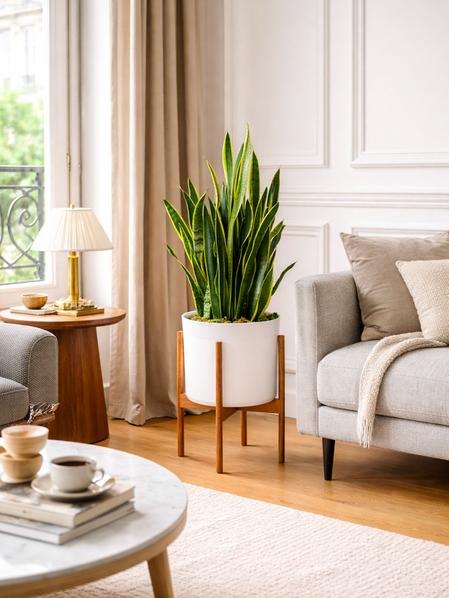
MCM design keeps circling back to natural forms. One large plant does more for this style than a dozen small ones scattered around.
A fiddle leaf fig, a snake plant, or a monstera in a simple ceramic or terracotta pot. Set it in a corner or next to the sofa. The organic shape of the leaves contrasts with all those clean straight lines, and that tension is what makes the room interesting.
Skip the tiny succulent collection on the windowsill. One bold plant reads as a design decision. Ten small ones read as clutter.
19. Embrace the “Collected Over Time” Look
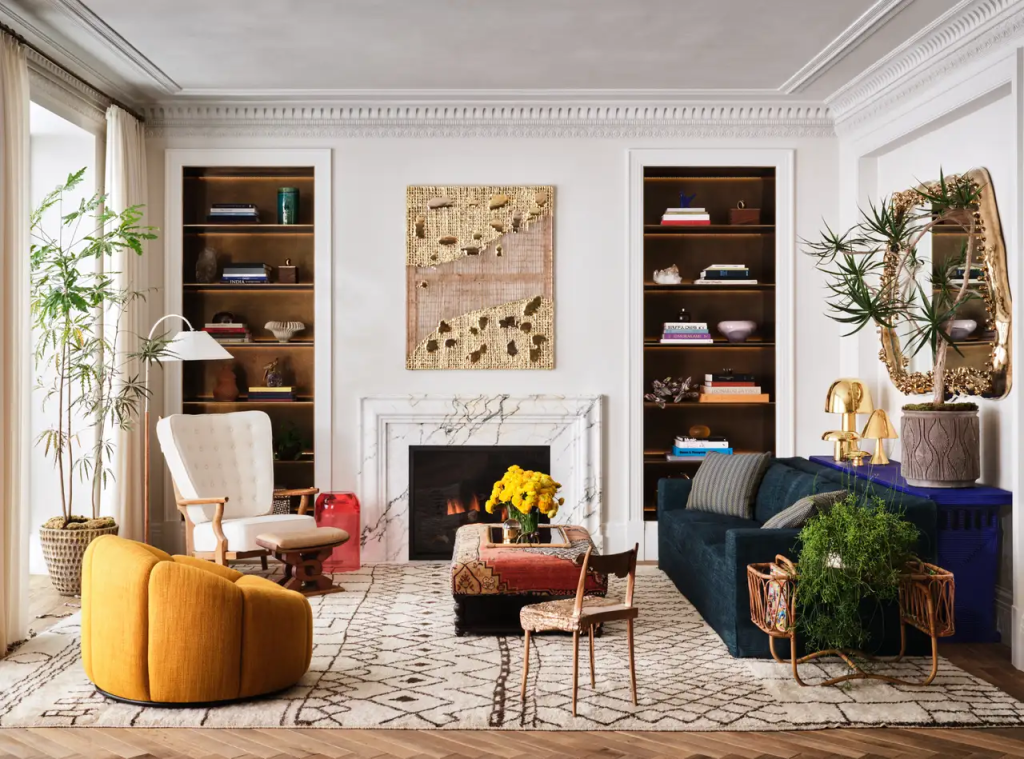
This is the most important idea on the list, and it’s the one that trips people up the most.
Your MCM living room should not look like you walked into a store, pointed at a showroom, and said, “I’ll take all of it.” That’s the fastest way to make a room feel lifeless. The goal is a space that looks like pieces accumulated over years, because they did, even if “years” means “three trips to Goodwill and one Facebook Marketplace score.”
Mix a new sofa with a vintage coffee table. Put a thrift-store lamp next to a retail rug. The 2026 conversation around secondhand decorating confirms this isn’t a compromise. It’s the whole point. Hunting for George’s March 2026 post had commenters talking about thrift culture as something their kids are choosing, not settling for.
Your room should tell a story. Even if the story is “I found this table on the curb and it’s the best thing I own.”
20. Start with What You Have and Build
You don’t need all 20 of these ideas today. You don’t even need ten. Start with three.
Maybe that’s painting one wall, buying one good lamp, and rearranging what you already own. Maybe it’s finding a coffee table this weekend and calling it a win. Mid-century modern started as practical, livable design for everyday people moving into their first real homes. Sound familiar?
The original MCM movement didn’t happen overnight in one shopping trip. It happened over years, as people added pieces that worked for their lives. Your first apartment is no different.
Grab what you have. Pull it away from the walls. Put a plant in the corner. Then go find one piece you love this weekend. The room will build itself from there.
You’re Closer Than You Think
Mid-century modern has always been a style for regular people in real spaces. That’s literally why it exists. It was mass-produced so that first-time homeowners and apartment renters could have clean, good-looking furniture without a trust fund.
Your starter home or first apartment is the perfect place to start building this look. Pick three ideas from this list. Hit a flea market this Saturday. Swap out some drawer pulls on Sunday. Let the rest happen when it happens.
The best mid century modern living rooms don’t look designed. They look lived in. Yours will too.